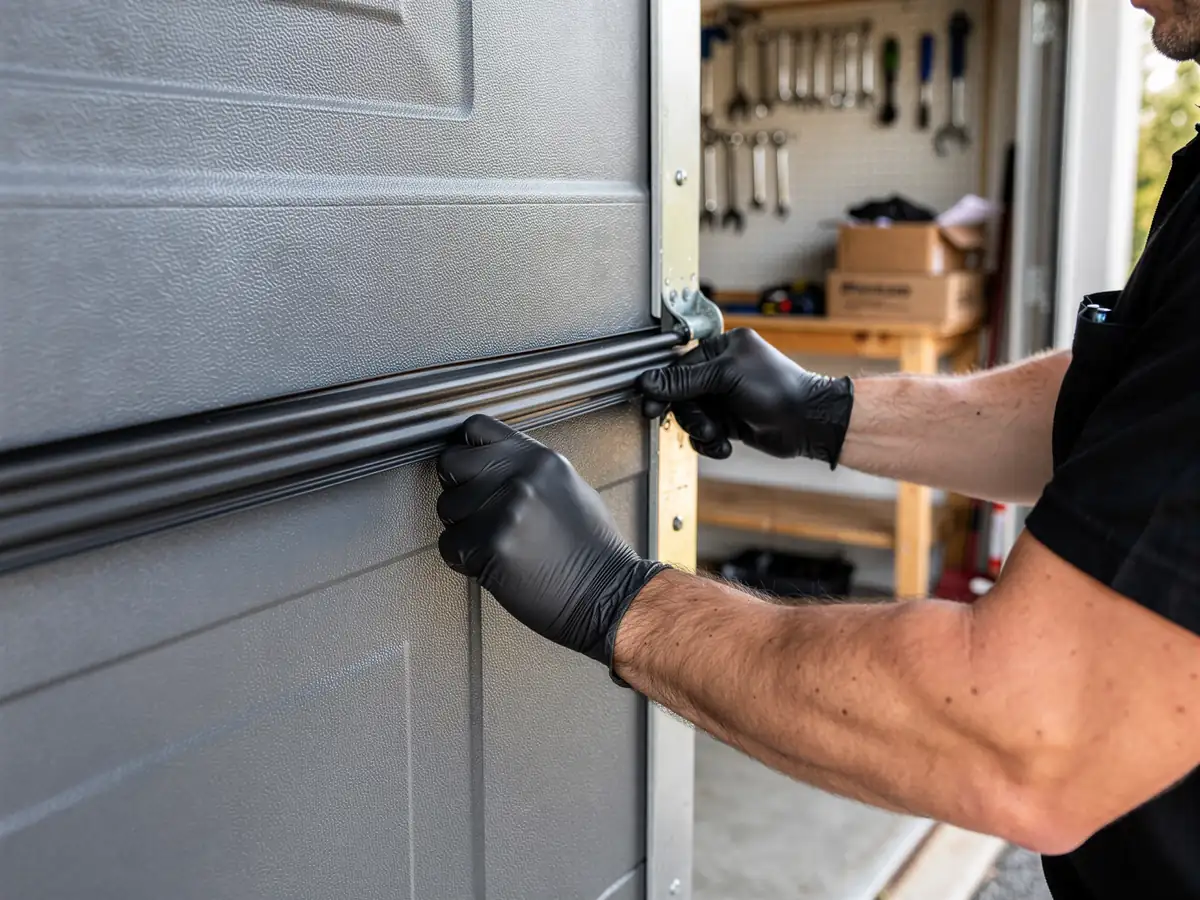
Panel Replacement for Harrisburg's Newer Steel Doors
Harrisburg homes mostly went up around 1992, newer steel sectional doors than most of the Columbia area. Here's what panel damage looks like on that stock and how a repair visit works.
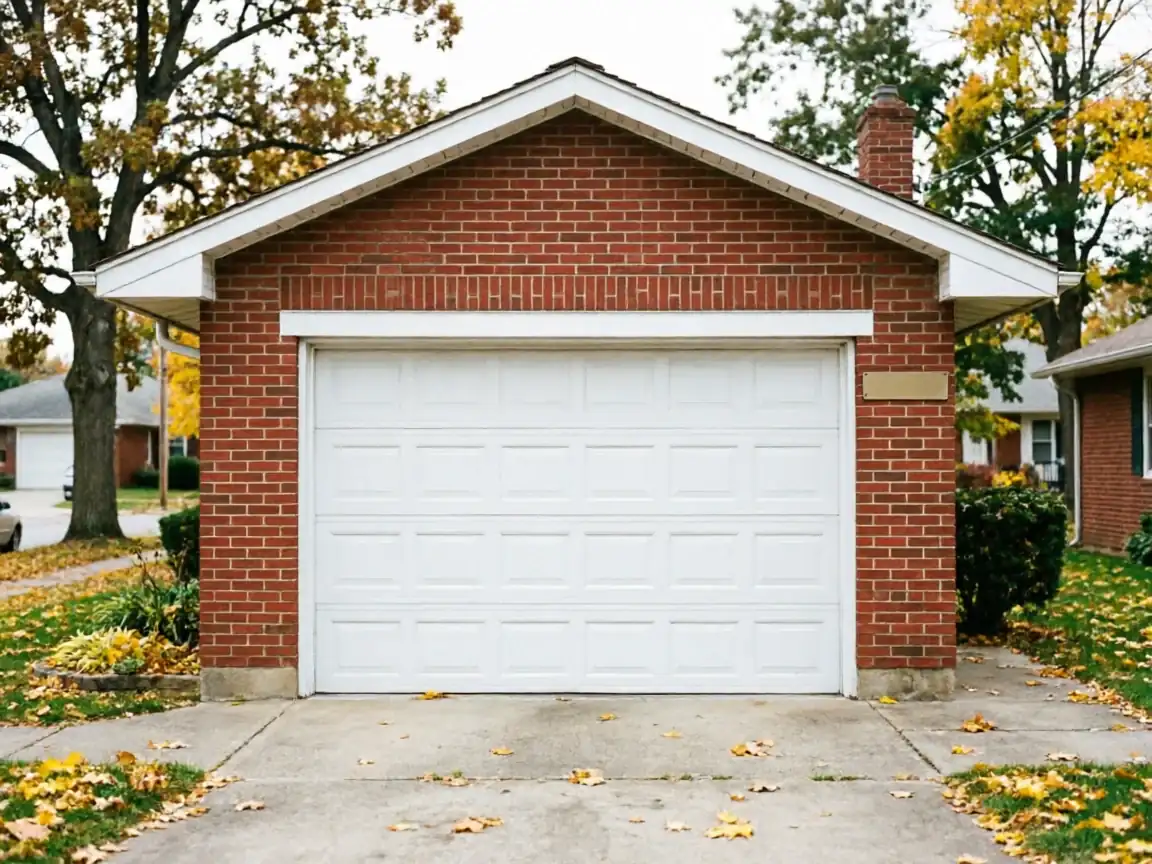
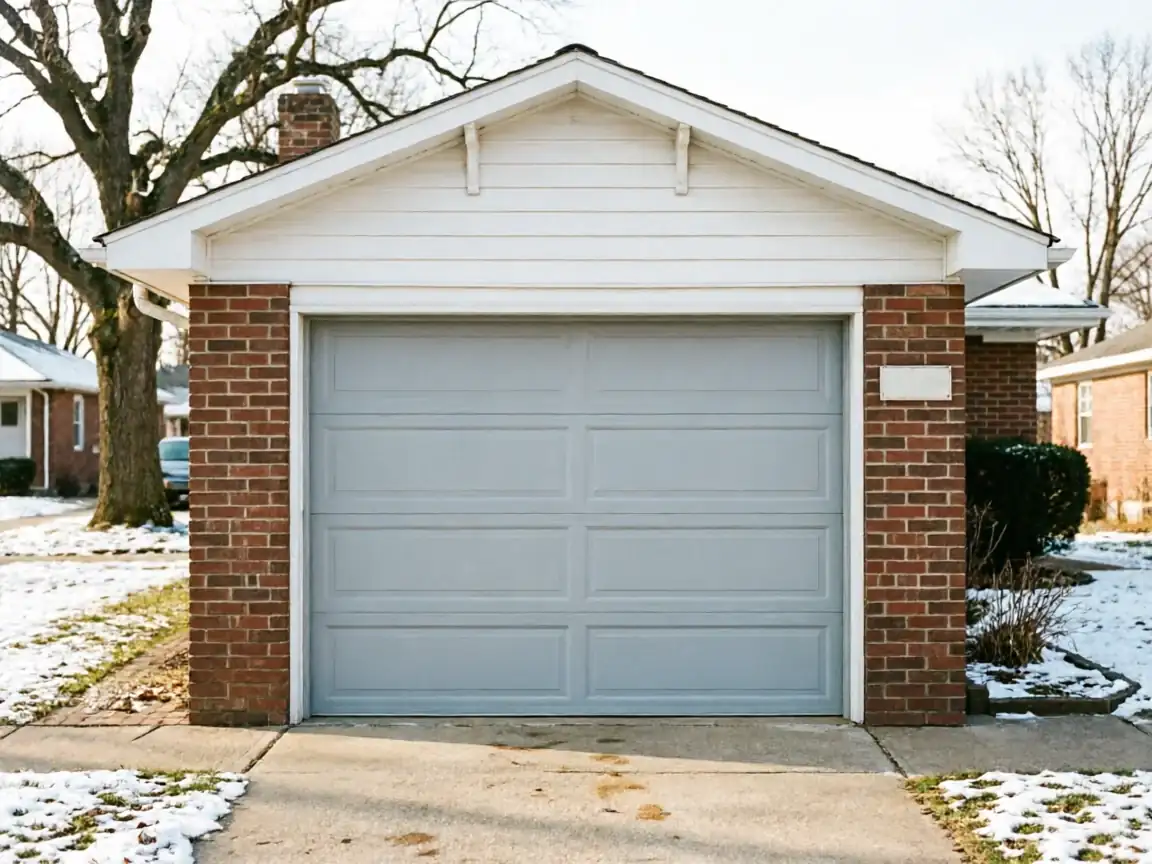
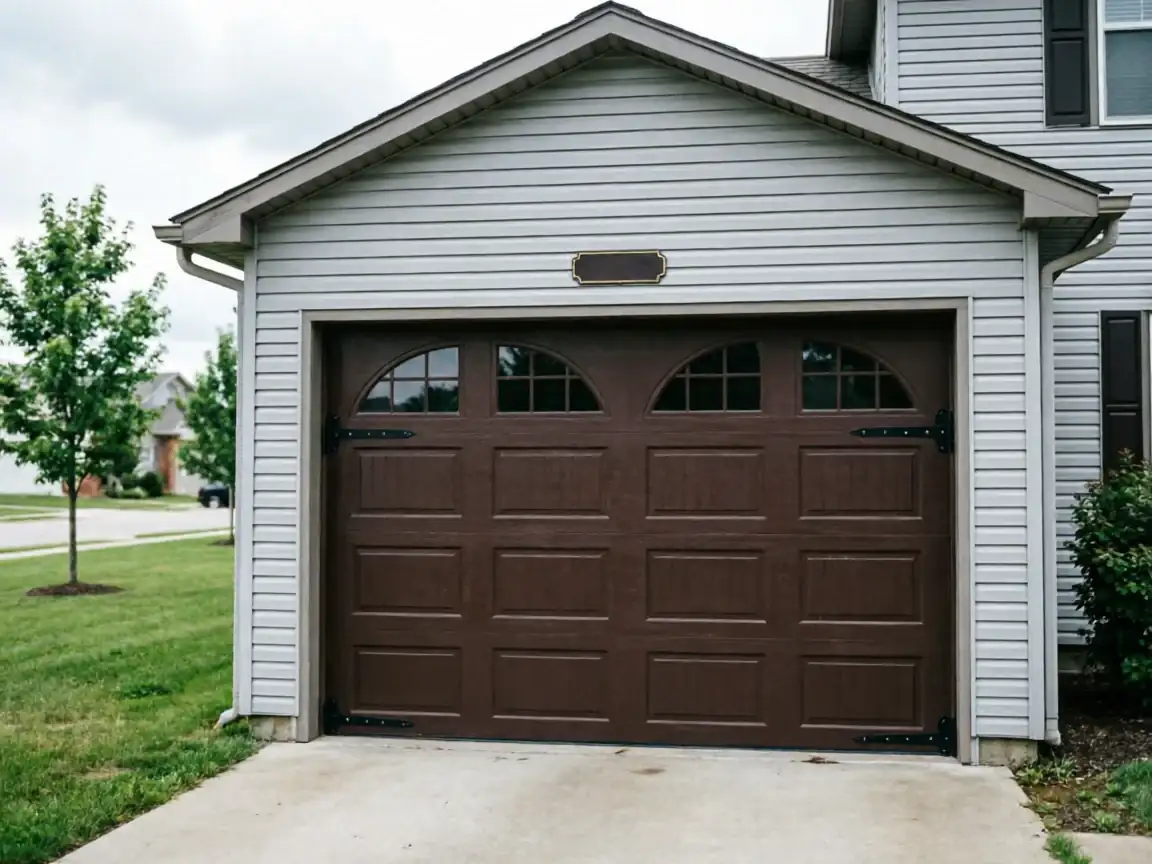
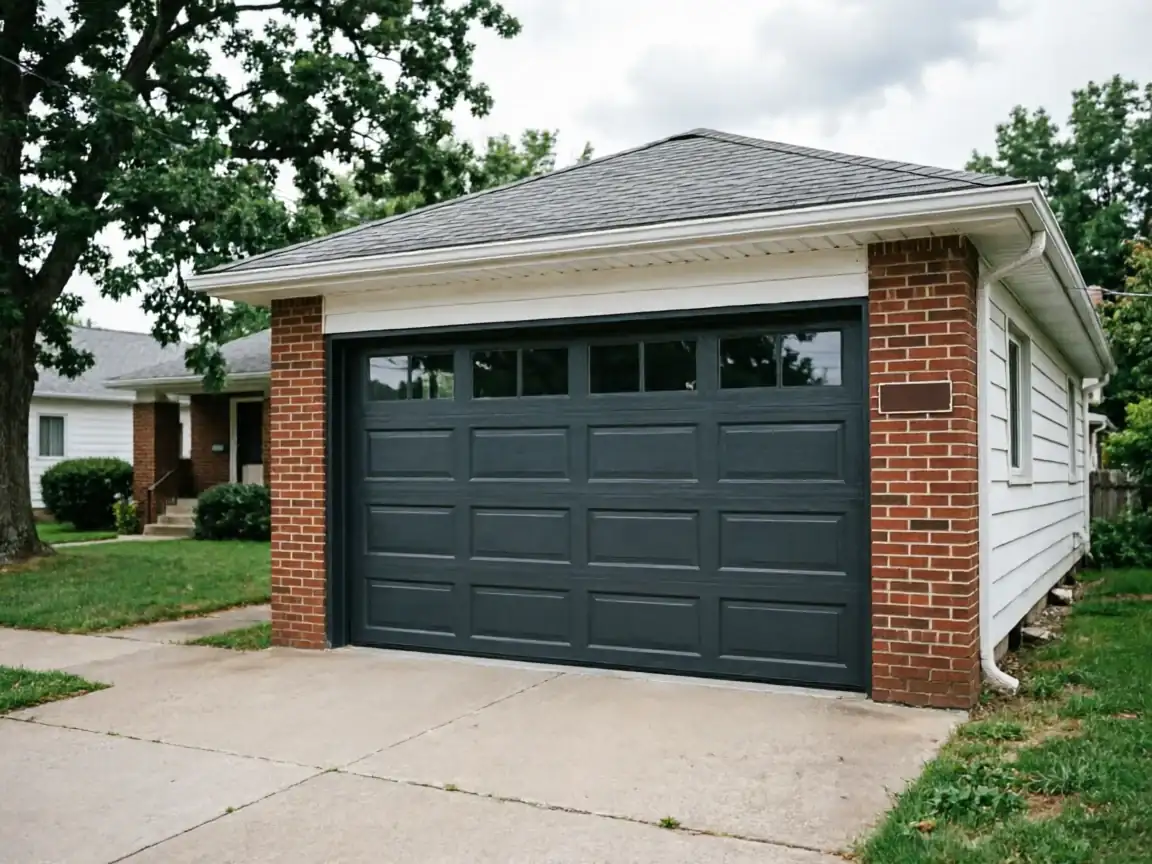
Most houses in Harrisburg were built around 1992, which puts the doors a good 15 years newer than the typical stock across the wider Columbia service area, where the median build year runs closer to 1978. That later build date means Harrisburg mostly has factory steel sectional doors - raised-panel steel skins over a foam core, hung on standard 16x7 or 9x7 tracks, not the older wood or flat one-piece doors you'd find on a 1960s build. Steel holds up fine until the cold gets at it. This area sits in a cold-severe climate band, and that means real freeze-thaw cycling on anything with a seam. A steel panel skin flexes with temperature swings, and where the foam backing meets the steel face, that flex opens tiny gaps. Water gets in during a thaw, freezes again overnight, and the gap grows. After a few winters you get bubbling paint, then rust blooming from the inside out, usually starting at the bottom two panels where road salt and snowmelt sit against the door longest. It is not a design flaw - it is what happens to any steel door of that era in this climate, and it shows up on panels before it shows up anywhere else on the door.
What You Are Seeing
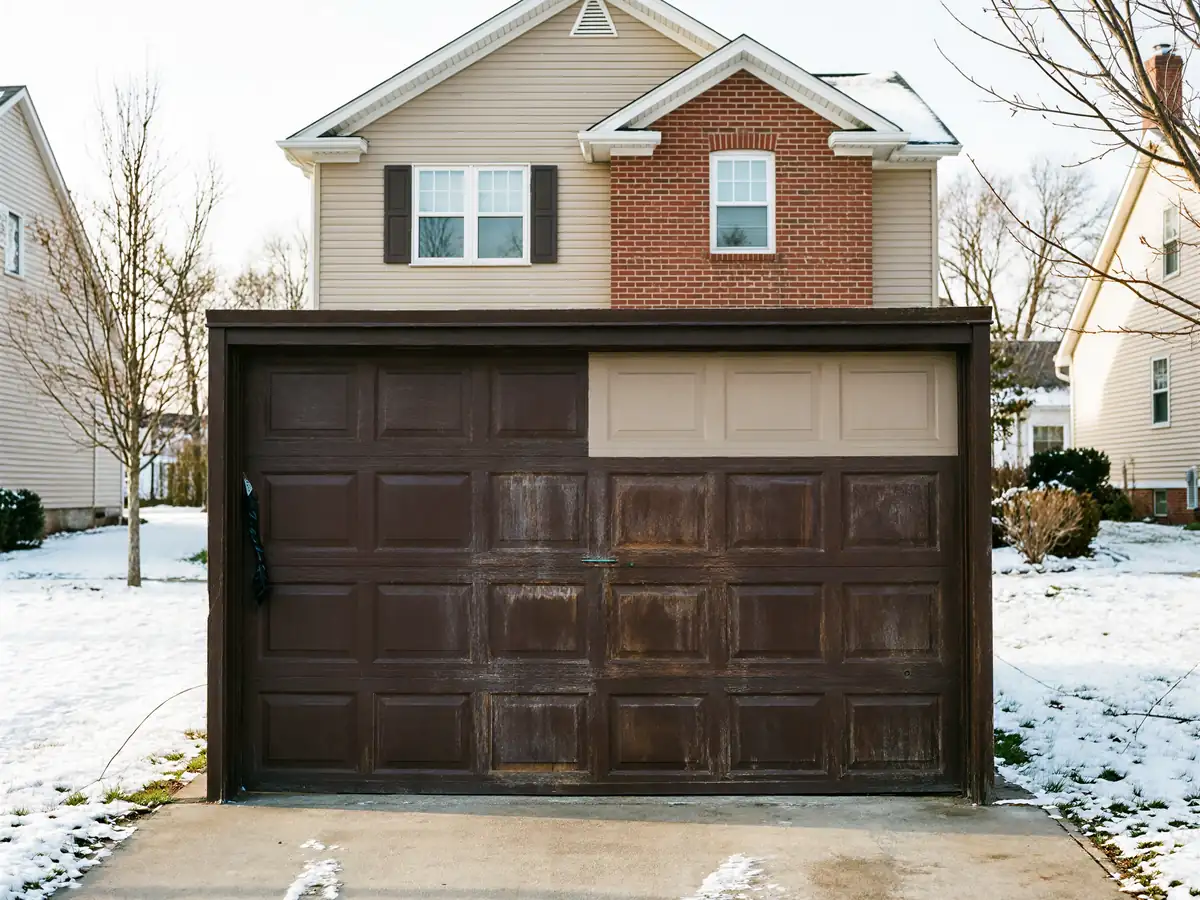
On a door built to 1990s specs, panel failure usually looks like one of three things. First: a crease or dent from a car bumper or a wind-thrown branch, which on steel doesn't pop back out - the metal skin stays bent and the foam core behind it cracks along the fold. Second: rust lines running along a horizontal seam, usually bottom panel first, which means the paint seal failed and moisture has been working under the surface for a while, not overnight. Third: a panel that looks fine from six feet but rattles or flexes when the door runs, which usually means the foam-to-steel bond has let go and the panel is basically two thin skins doing nothing structural anymore. None of these are cosmetic once they've gone this far - a cracked or delaminated panel changes how the whole section carries weight, which puts extra load on the rollers and the spring doing the lifting. If your door is from that early-90s wave, you're looking at a panel that's reaching the end of a steel skin's working life, not a one-off dent.
Booking a Visit
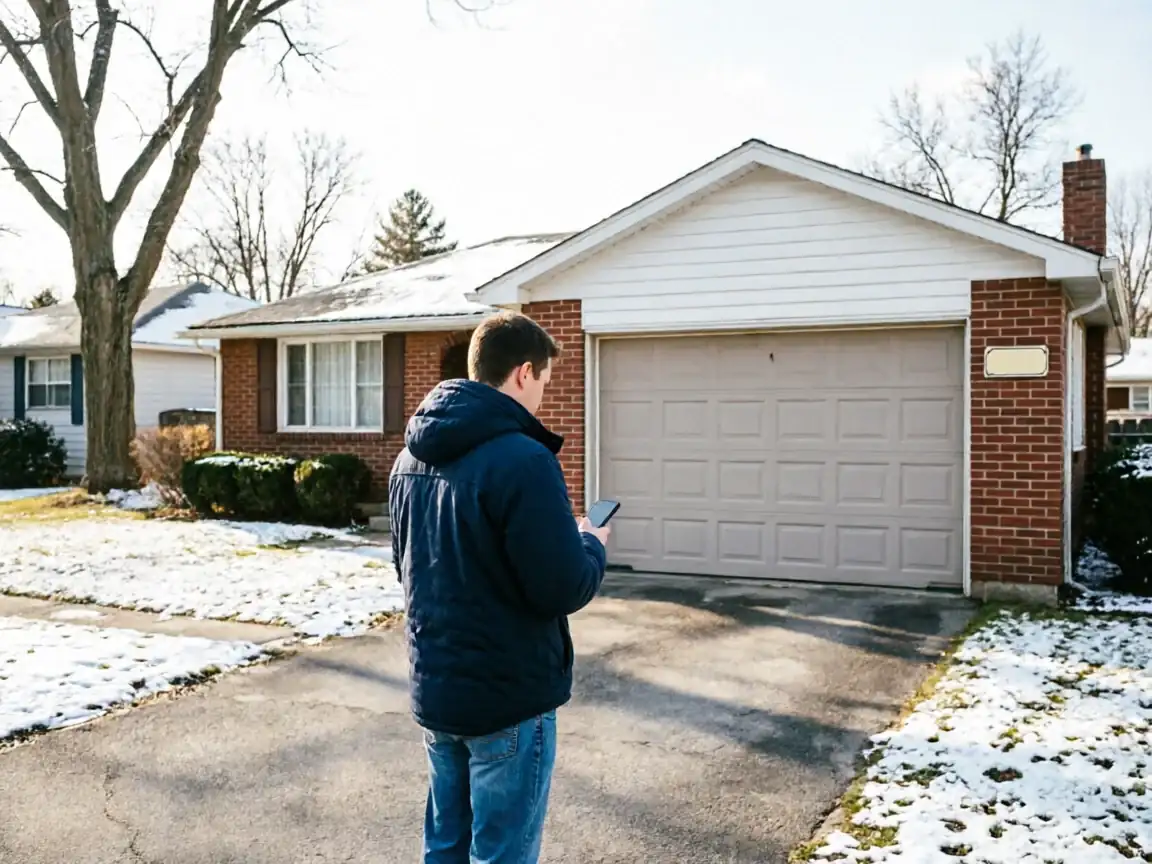
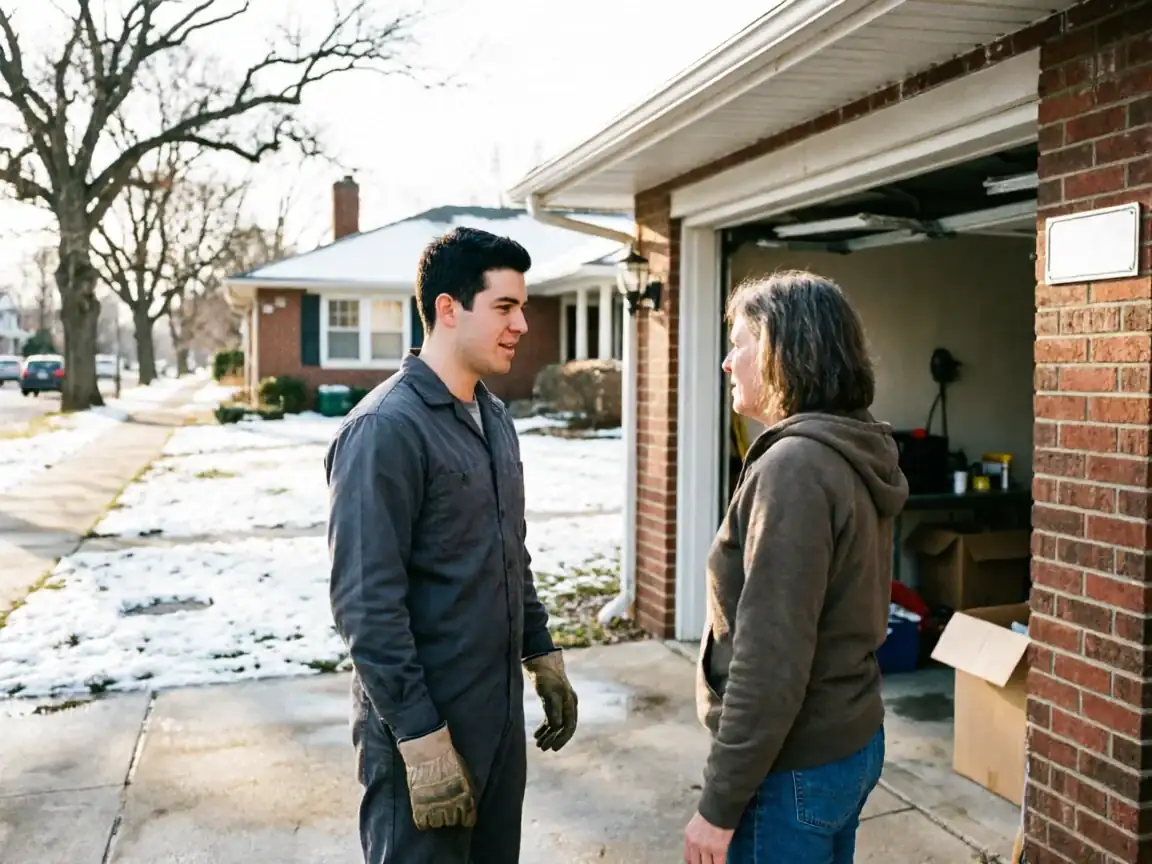
We run out of Columbia, about 15 miles from Harrisburg, so there's no local branch to swing by - every visit here is a scheduled trip, not a drop-in. When you call, have the door's brand and approximate age ready if you know it (a build date around 1992 usually narrows the panel profile fast), and a photo of the damage if you can get one, since panel stock and colors vary enough that we want to know what we're matching before the truck leaves. We'll tell you up front whether a single panel swap makes sense or whether the full door is the better call given its age. See the <a href="/service-area/harrisburg/">Harrisburg service area page</a> for how we cover the area, and the <a href="/garage-door-panel-replacement-columbia-mo">Columbia panel replacement page</a> for the full rundown on the service itself.
Can You Do This Yourself
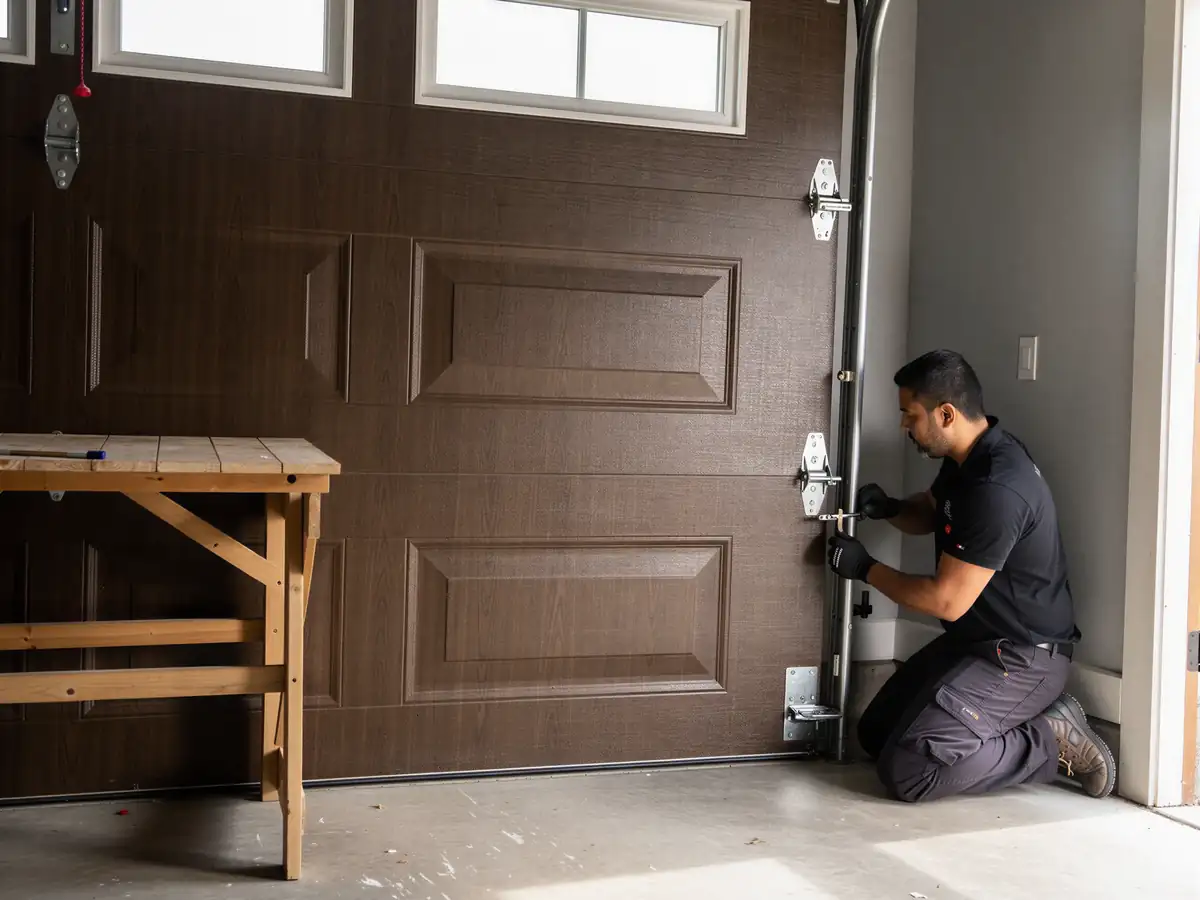
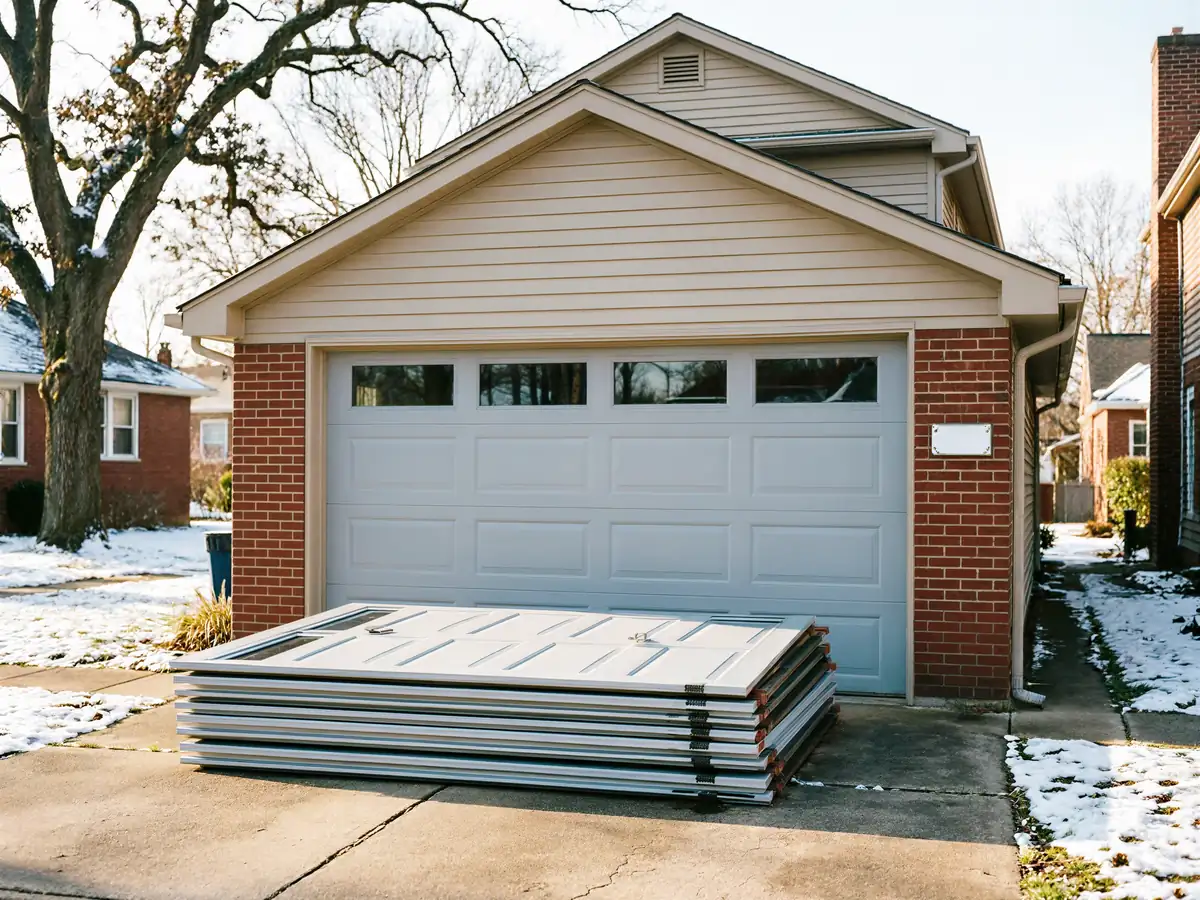
A single dented panel on a steel sectional door is replaceable without swapping the whole door, and if you're handy, removing the old panel and bolting in a new one is within reach. The hard part isn't the labor - it's finding the exact panel profile and color match for a door that's over thirty years old, since manufacturers change panel tooling and powder-coat colors over the decades and a lot of older runs are simply discontinued. We won't pretend we can always source an exact match either; sometimes the honest answer is that a close match is the best anyone gets, or that replacing the whole door costs barely more than chasing down one obsolete panel. If the rust has gone past the surface and into the foam core, patching that panel is a short-term fix at best - at that point you're buying time, not solving the problem.
How it works
From “it’s stuck” to “it’s fixed”
01
Tell us what’s wrong
Describe the symptom - won’t open, loud bang, opener runs but the door won’t move.
02
On-site diagnosis
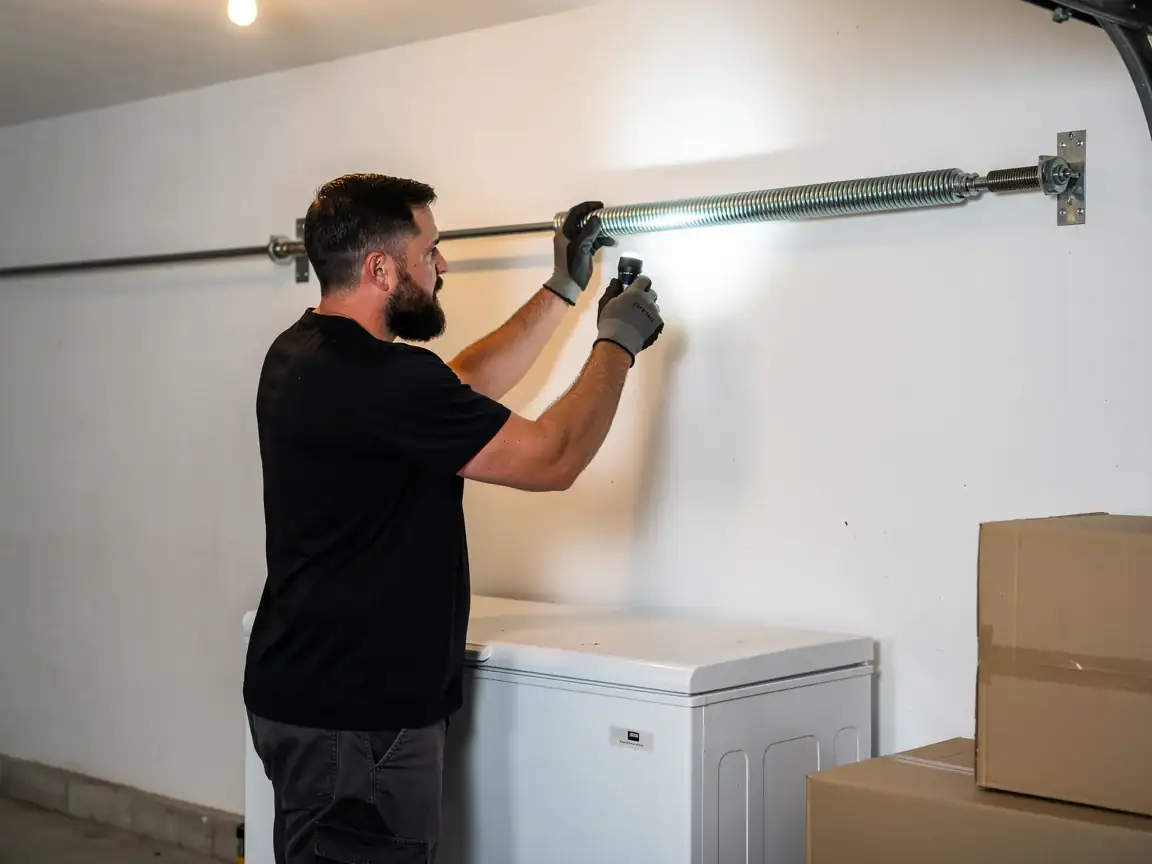
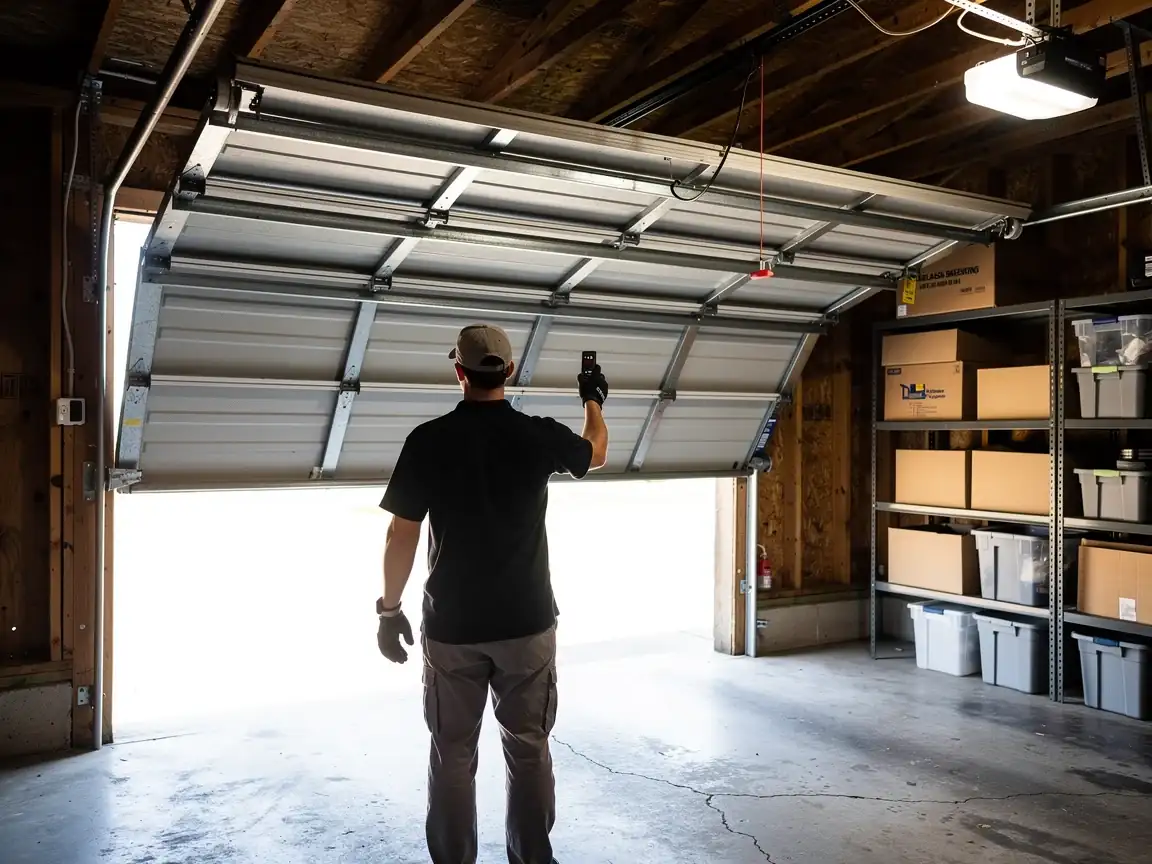
A technician tests the door under power and by hand and finds what actually failed.
03
Clear, up-front plan
You get the fix that’s needed and what drives the cost - before any work starts.
04
Repaired & tested
The repair is done, the door is set true and tested, and the work area left clean.
Not sure which repair your door needs in Columbia, MO? Describe what it’s doing - every job starts with a diagnosis.
Why does my Harrisburg garage door panel keep rusting at the bottom?
Most Harrisburg houses were built around 1992, which means factory steel sectional doors. In this area's cold-severe climate, freeze-thaw cycling works moisture into the seam where the steel skin meets the foam core, and the bottom panel sits in snowmelt and runoff longest. Once paint seal fails there, rust works from the inside out, not the surface in.
Can one panel be replaced, or does the whole door need to go?
If the door frame and other panels are sound, a single panel swap is often enough. The limiting factor is usually finding a matching panel profile and color for an older door - manufacturers retire tooling and finishes over time, so on a door from the early 90s, matching stock isn't guaranteed.
Do you have a crew based in Harrisburg?
No, we work out of Columbia, about 15 miles away, and come out to Harrisburg on scheduled visits rather than keeping a local branch. Call ahead with the door's age and a photo of the damage so we know what panel stock to bring.
Is it worth fixing a delaminated panel instead of replacing the door?
It depends on how far it's gone. A panel where the foam core has separated from the steel skin is structurally weak even if it still looks okay from a distance, and patching it is usually a short-term fix. If more than one panel shows the same wear, replacing the full door is often the better money.
Ready to get your garage door sorted?
Tell us what it’s doing and where you are in Columbia - we’ll take it from there.