What the Fix Involves
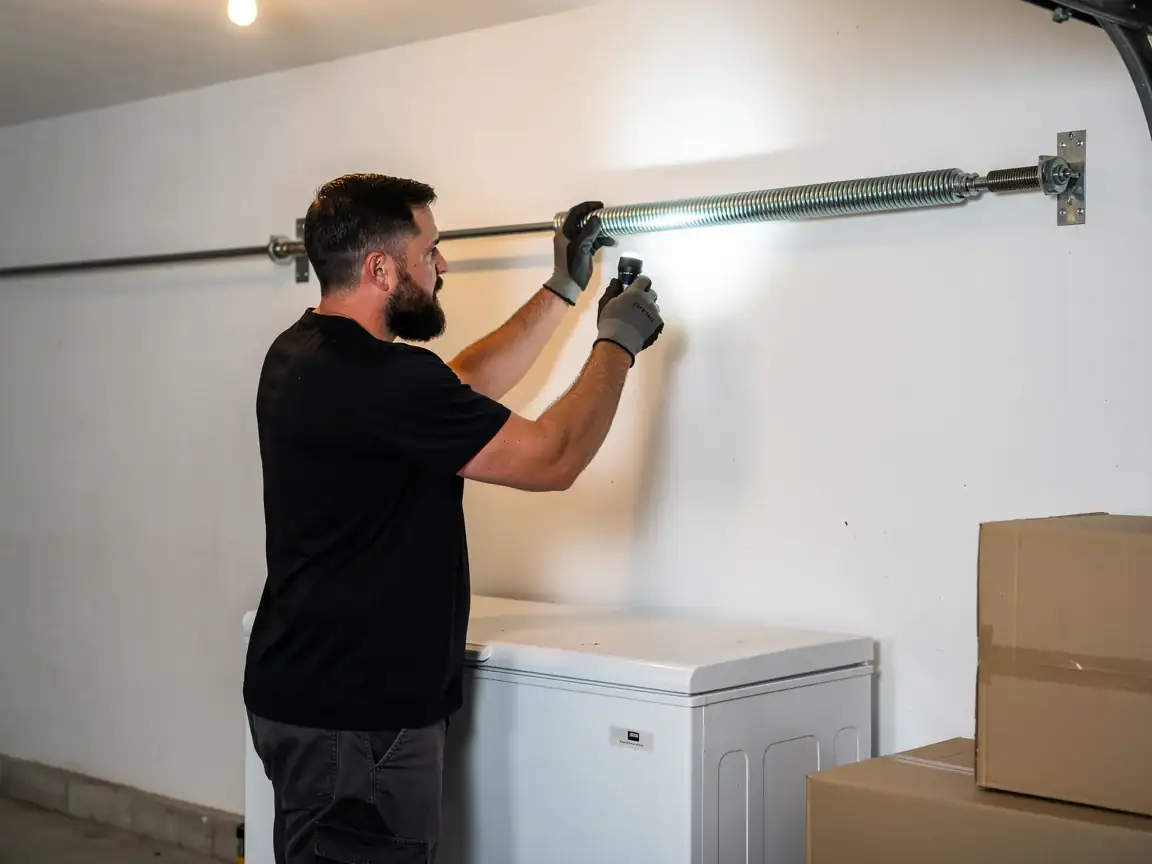
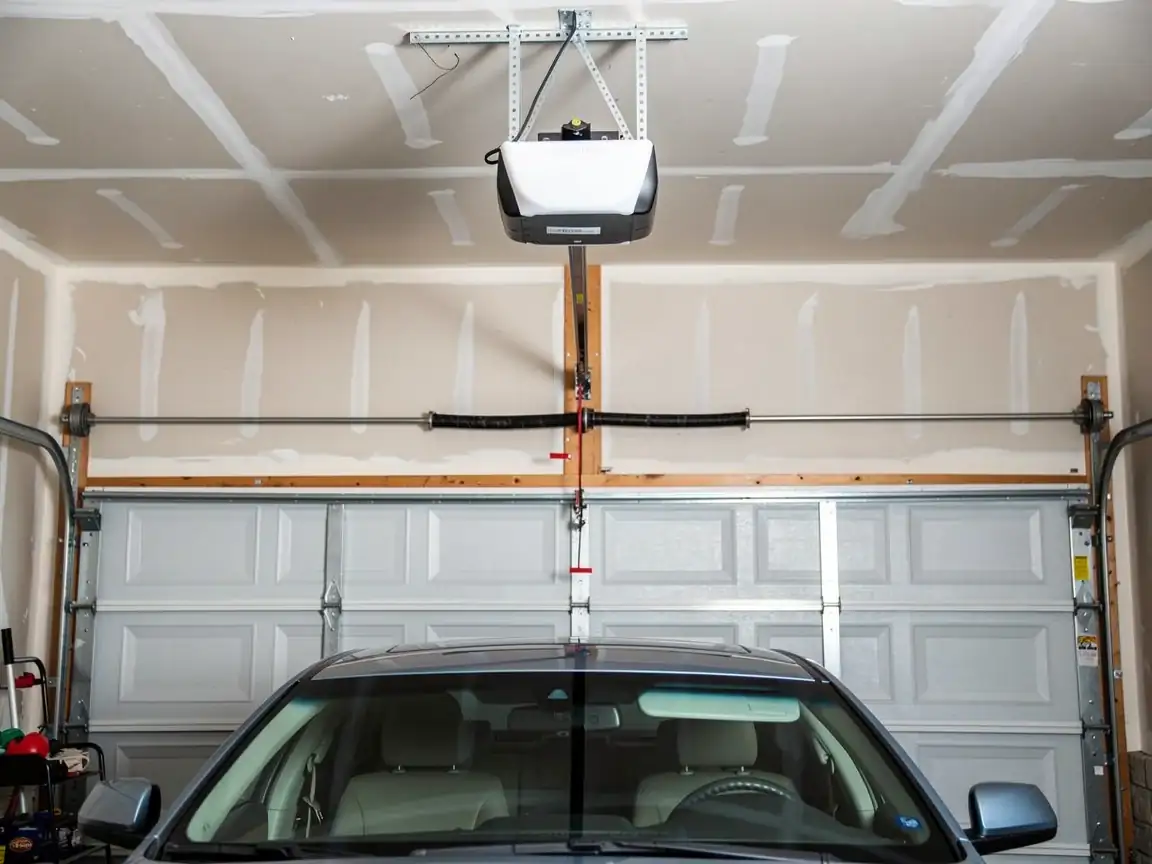
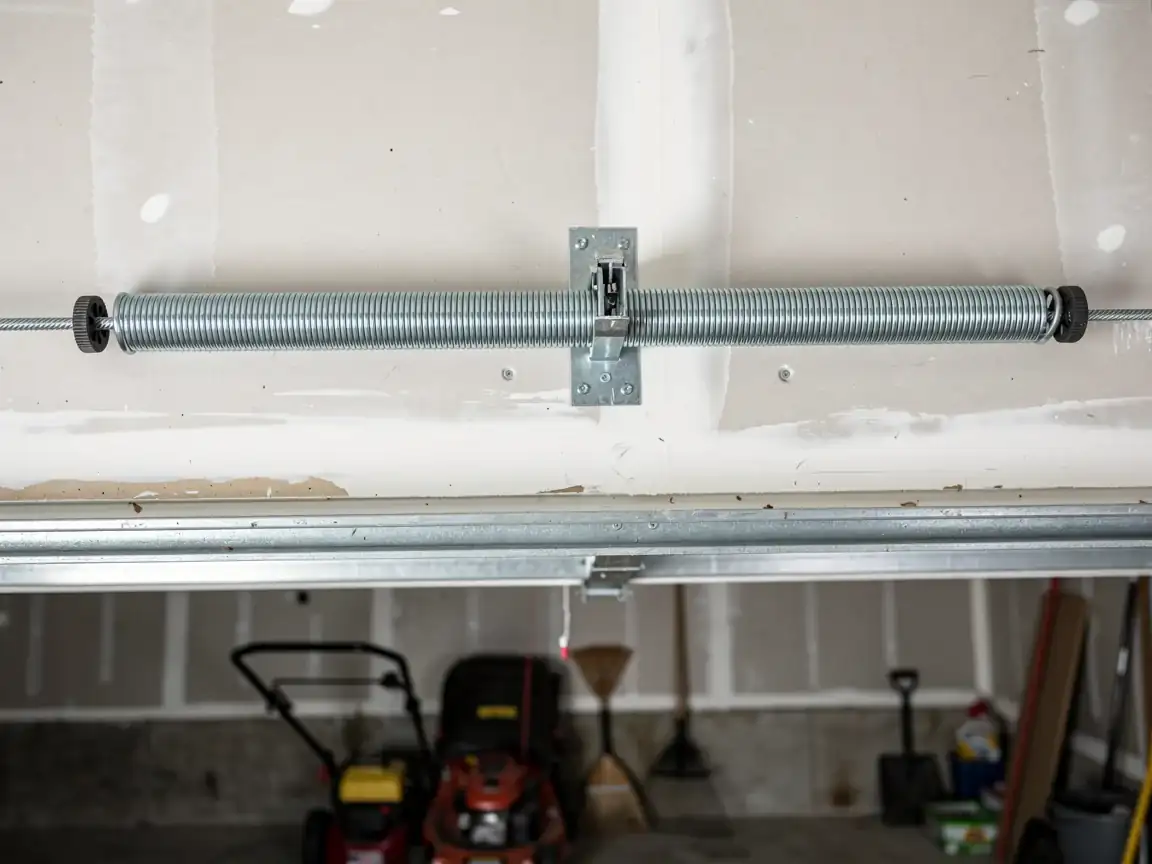
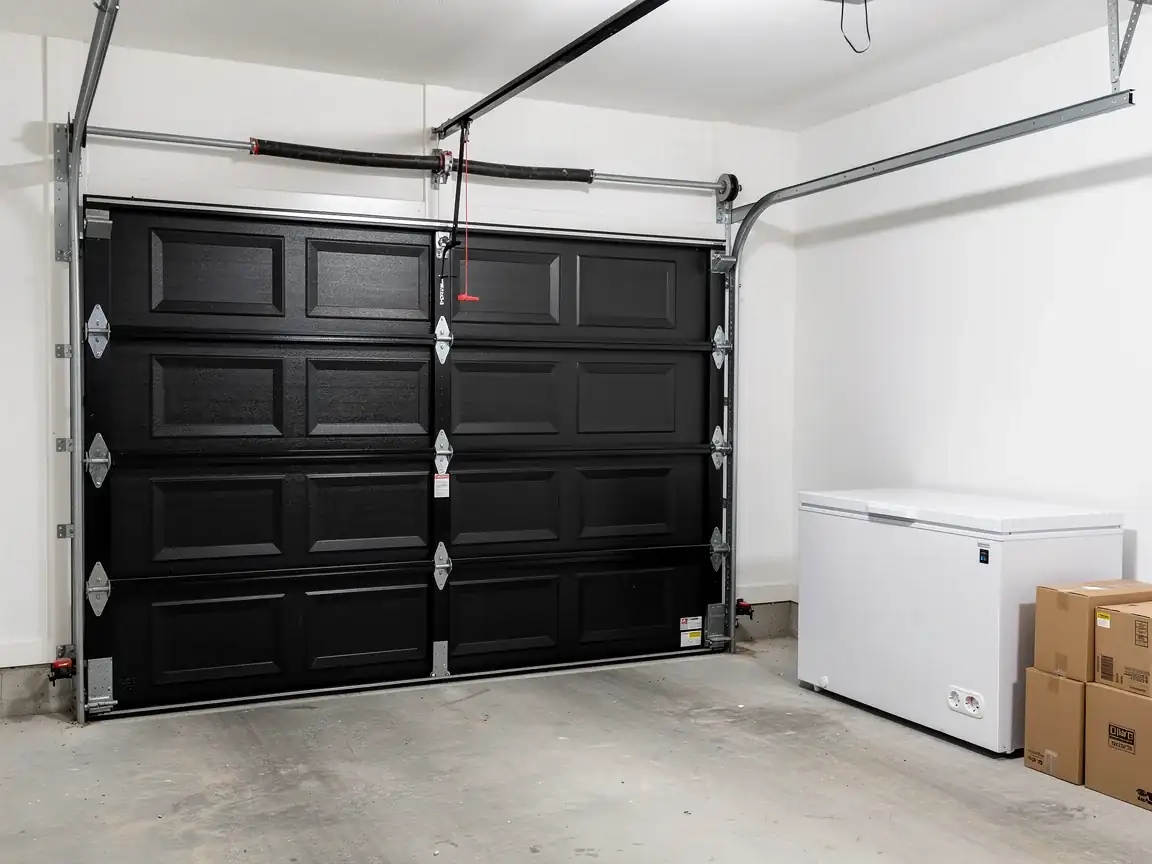
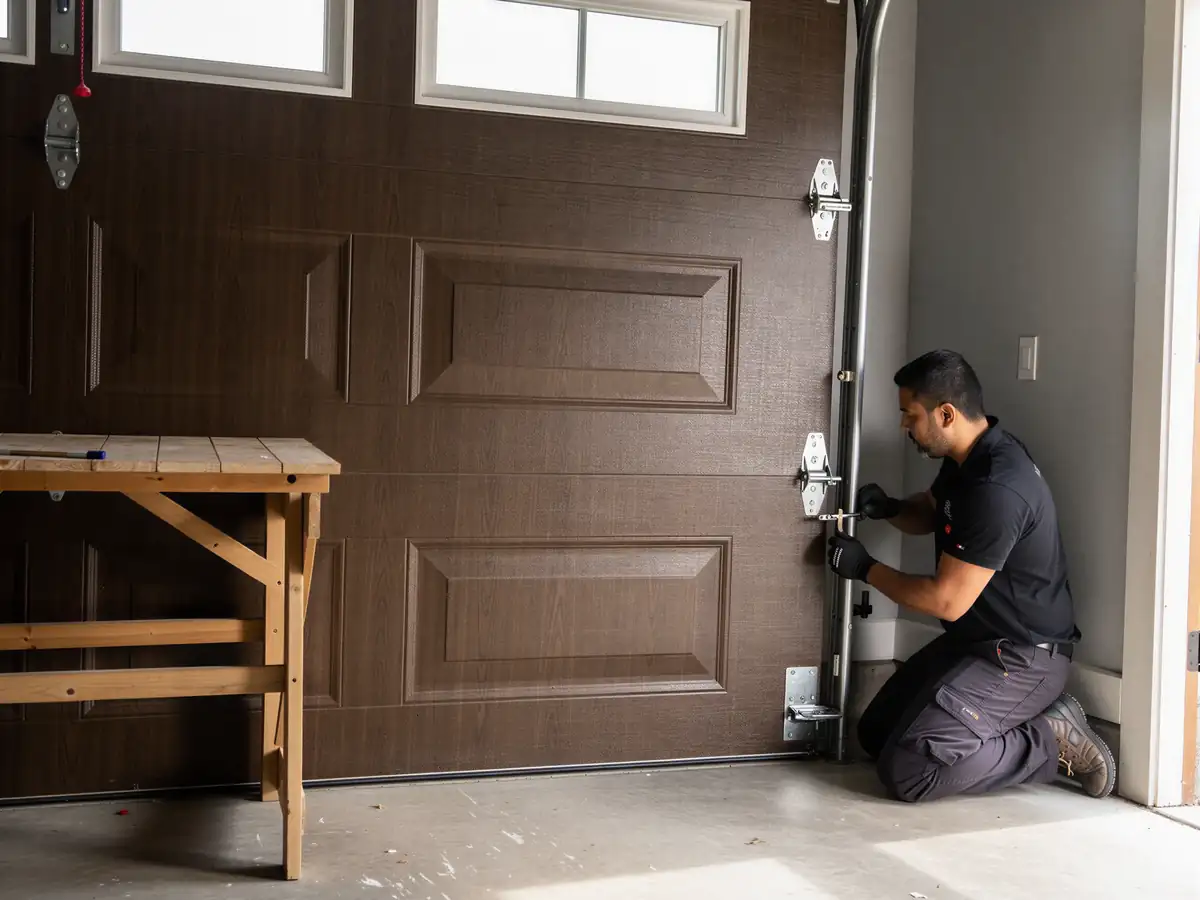
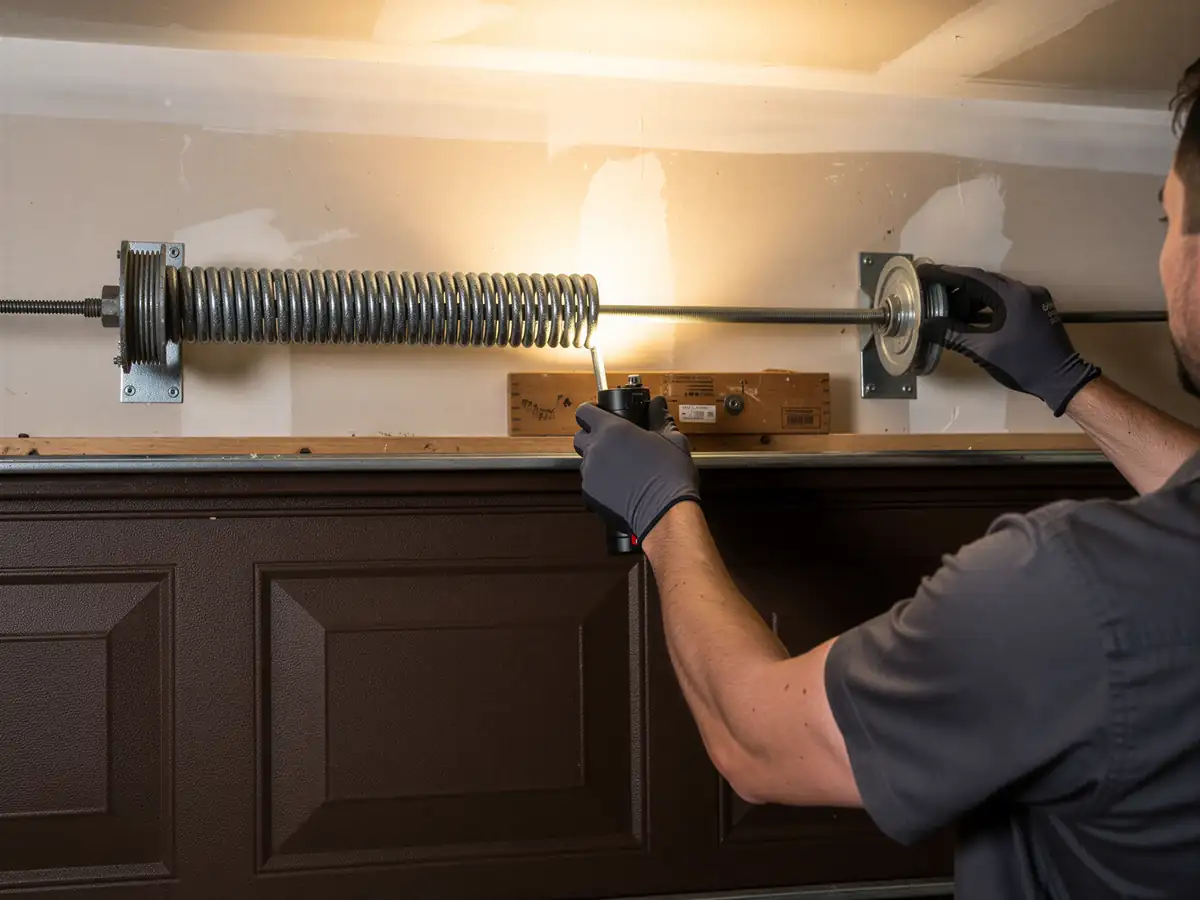
We don't just replace the broken strand - on a door this old we pull both cables as a pair, because if one let go from age the other is on the same clock. We check the drums for grooving where the old cable wore a channel, since a new cable riding in a worn groove will fray again inside a year. If the door still has its original track and the mounting holes have stretched or rusted, that gets addressed before the cable goes back on, not after. Tension on the spring side gets reset to match the door's actual weight, not just eyeballed - on older one-piece or narrow-panel doors the weight distribution isn't always what a newer door's spring chart assumes. We test full cycles afterward, both by remote and by hand, listening for drag at the drum.
What You Are Seeing
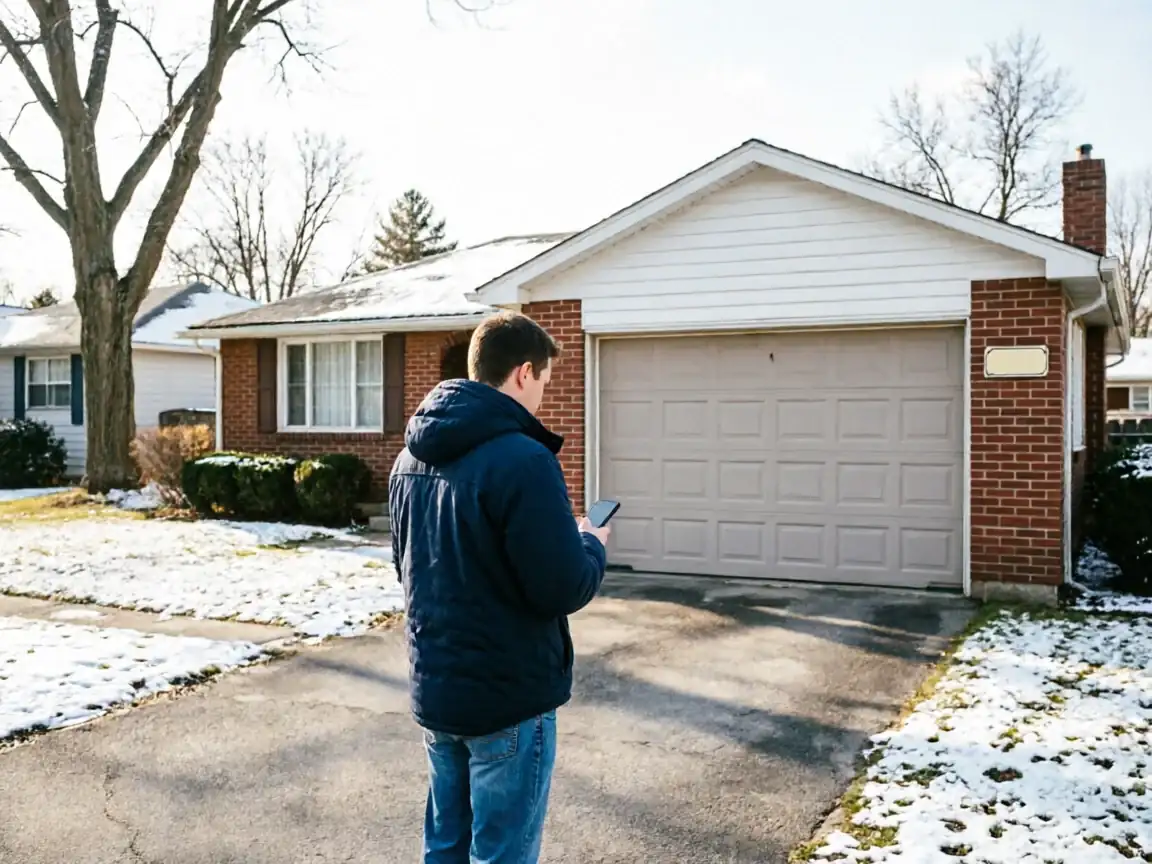
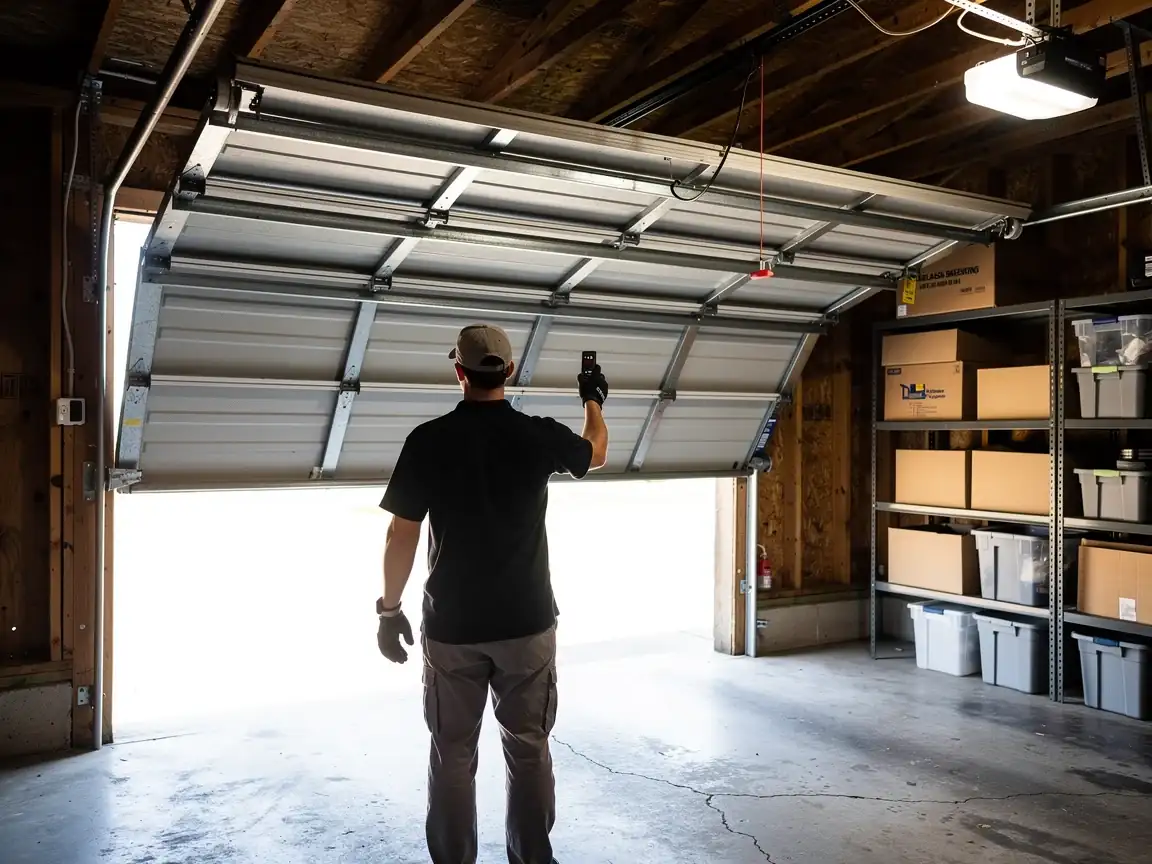
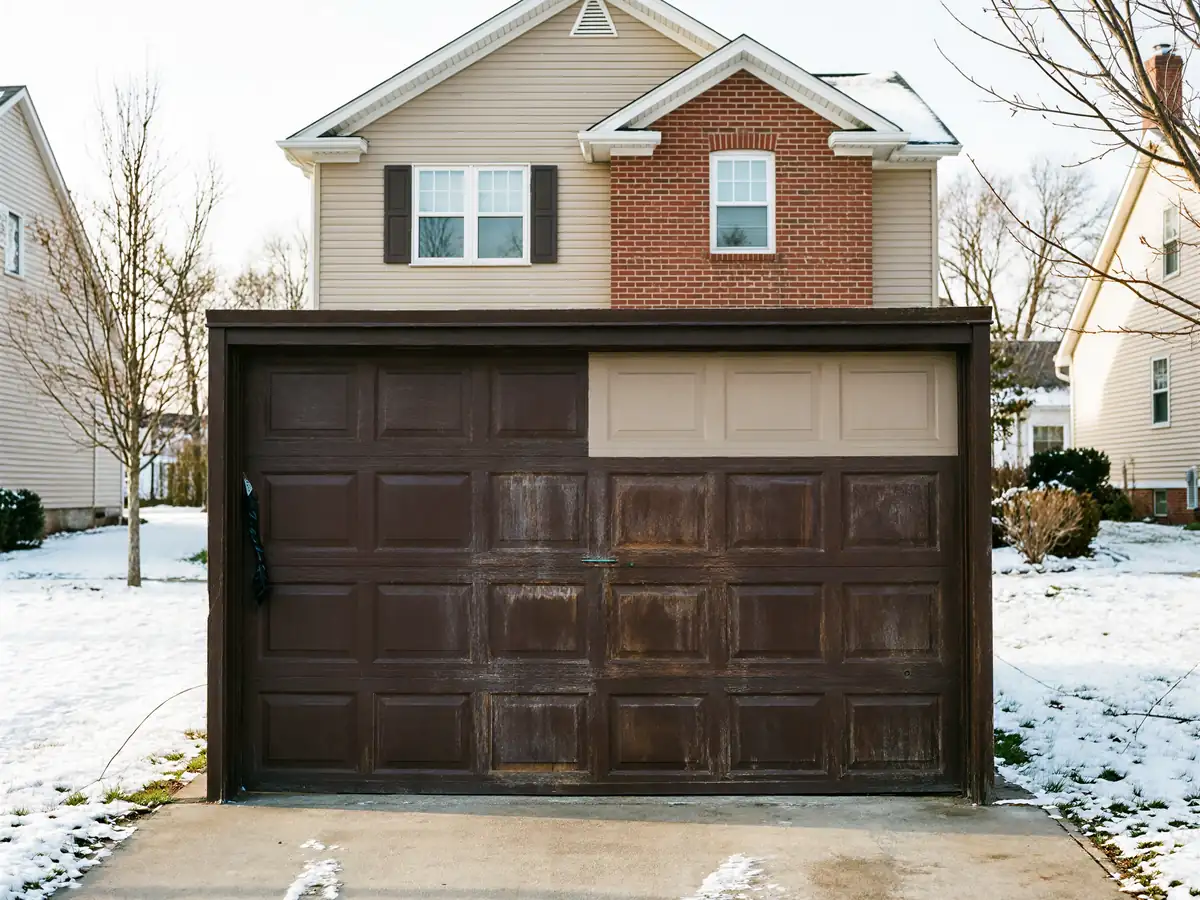
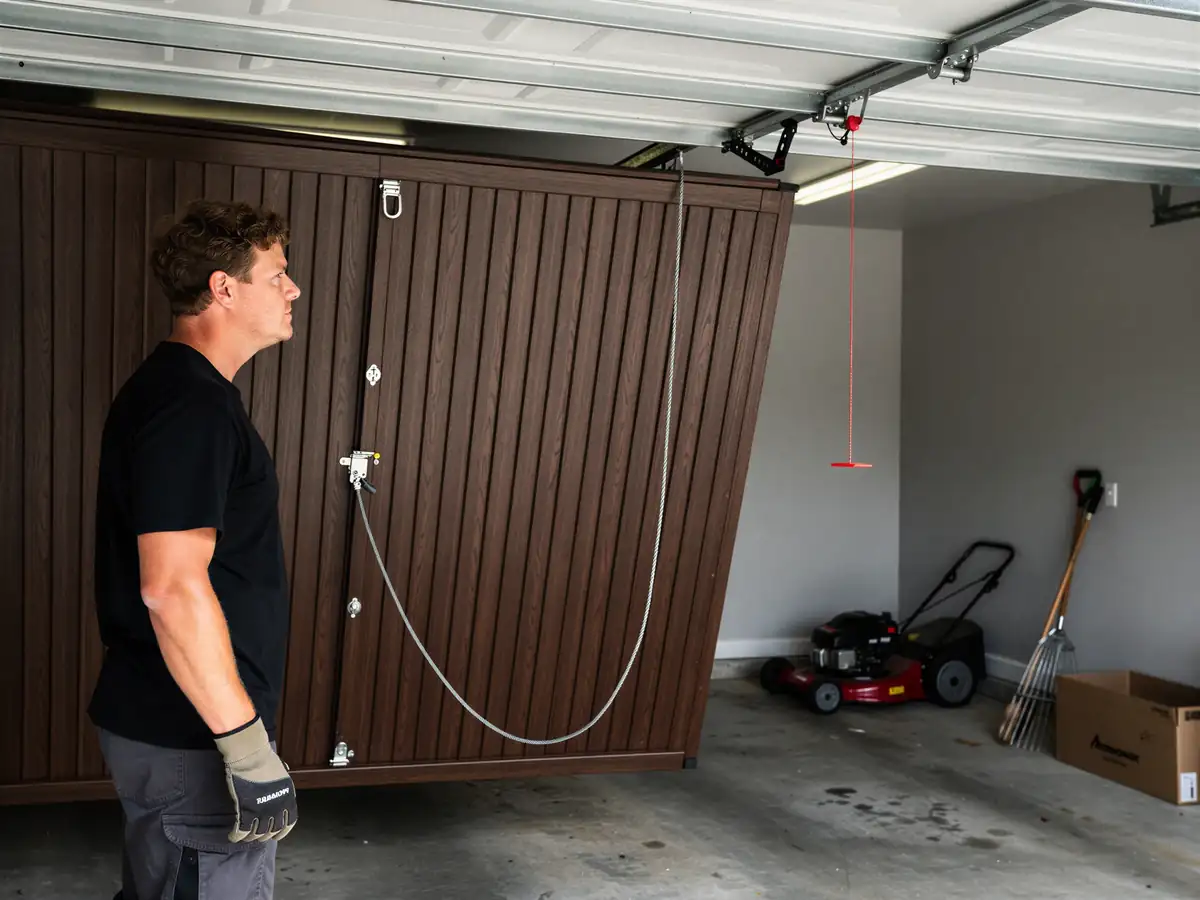
A door that's gone crooked in the opening, dropping on one side while the other stays put, usually means one cable has slipped off the drum or frayed through. If you see a tangle of wire bunched at the bottom bracket, or the door won't budge and the opener just strains against it, that's the cable, not the opener. Sometimes it's quieter - a slow list to one side over a few weeks as strands give out one at a time before the final snap. On older doors with no safety cable installed, a sudden break can let the door drop hard and fast, which is the reason we don't recommend DIY cable work on anything built before the newer safety-cable standard.
What It Costs
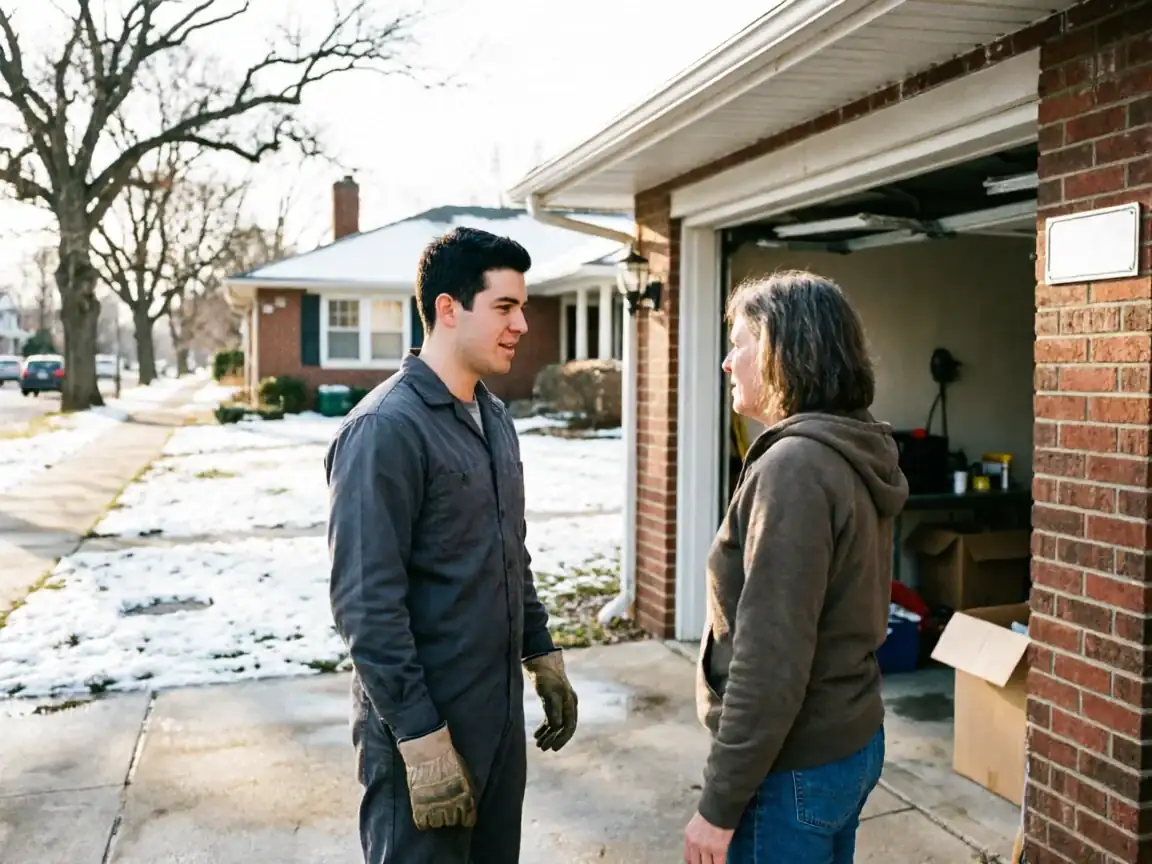
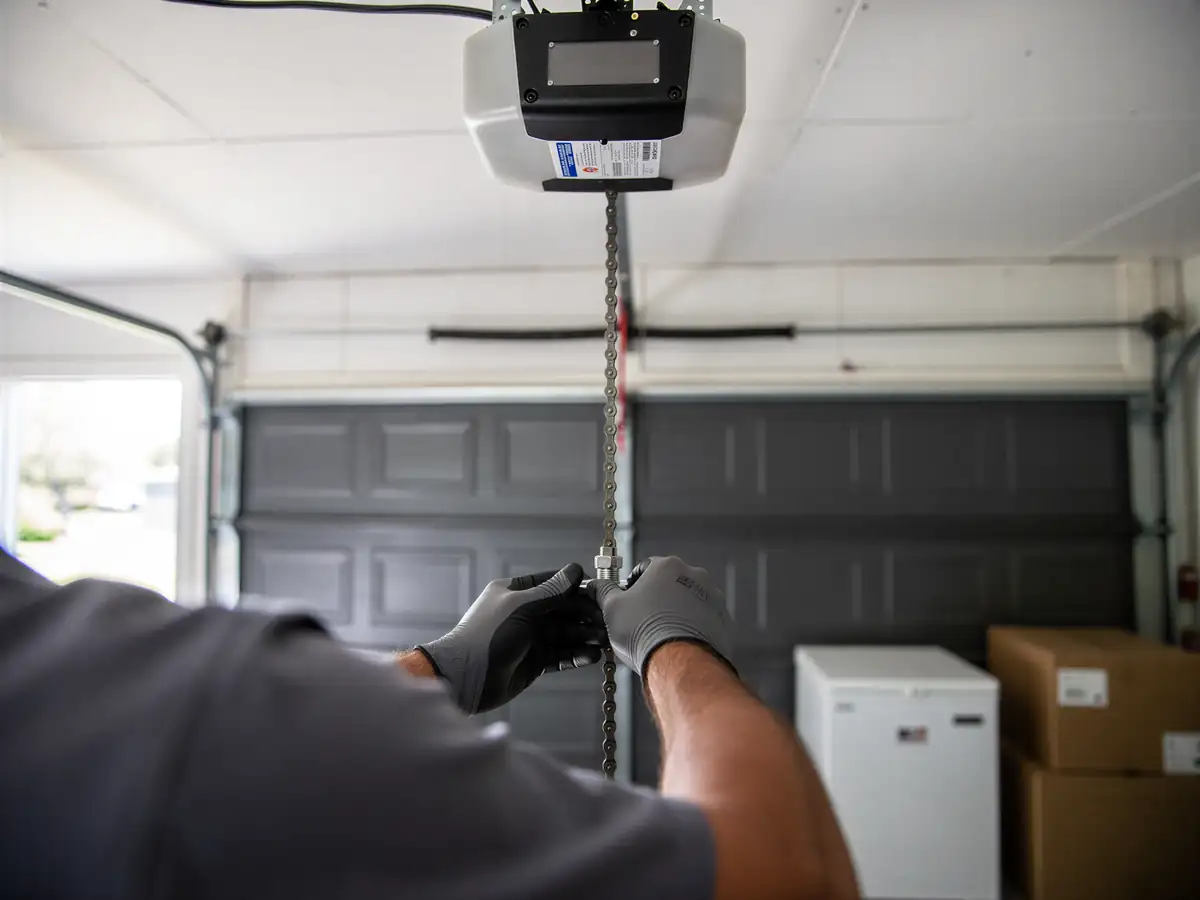
We don't have a flat number to post for this - cable repair on a straightforward door is a different job than one where the drums are grooved or the shaft needs freeing up, and we're not going to guess a price without seeing the door. What we can tell you is that a cable-only repair is a lot less than a full spring and hardware replacement, and on a door with a median build year as old as 1938, it's worth asking us to look at the whole lift system while we're there rather than fixing the cable twice in two years. If the drums or shaft are too far gone, we'll say so before we start charging for parts that won't hold.