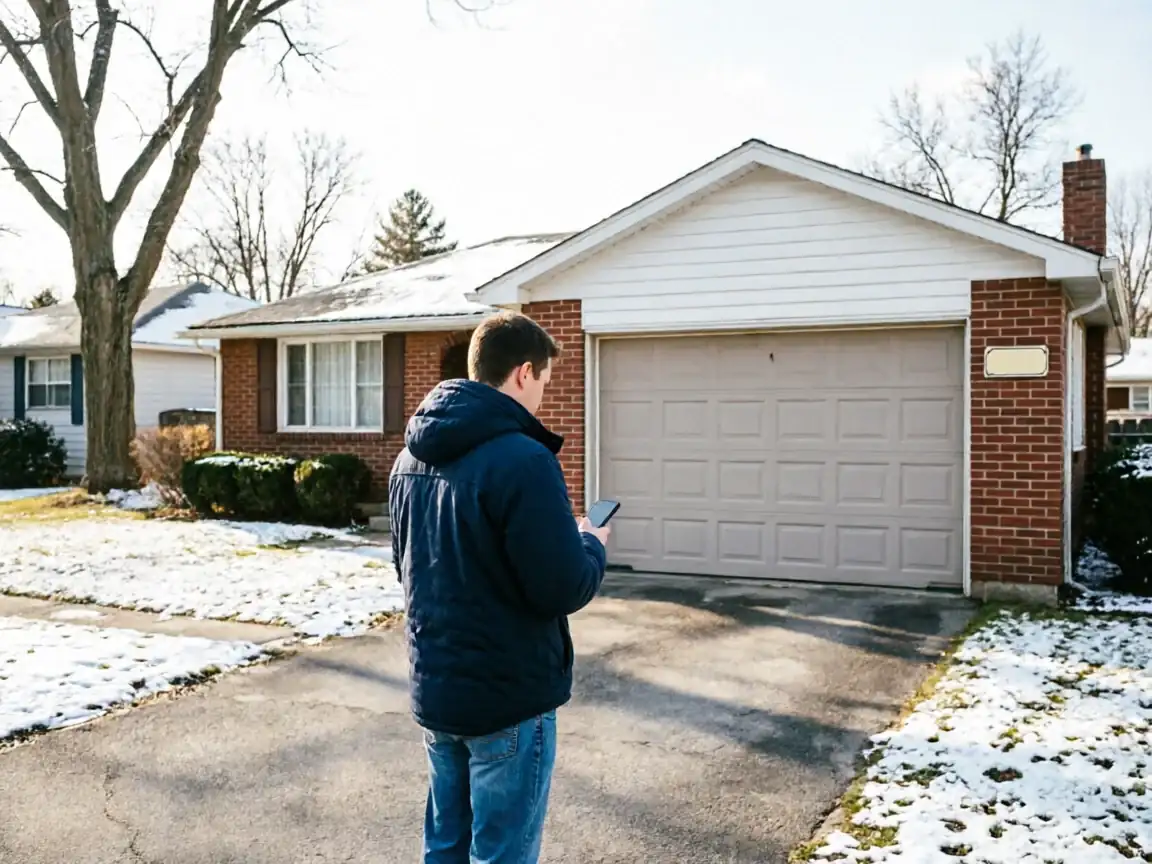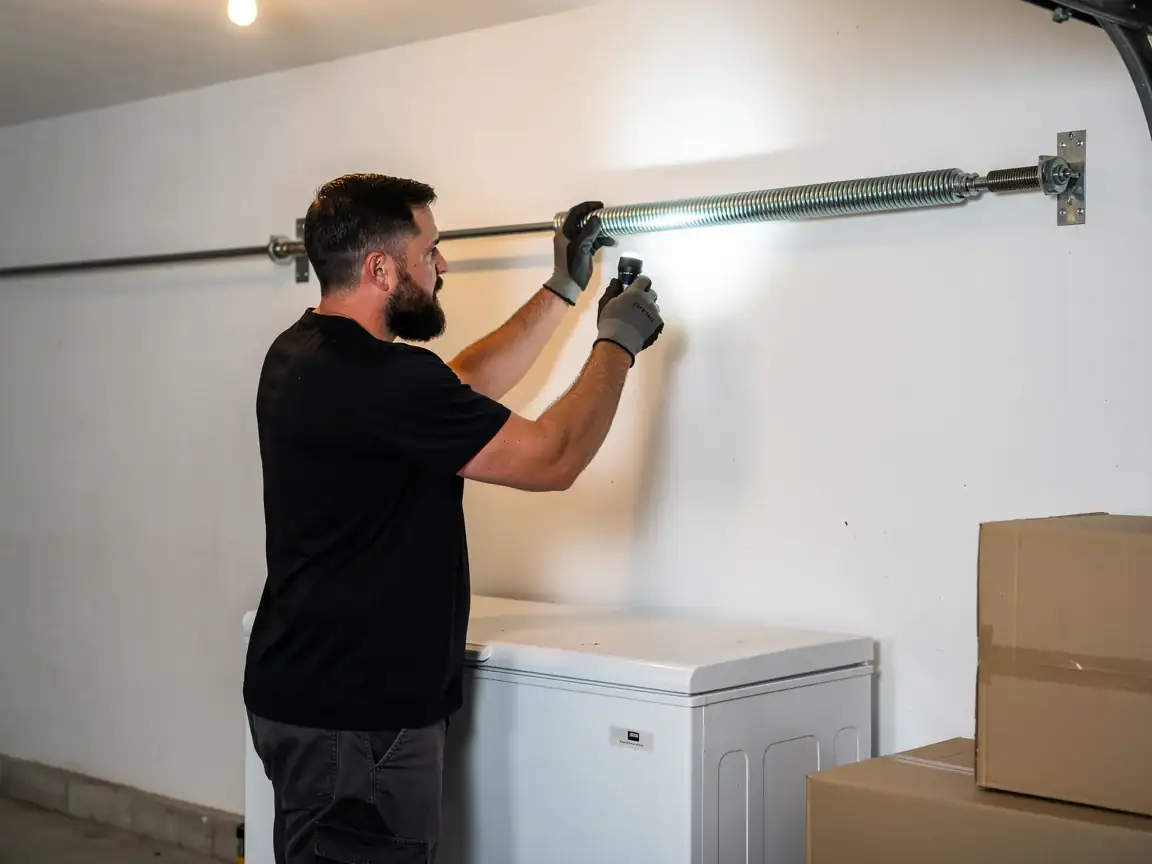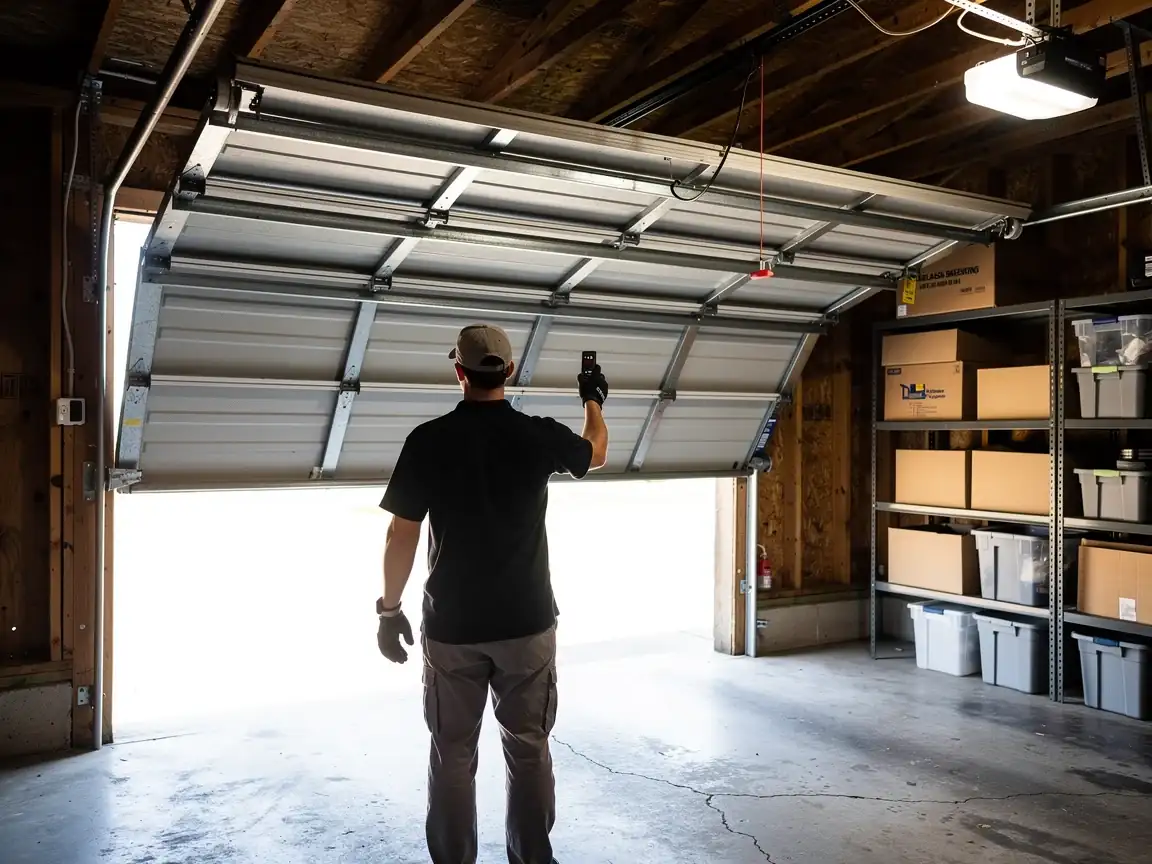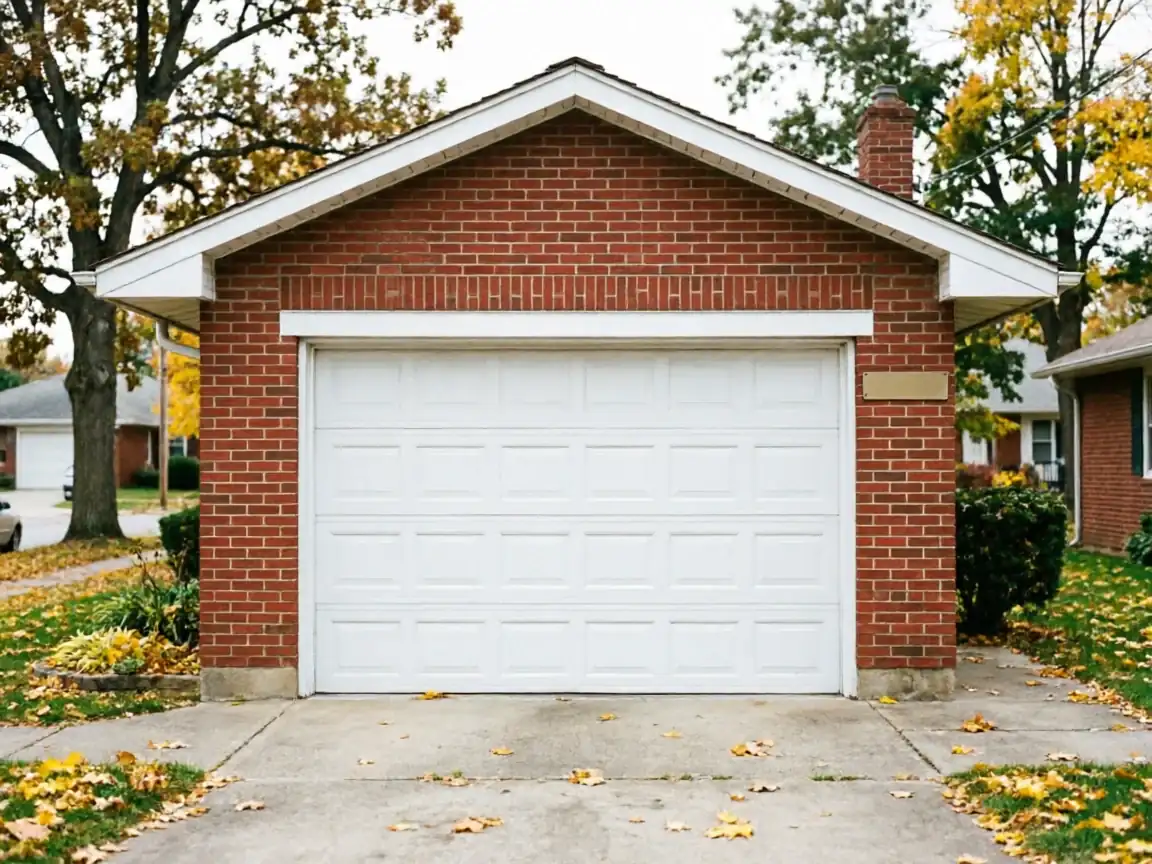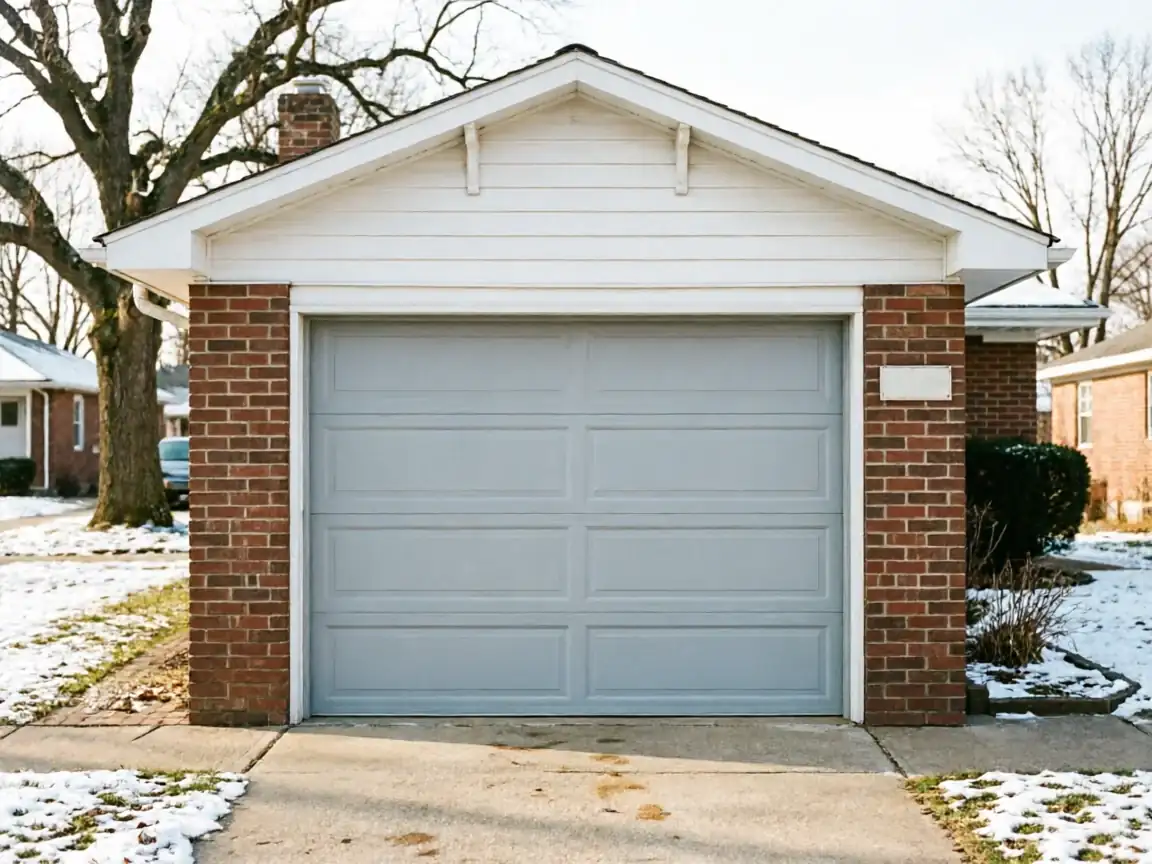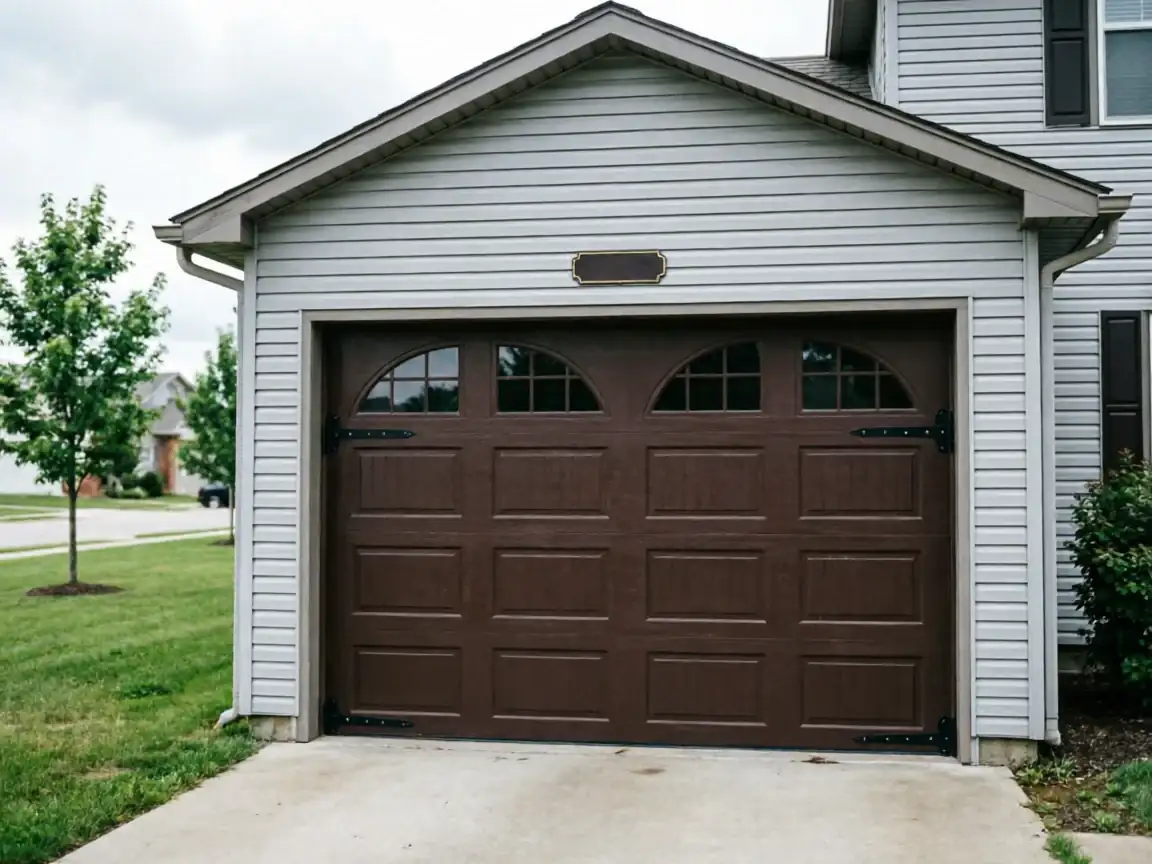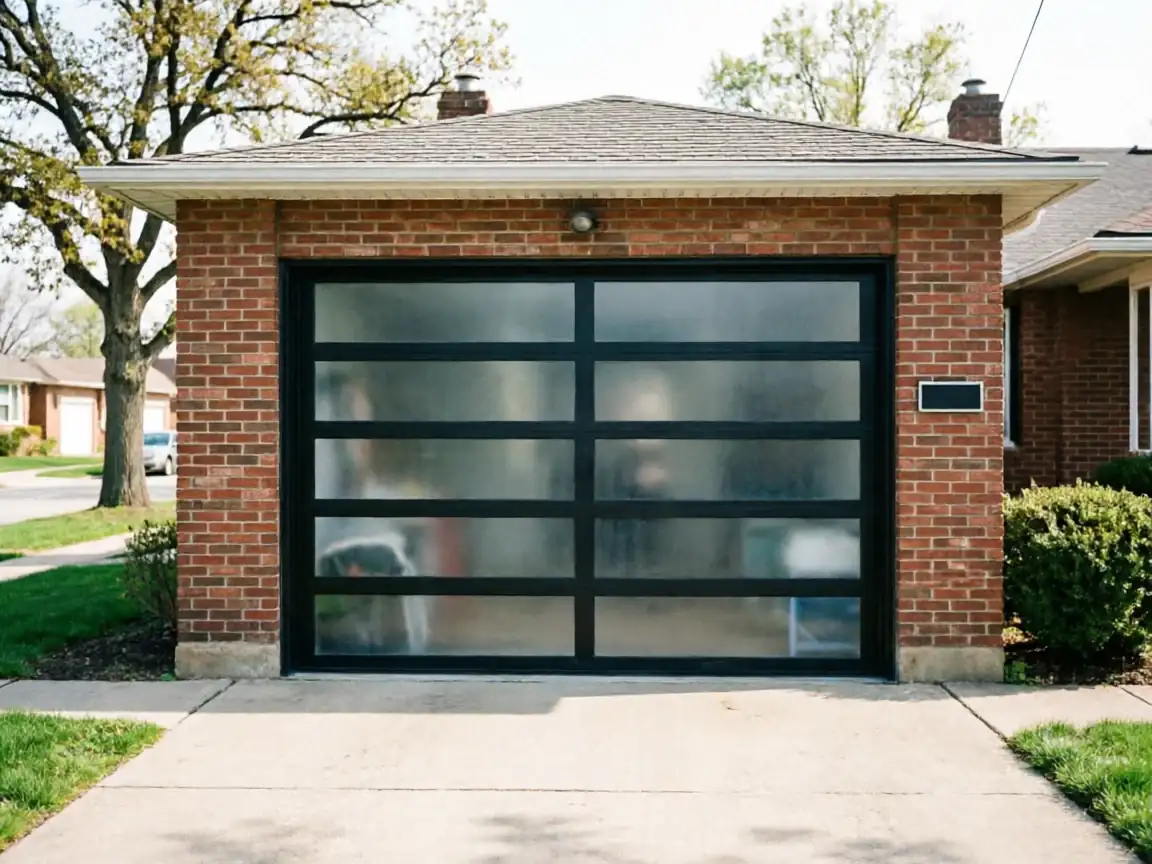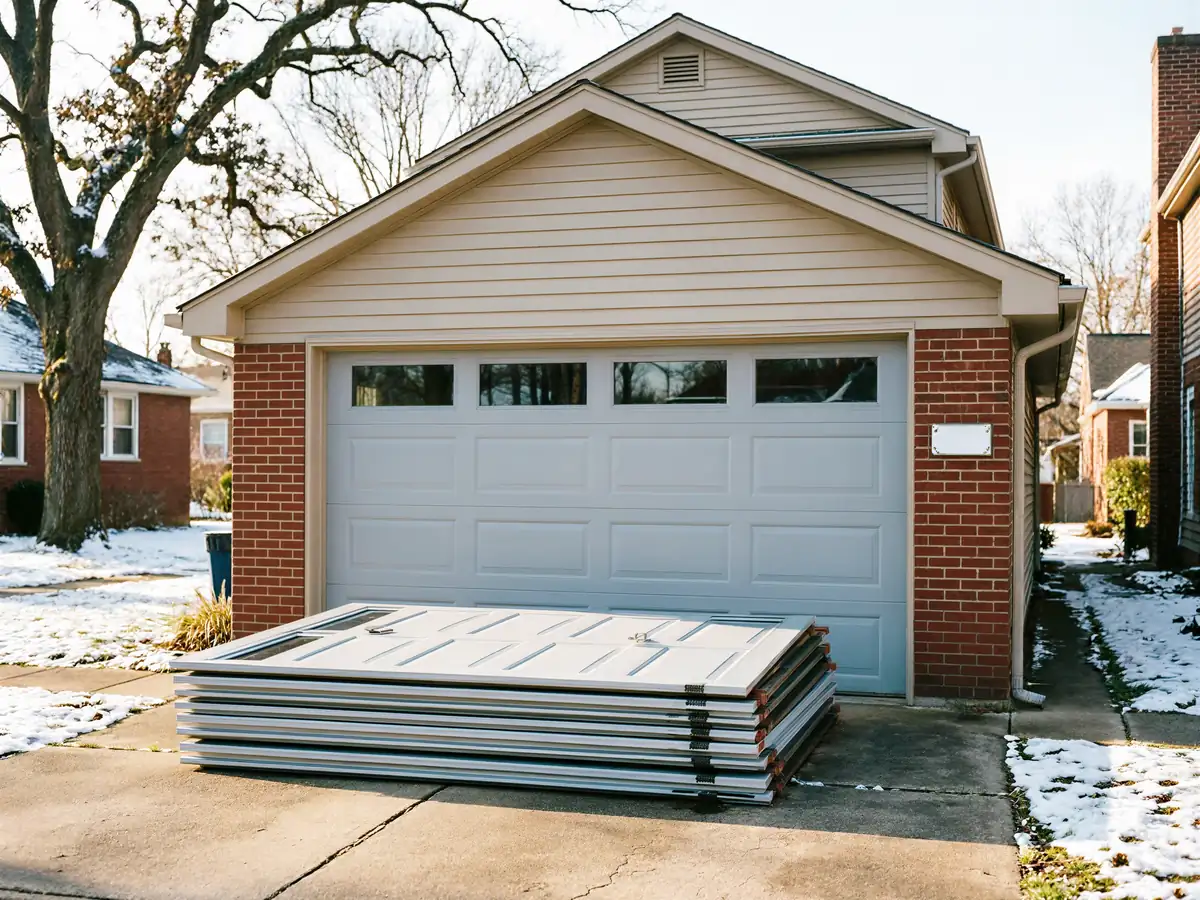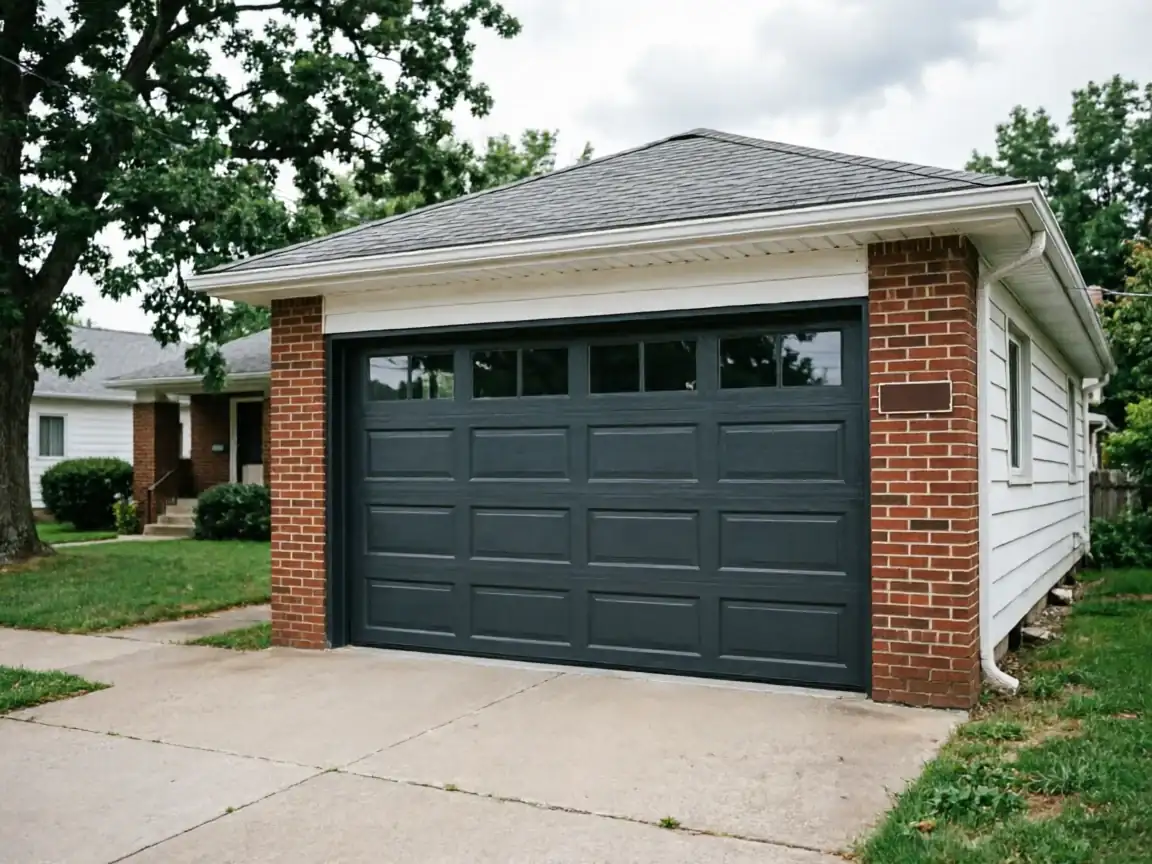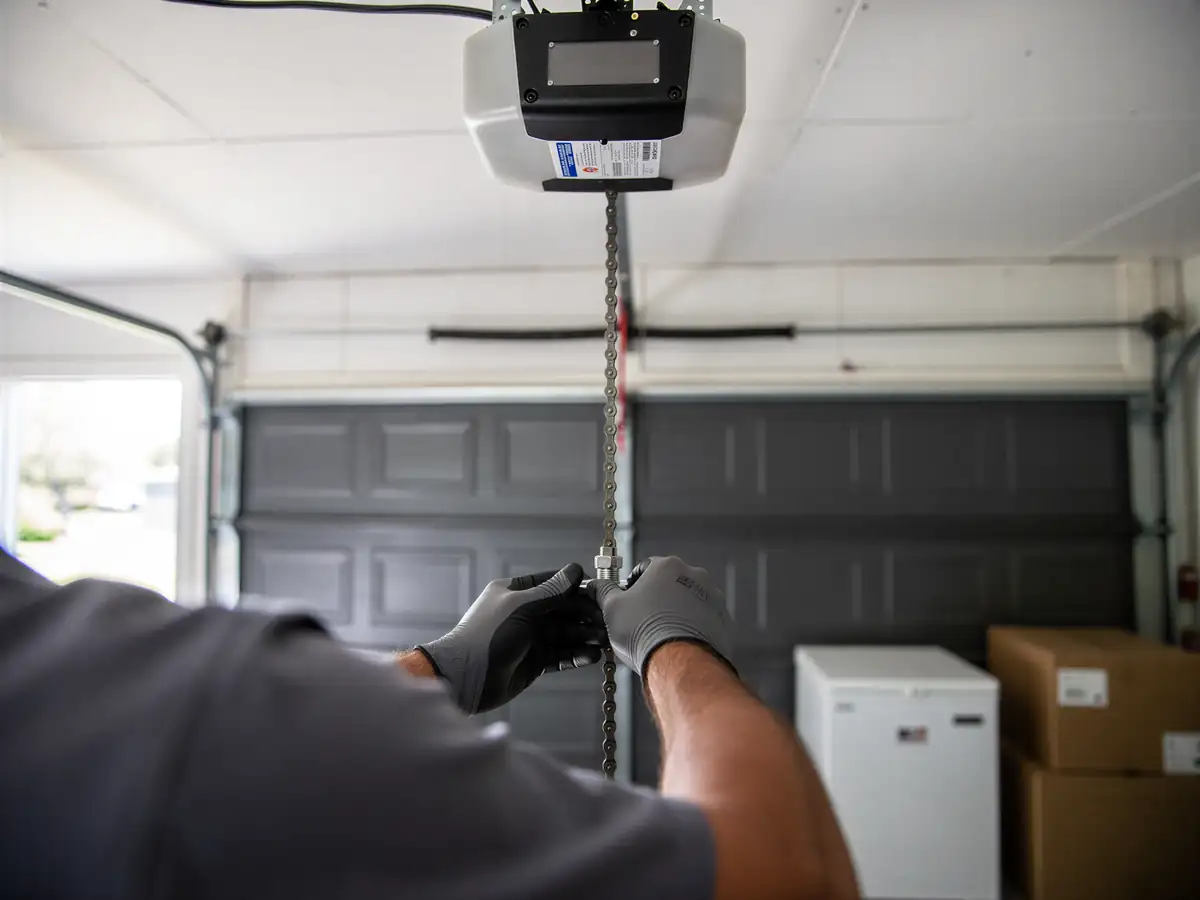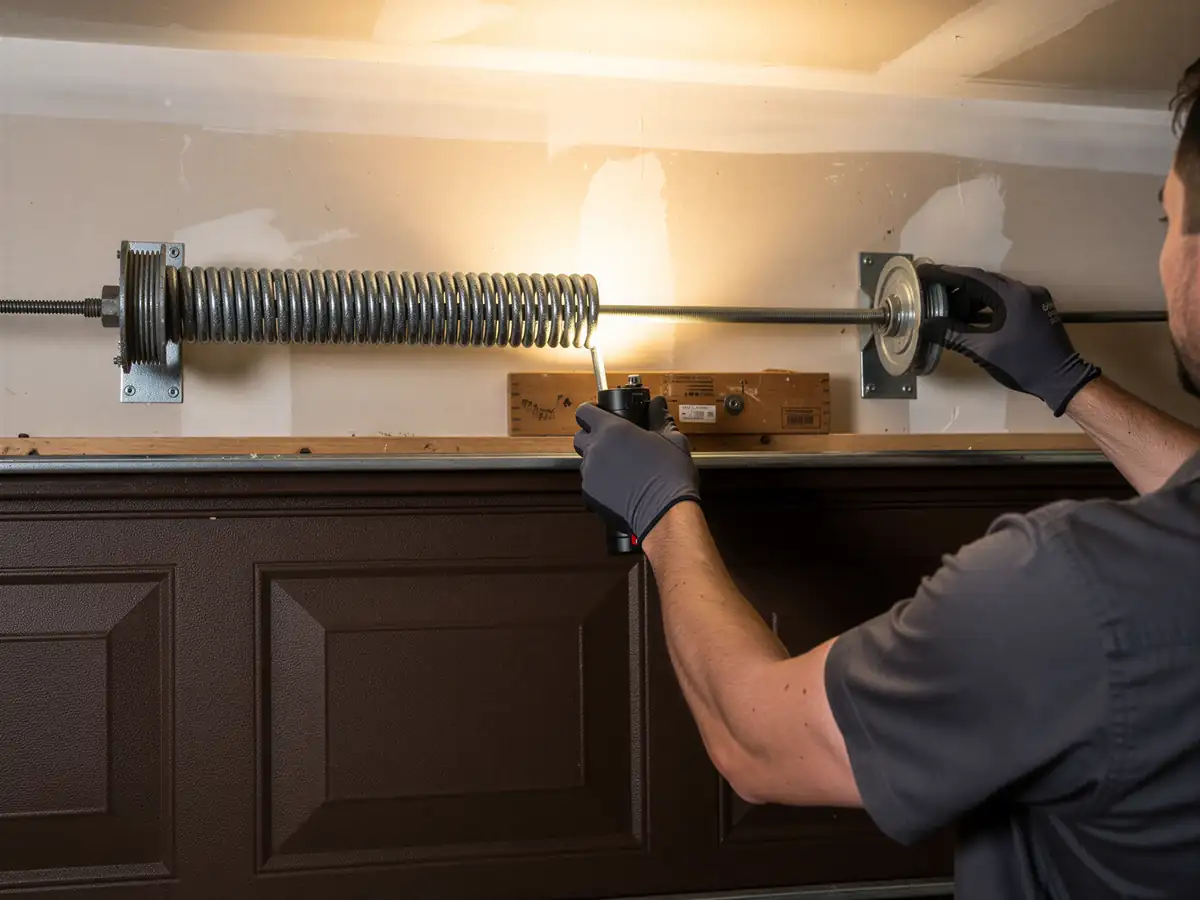
What You Are Seeing
Jamestown is a small place
About 158 households, not the kind of volume that supports its own garage door outfit. That's why this job comes out of Columbia, 15 miles west. A town this size means a narrower range of doors than you'd find in a bigger market: fewer custom installs, more of the same handful of builder-grade models going in and failing in the same handful of ways.
- 158 households
- 15 miles
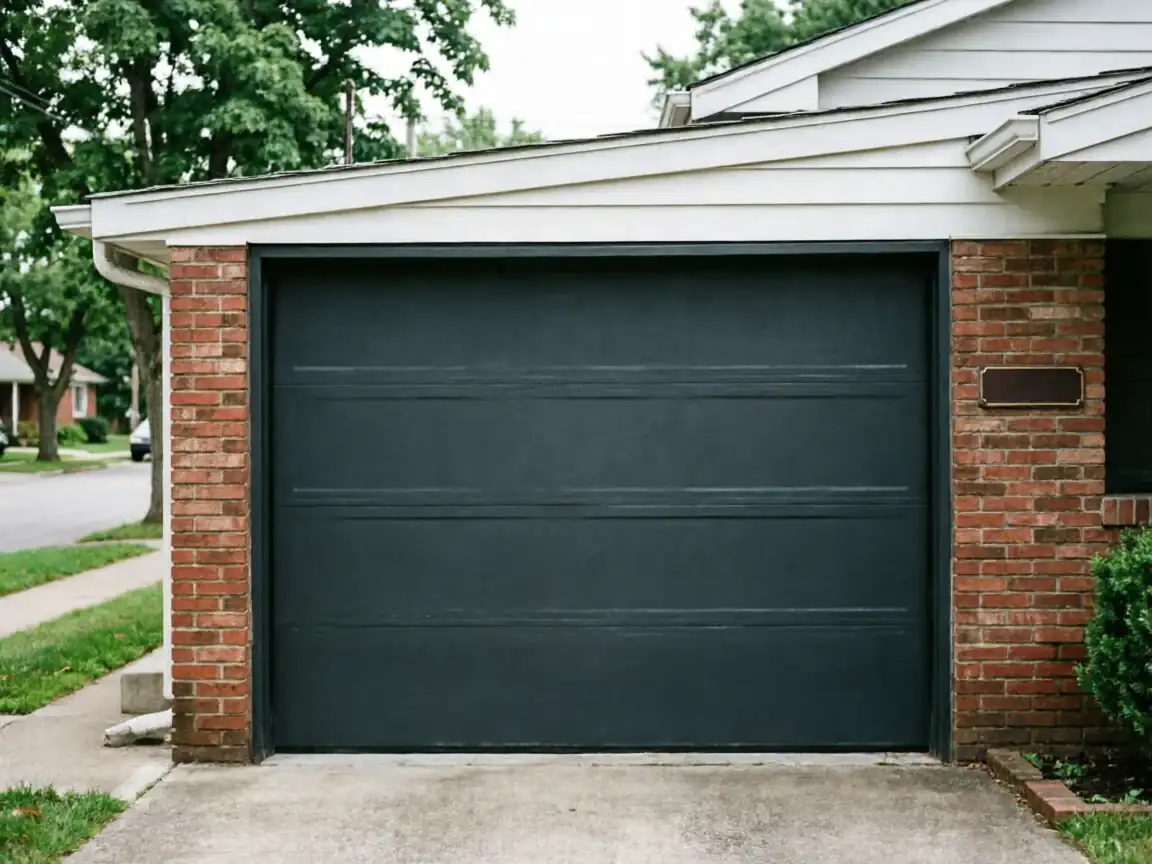
The houses here mostly went up around 1974, give or take a decade on either side
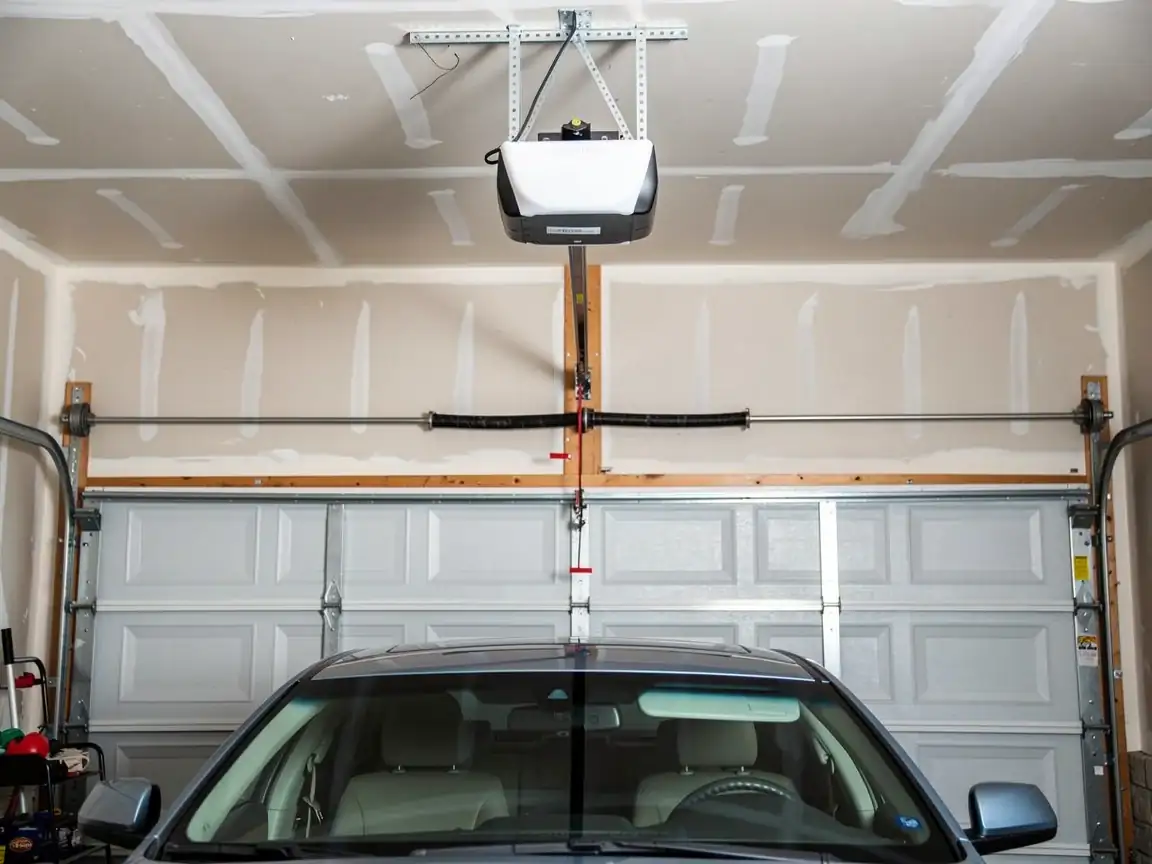
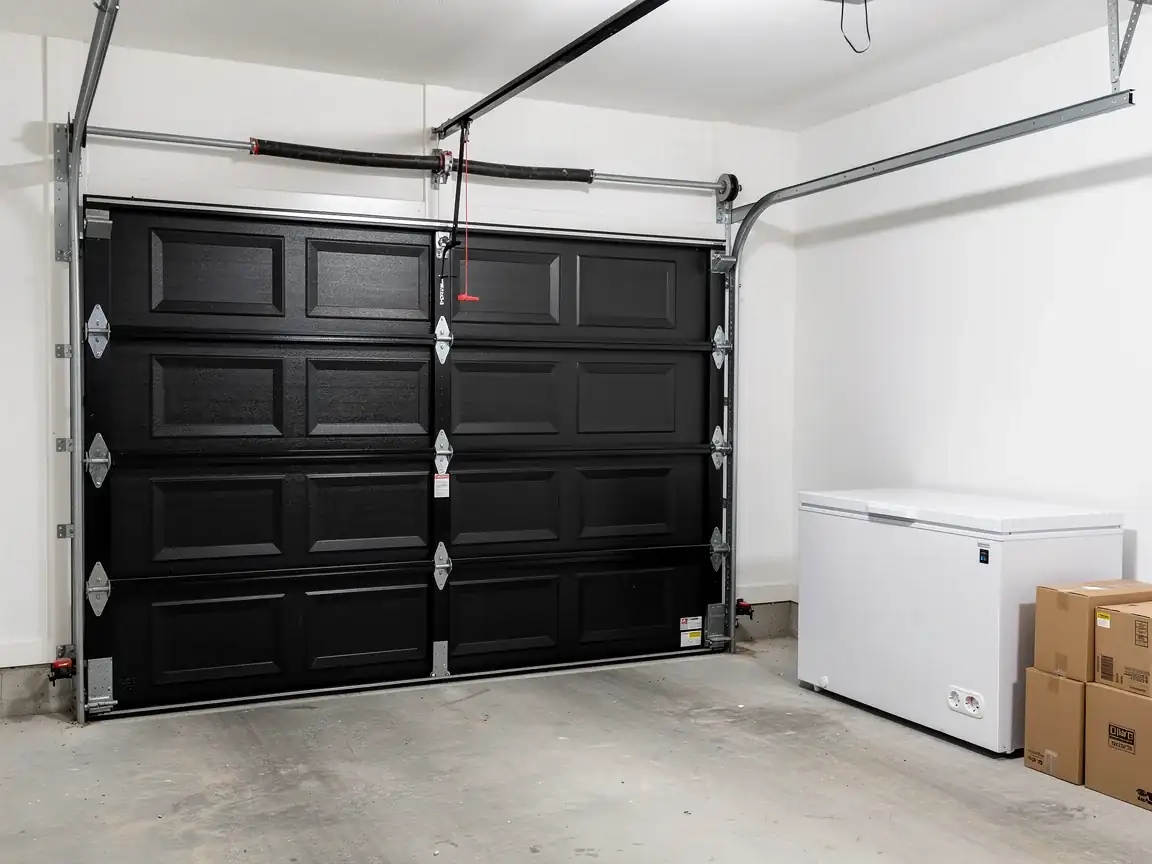
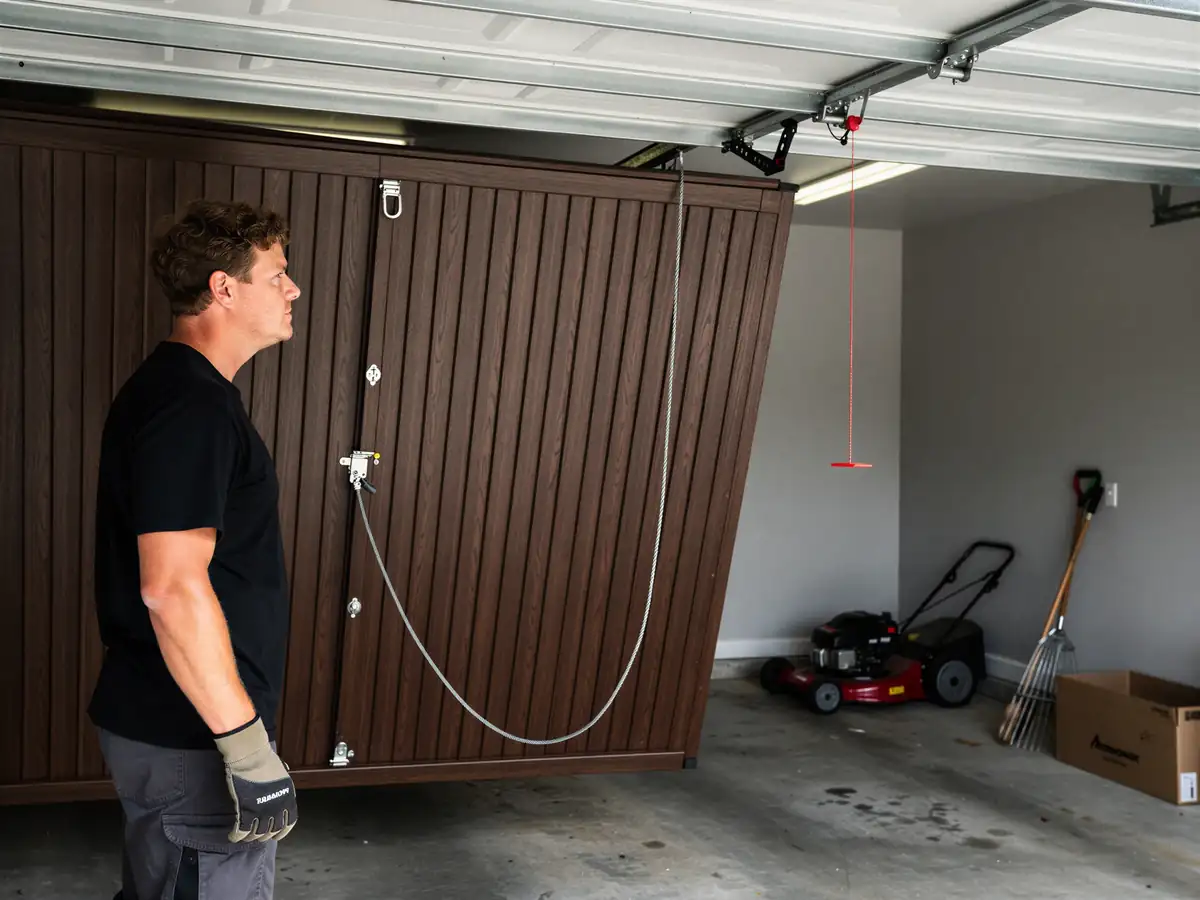
That's a specific era. Torsion springs from that period were sized to looser standards than what's common now, and a lot of the original hardware is still bolted to the same jambs it shipped with. When a spring snaps or a cable frays on a door that old, you're not dealing with a modern extension-spring setup - you're dealing with whatever the builder spec'd fifty years ago, and that changes what fits.
Because the household count is small, we're not out here every day
Most calls are scheduled, not same-day, and that's worth knowing going in.
What Is on the Truck
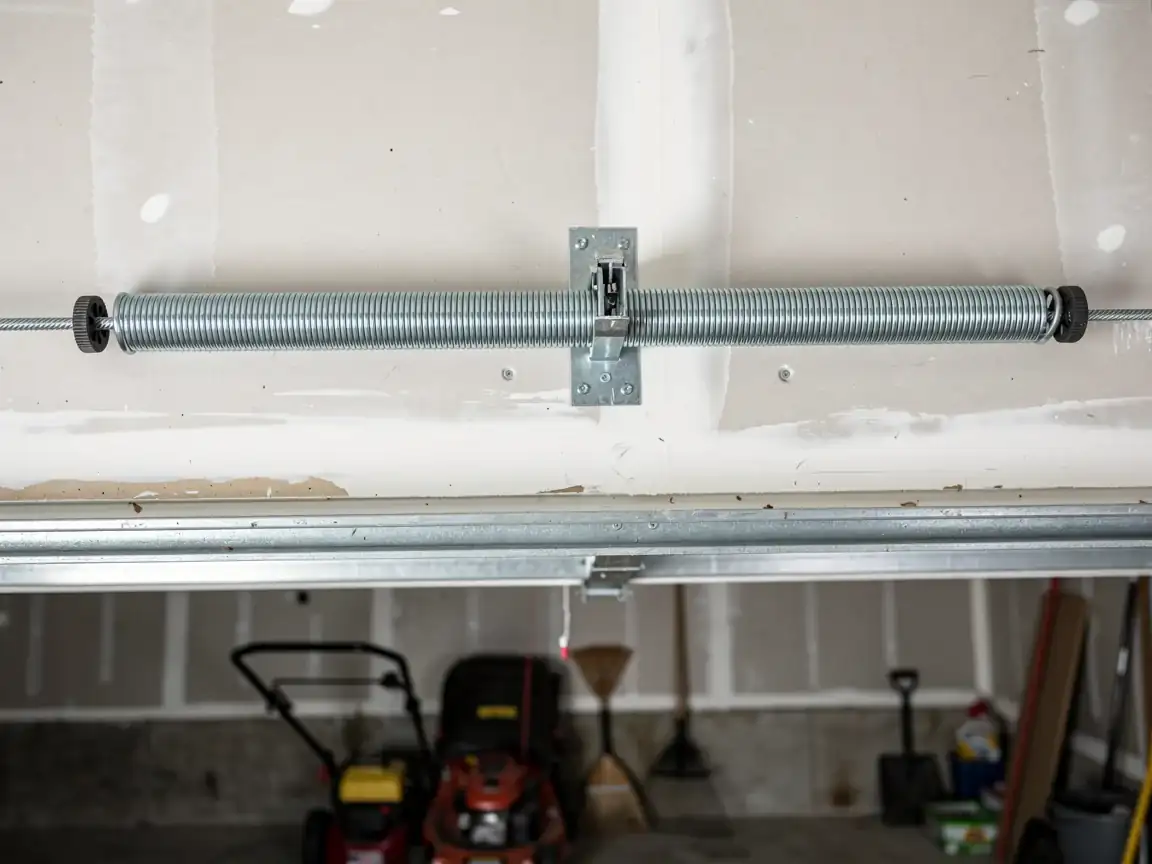
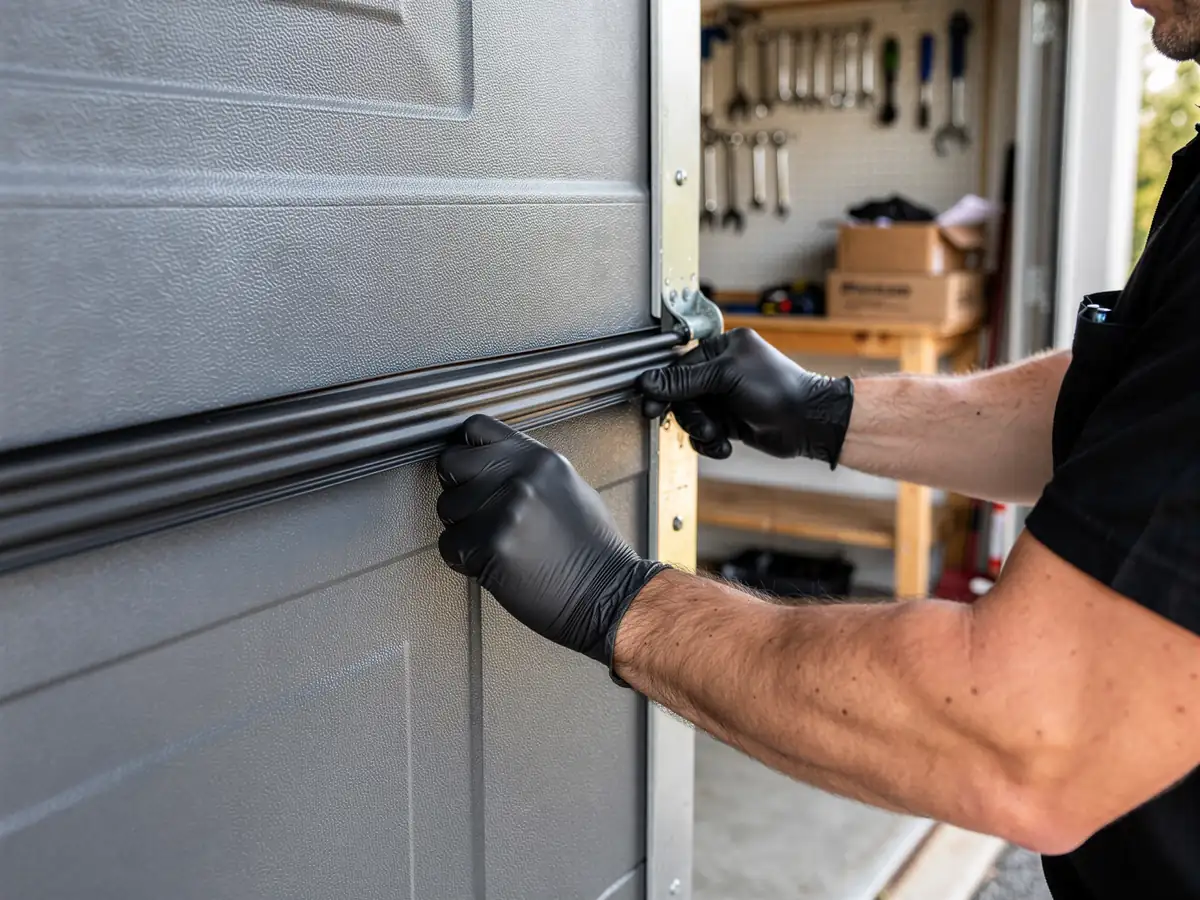
For 1970s-era housing stock, the truck carries standard torsion springs in the wind sizes that cover most of what was installed through that decade, plus extension spring kits for the older two-spring setups some of these garages still run. Steel rollers and standard-lift cable are stocked in common sizes.
What isn't always on the truck: oddball hardware specific to a door nobody made anymore - a non-standard track width, or a spring size outside the common range. The climate here runs cold and severe in winter, which hardens springs and nylon rollers and shortens their working life, so wear items like these are the ones we carry the most of, not the exception.
If a part turns out to be genuinely obsolete - a discontinued panel profile, say - that's a special order, and it won't happen on the first visit. Jamestown's small enough that we don't keep guessing inventory for it; we stock for the housing era that's actually out there.
Why This Fails Locally
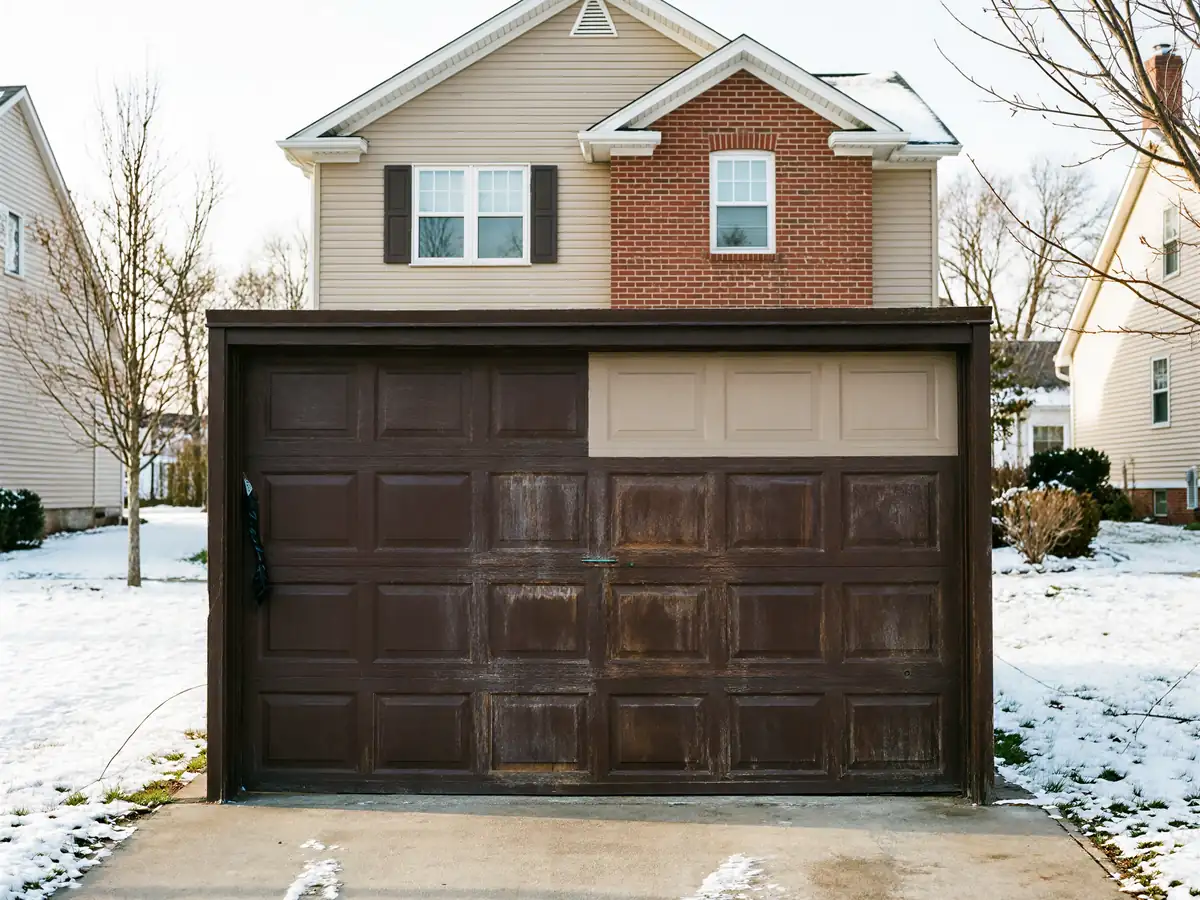
Cold, severe winters do two things to a door built in the 1970s that a newer door in a mild climate doesn't deal with: they stiffen the torsion spring's steel past its design tolerance over repeated freeze cycles, and they dry out and crack nylon rollers that were never rated for the temperature swing. On a 50-year-old spring, that's often the final failure, not the first one - it's been losing tension for years and the cold finishes the job.
Income in this area runs a median of $58,889, which tends to mean owners hold onto a working door longer and fix rather than replace. That's a reasonable call on a door that's mechanically sound. It stops being reasonable once the track is bent or the opener's control board is failing alongside the spring - at that point a repair is patching one symptom while two others wait their turn, and we'll tell you that instead of billing for the first patch.
Where This Job Goes Sideways
The thing that turns a routine spring swap into a bigger job here is the jamb itself
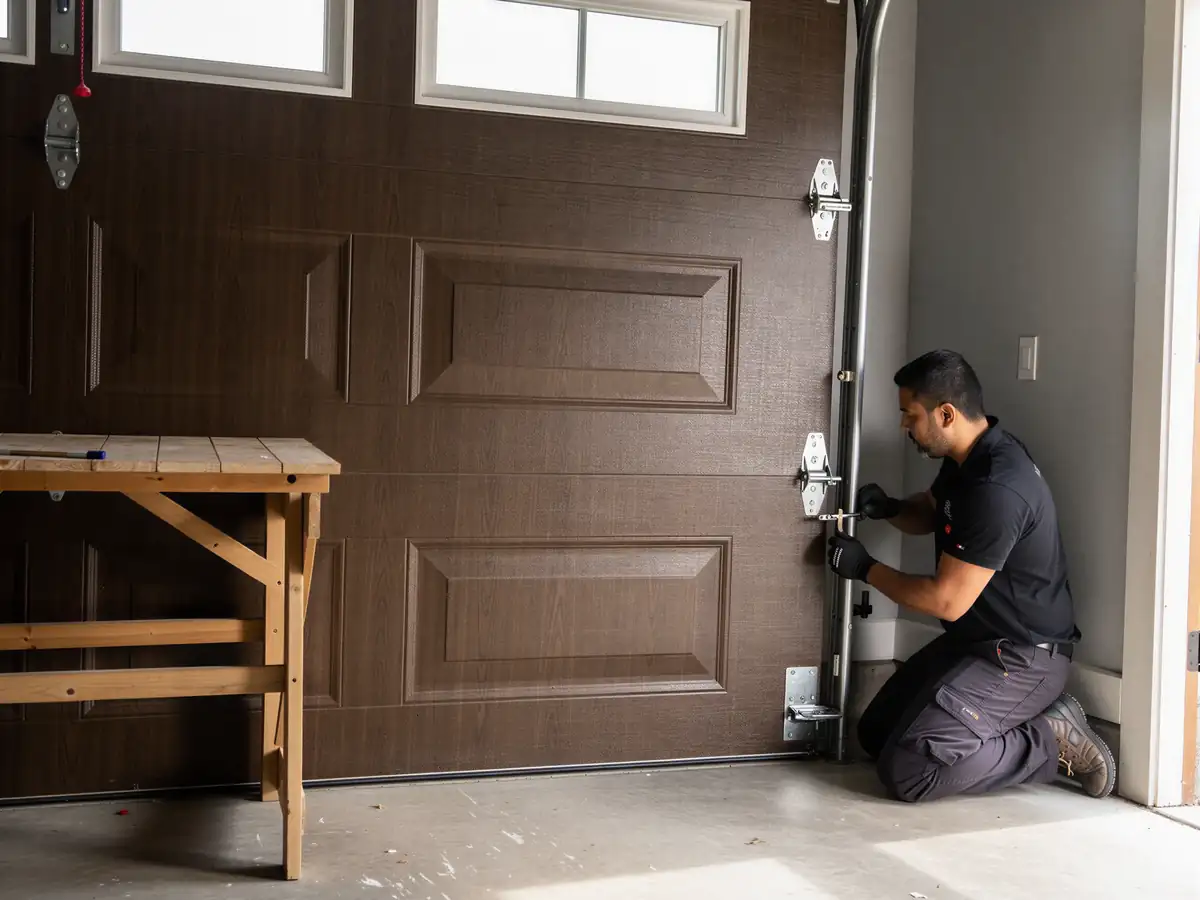
Houses from the 1974 era were framed to the standards of that decade, and over fifty winters of expansion and contraction, the wood around the track brackets has often loosened or split slightly - not enough to notice day to day, but enough that a new spring under full tension pulls a bracket loose that the old, weaker spring never stressed.
We check bracket and jamb condition before we tension anything
Because finding that problem after the door's closed up again means a second trip from Columbia, and on a 15-mile run that's time neither of us wants to spend twice. If the jamb needs reinforcing, we'll say so before we touch the spring, not after.