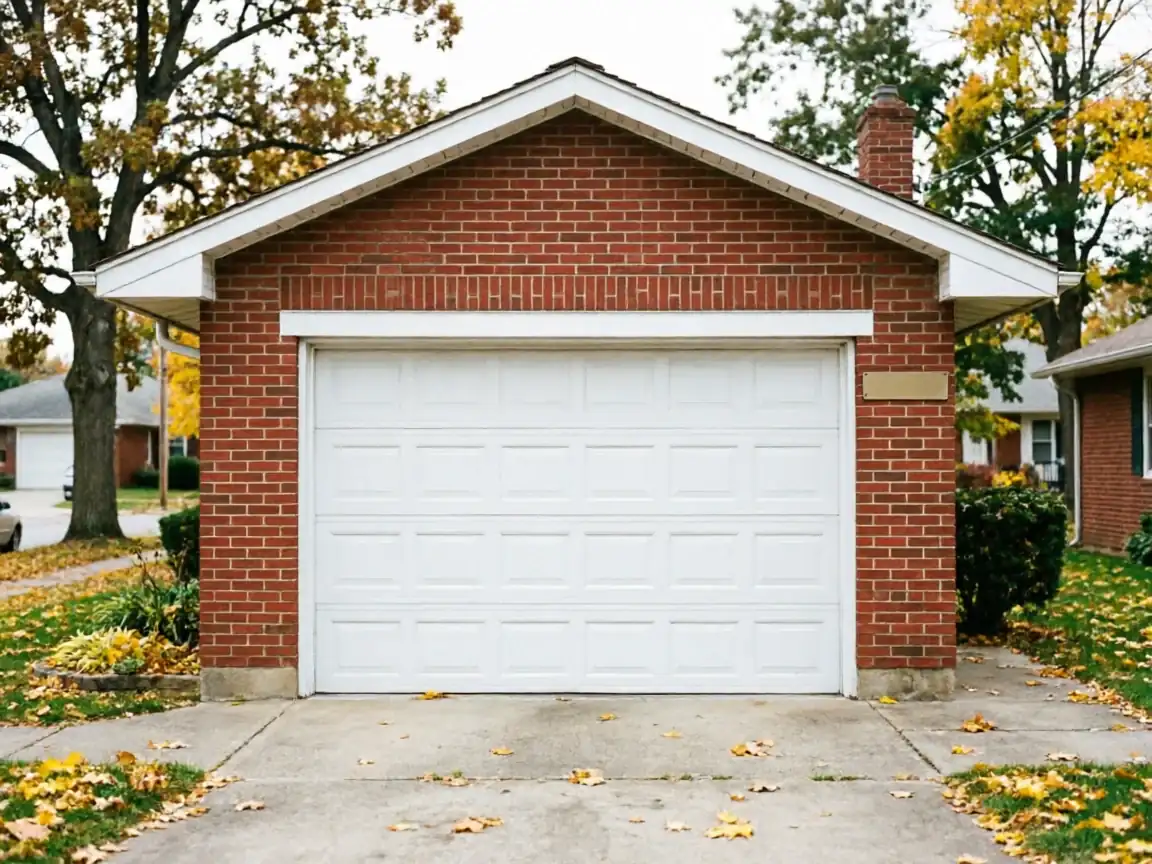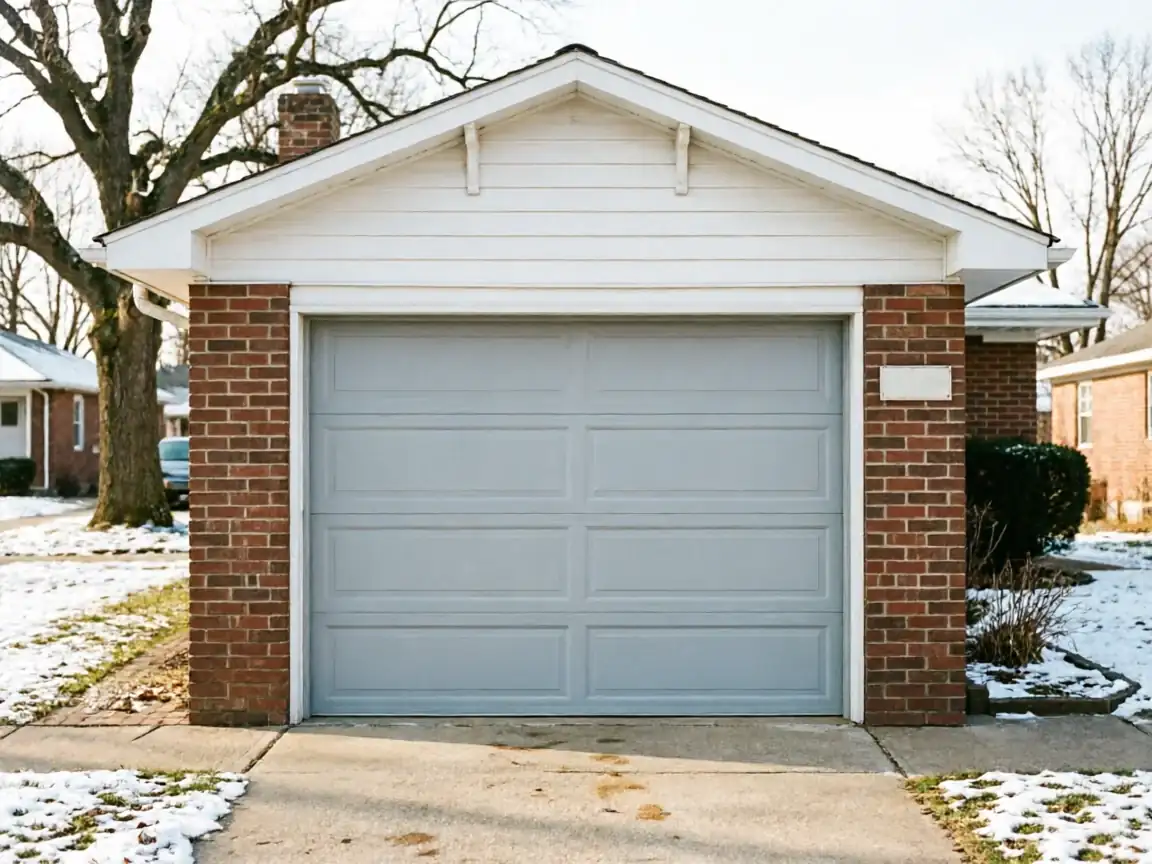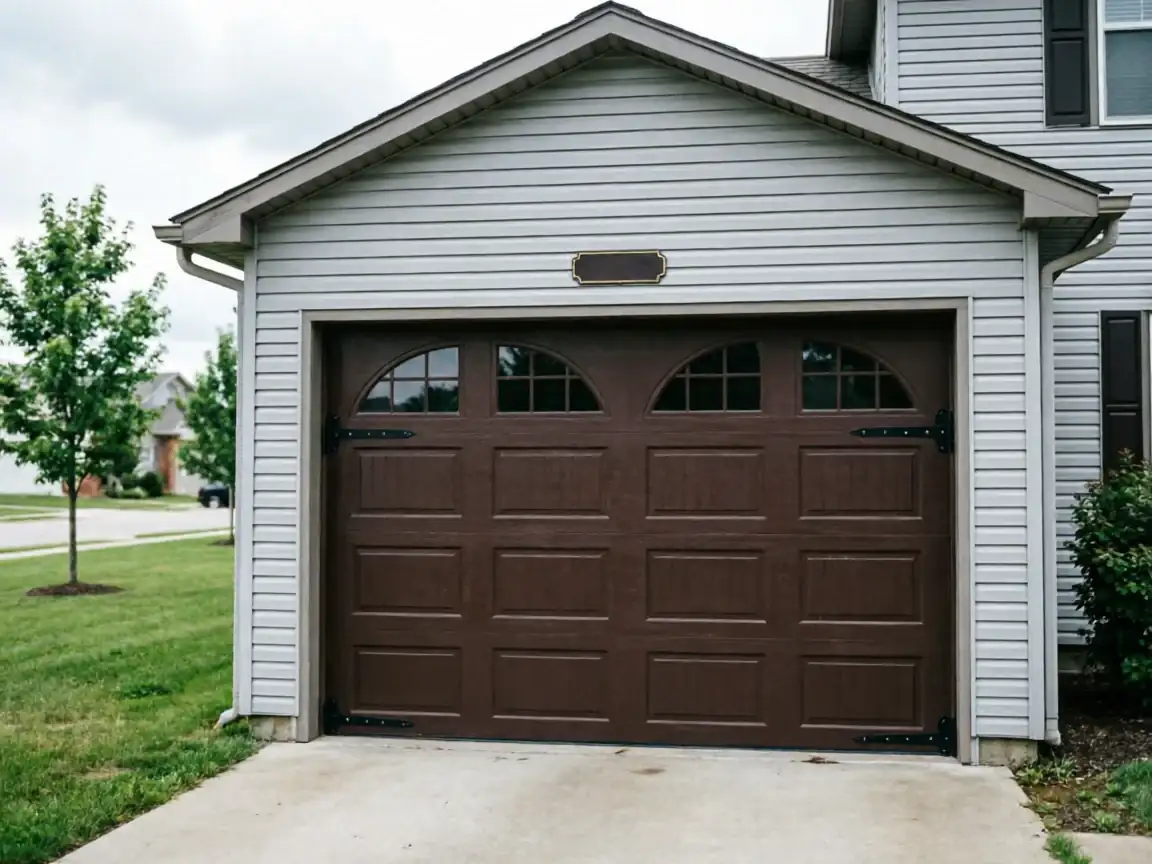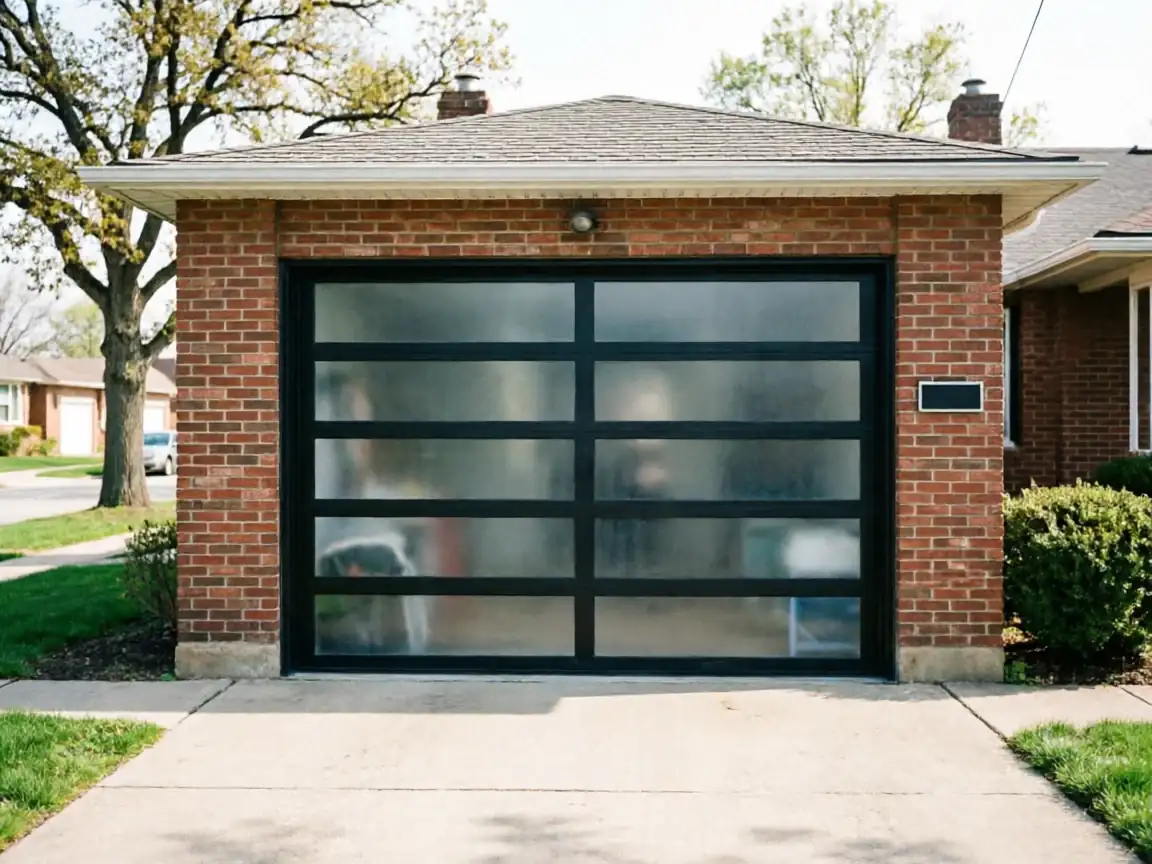
Where This Job Goes Sideways
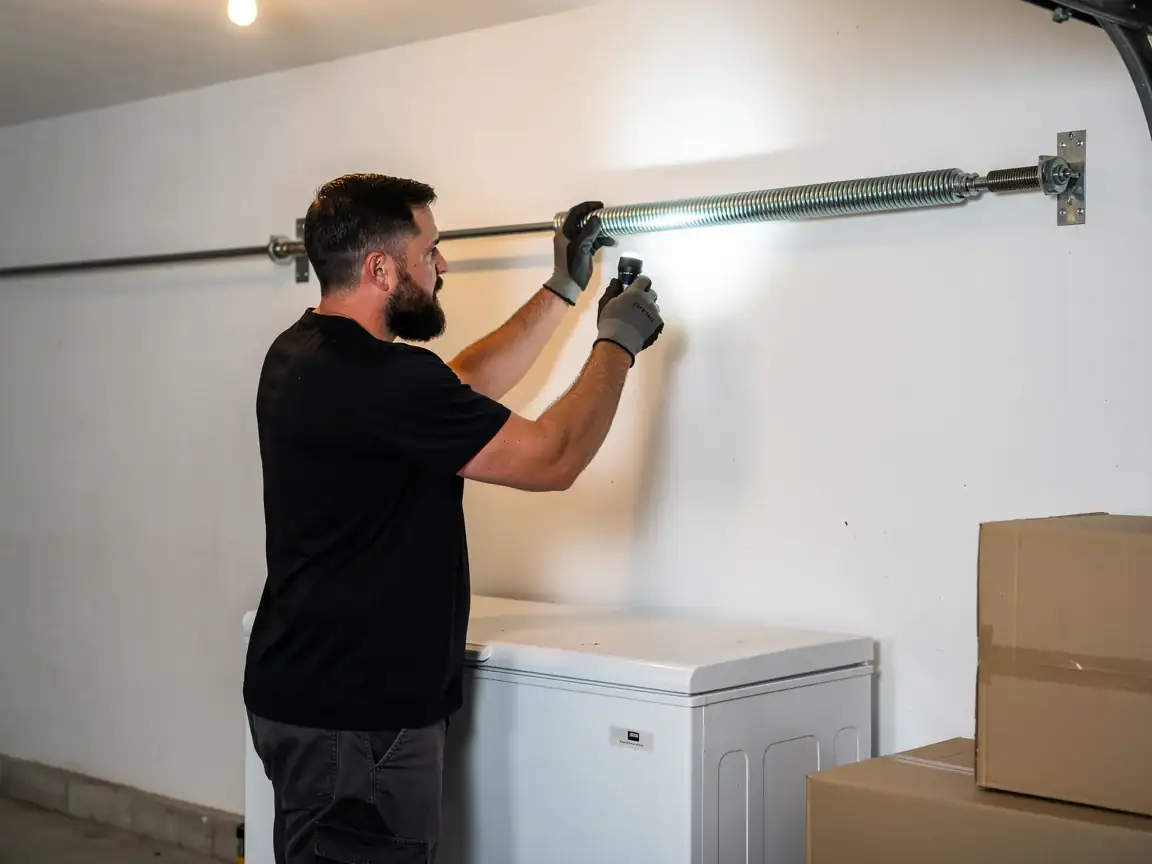
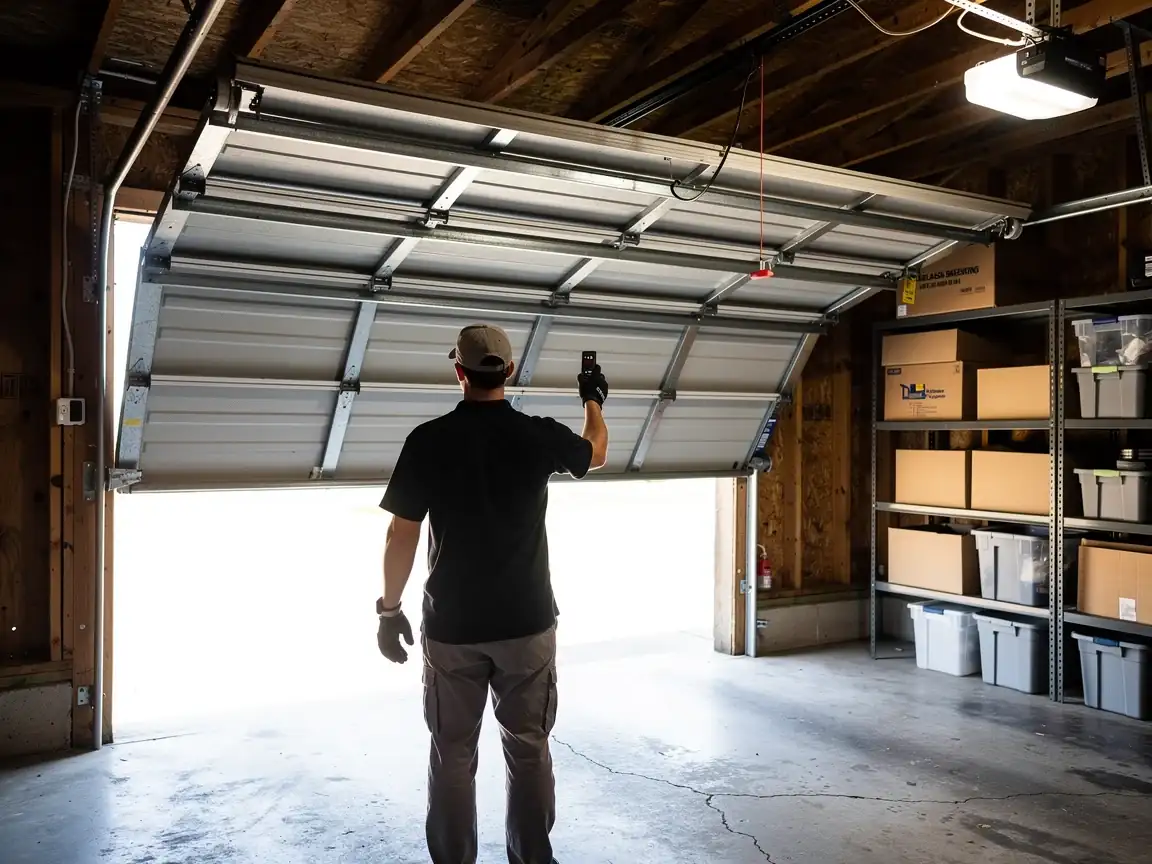
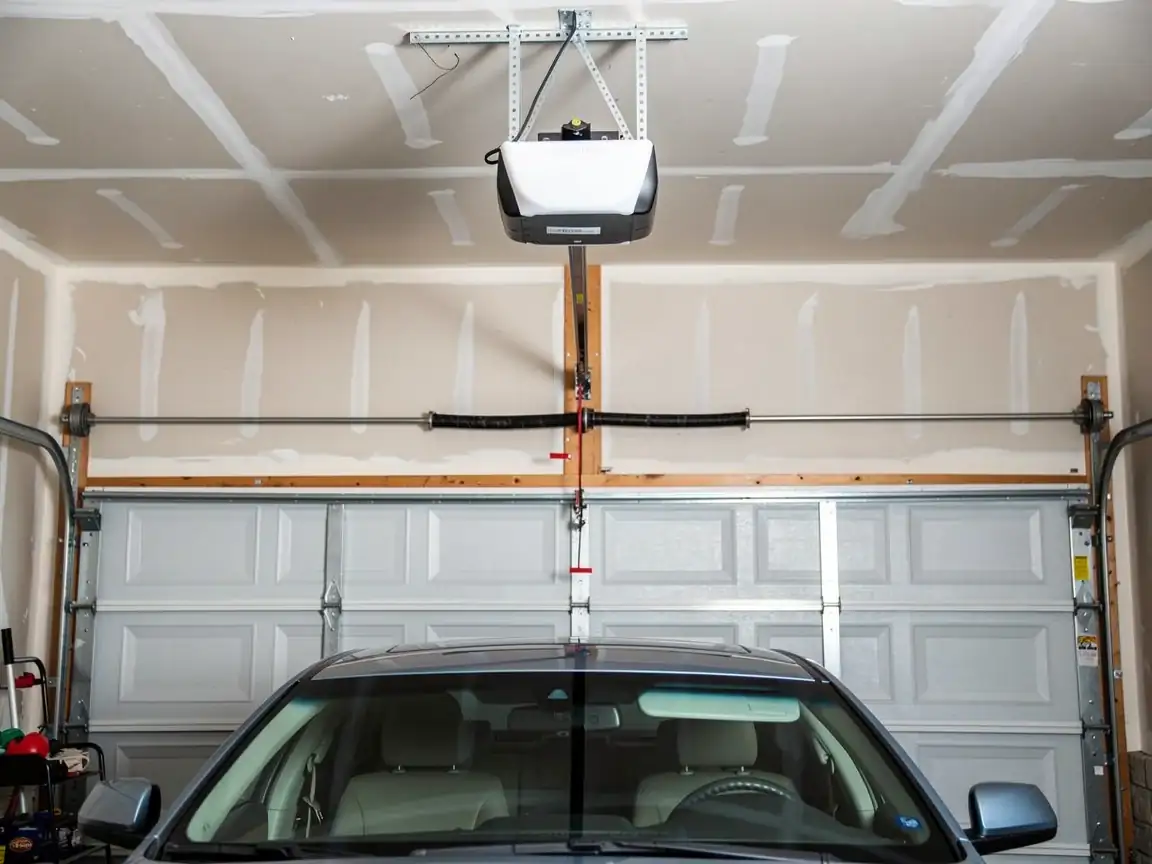
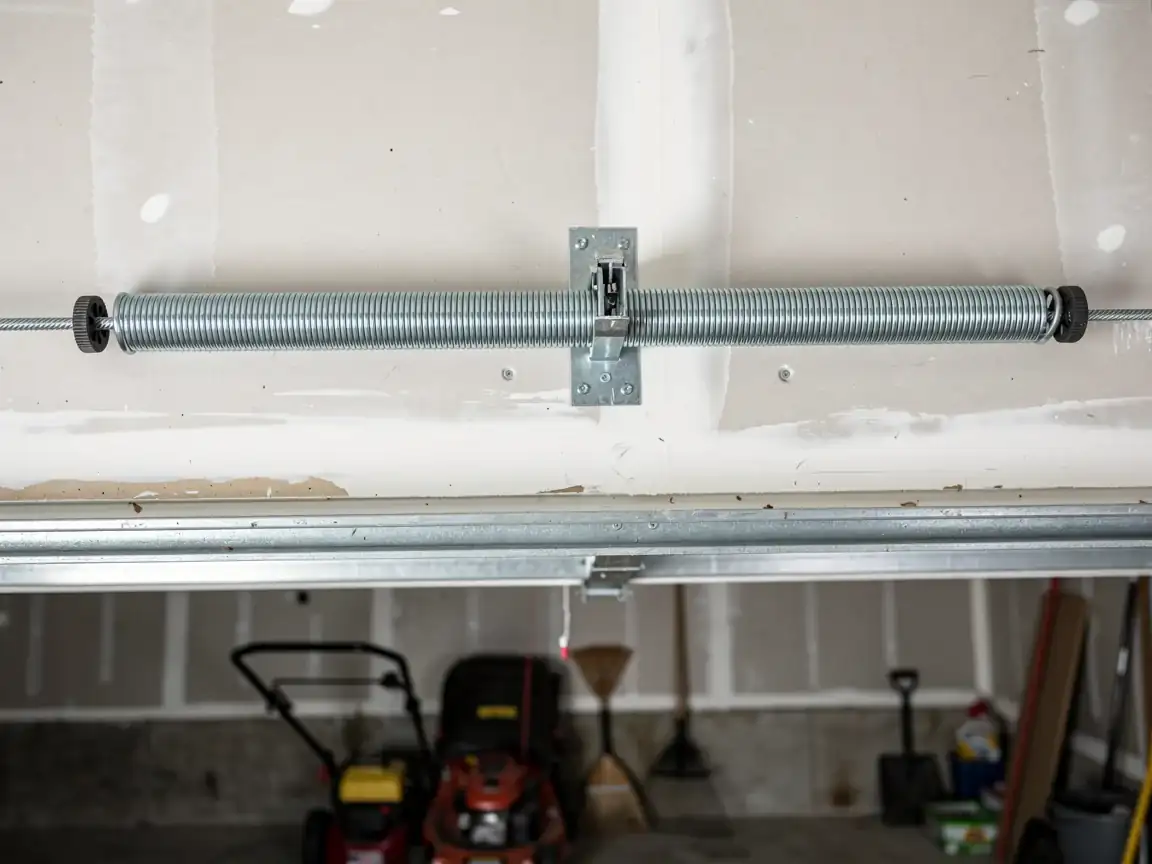
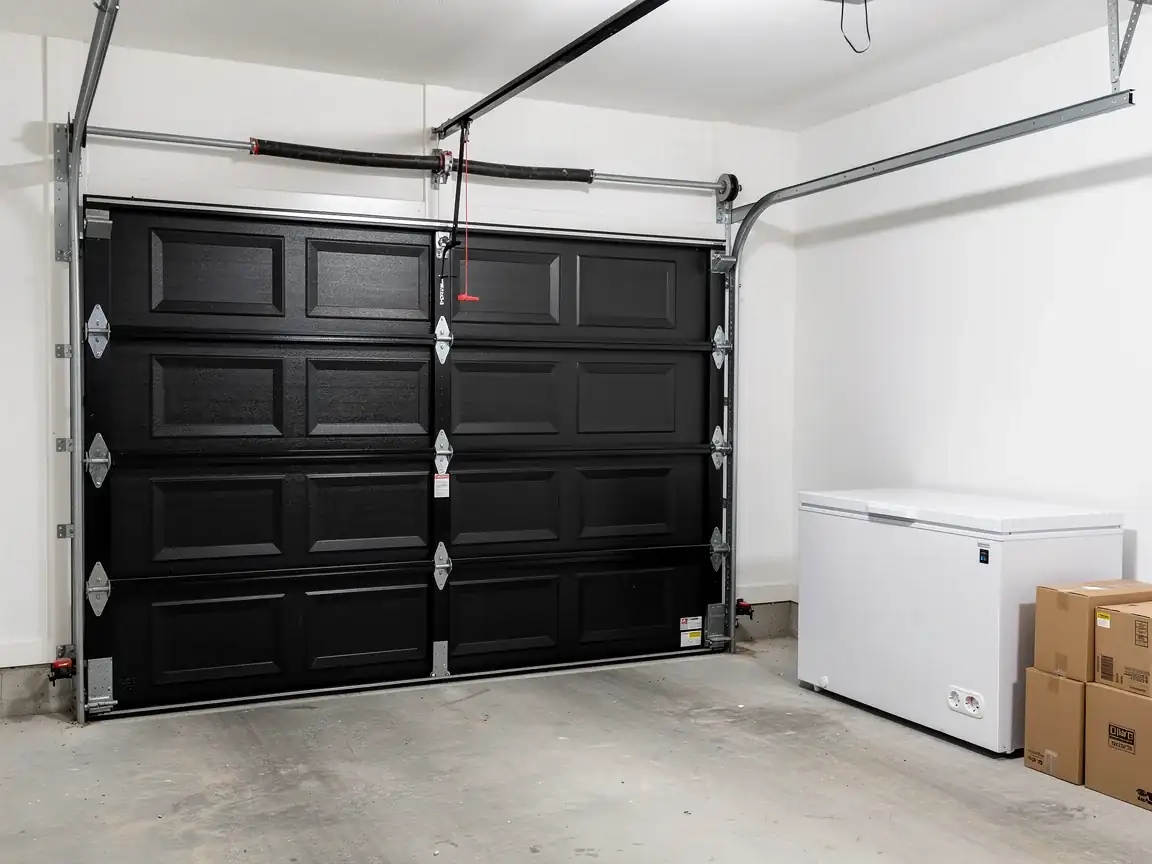
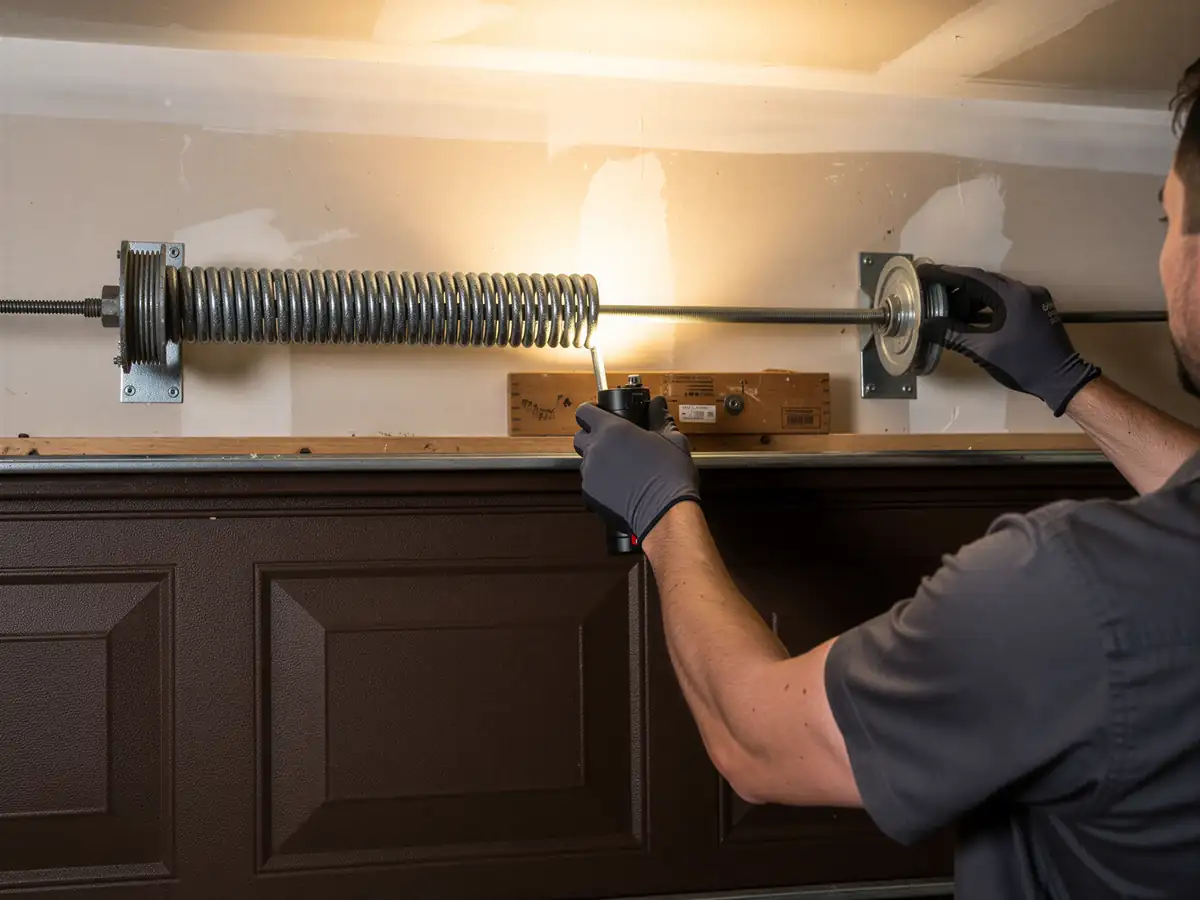
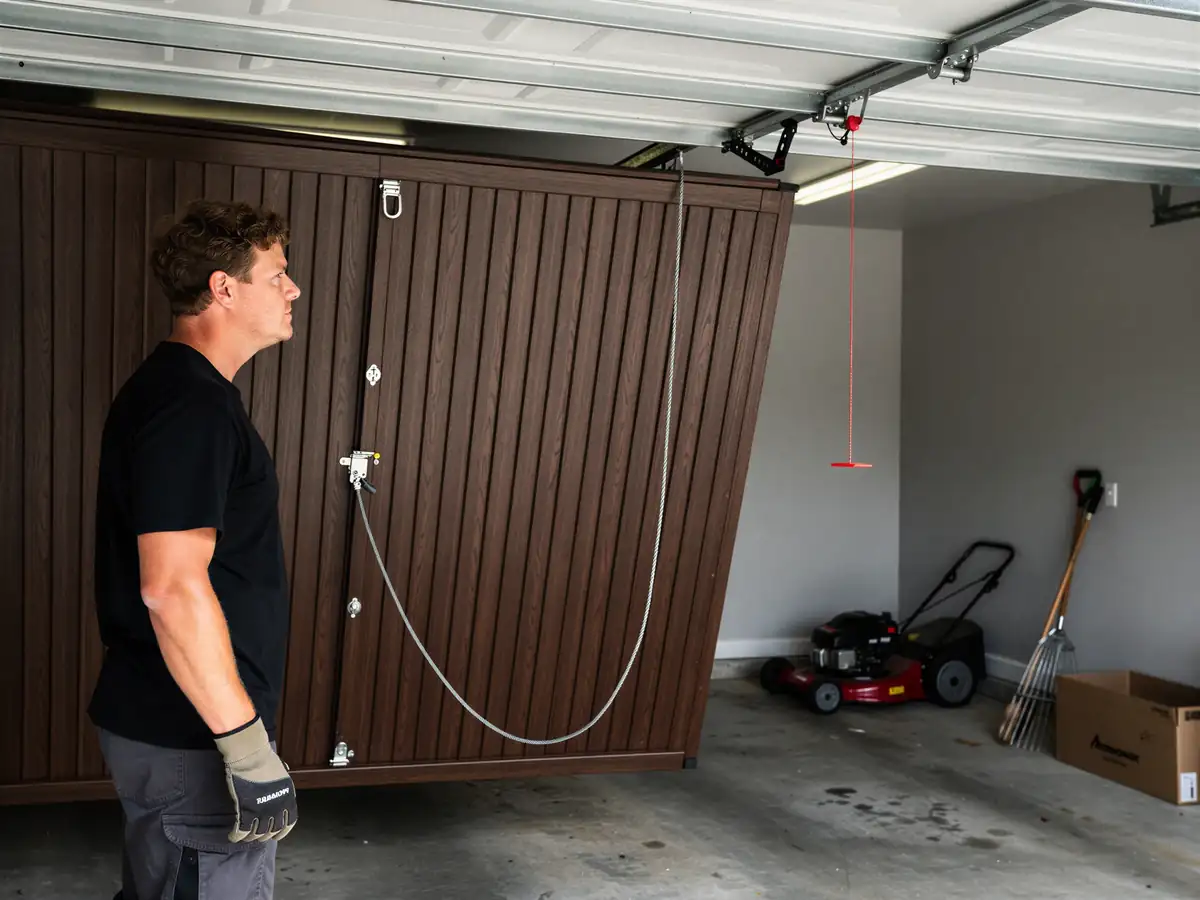
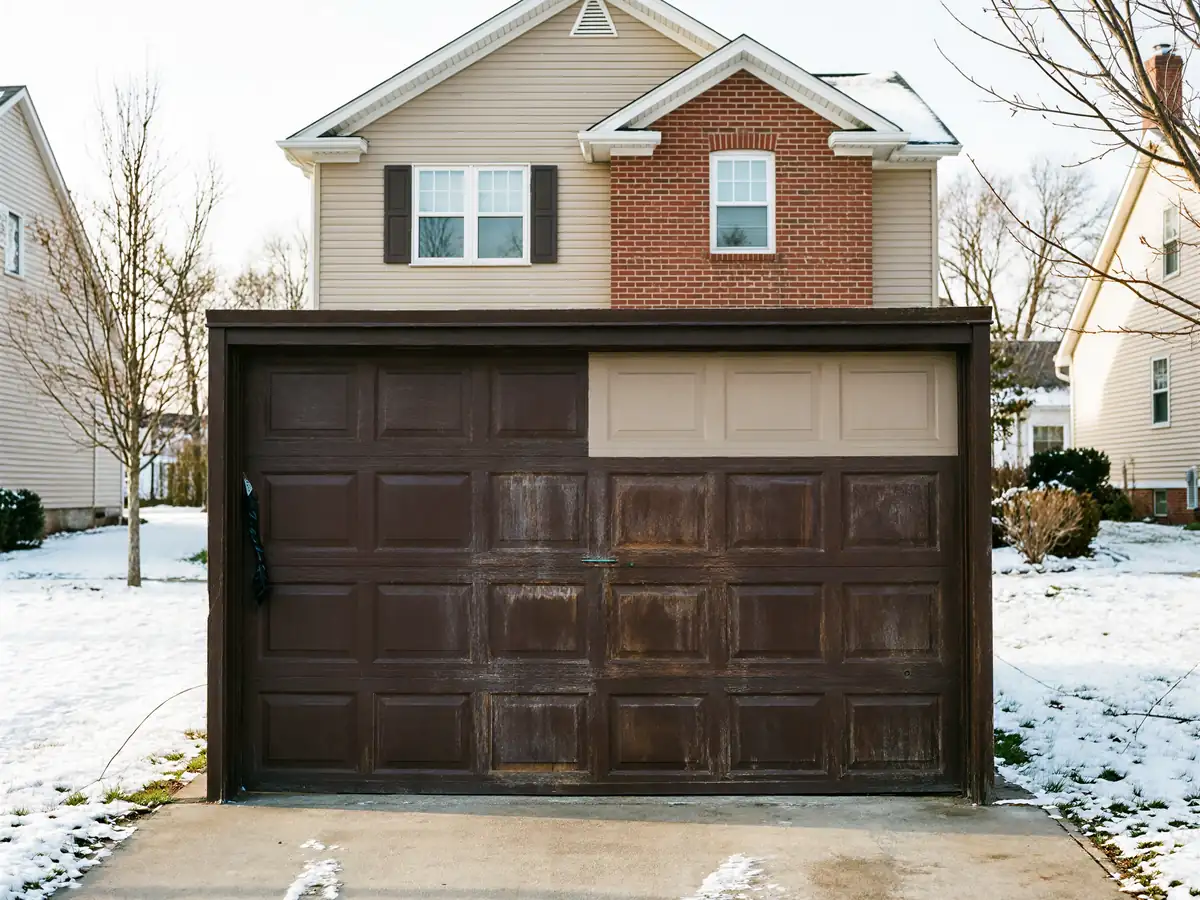
On a door built around the 1978 median for this area, the trouble usually starts with a torsion spring that's simply outlived its winds, or a cable that's frayed off the drum because the hardware was never upgraded when the door got heavier. On older one-piece and early sectional doors, track alignment drifts over decades of frost heave, and in a cold-climate area like this one the metal contracts enough each winter to loosen fasteners you'd never notice in a milder spot. The sideways part is when someone tries a quick fix on 1970s hardware with parts pulled off a current big-box door - wrong spring wind, wrong cable length, wrong drum size - and the door either binds or comes down wrong. We see that more on farm properties out this way, where a repair sometimes sits for a season before anyone calls, and by then a bent track has turned into a bent frame.
What It Costs
We don't have a Prairie Home-specific price list to hand you here - costs depend on the spring size, the door weight, and whether the track or opener is also compromised, and we won't quote sight unseen. What we can tell you is that a 17-mile trip from Columbia is built into how we schedule the day, not into a surcharge tacked onto your invoice. If a part isn't something we carry on the truck for a less common door size, which does happen more often on older 1970s-vintage doors than current stock ones, that can mean a short wait on the part rather than a same-visit fix. We'd rather tell you that up front than promise a fix we can't deliver that day.
What Is on the Truck
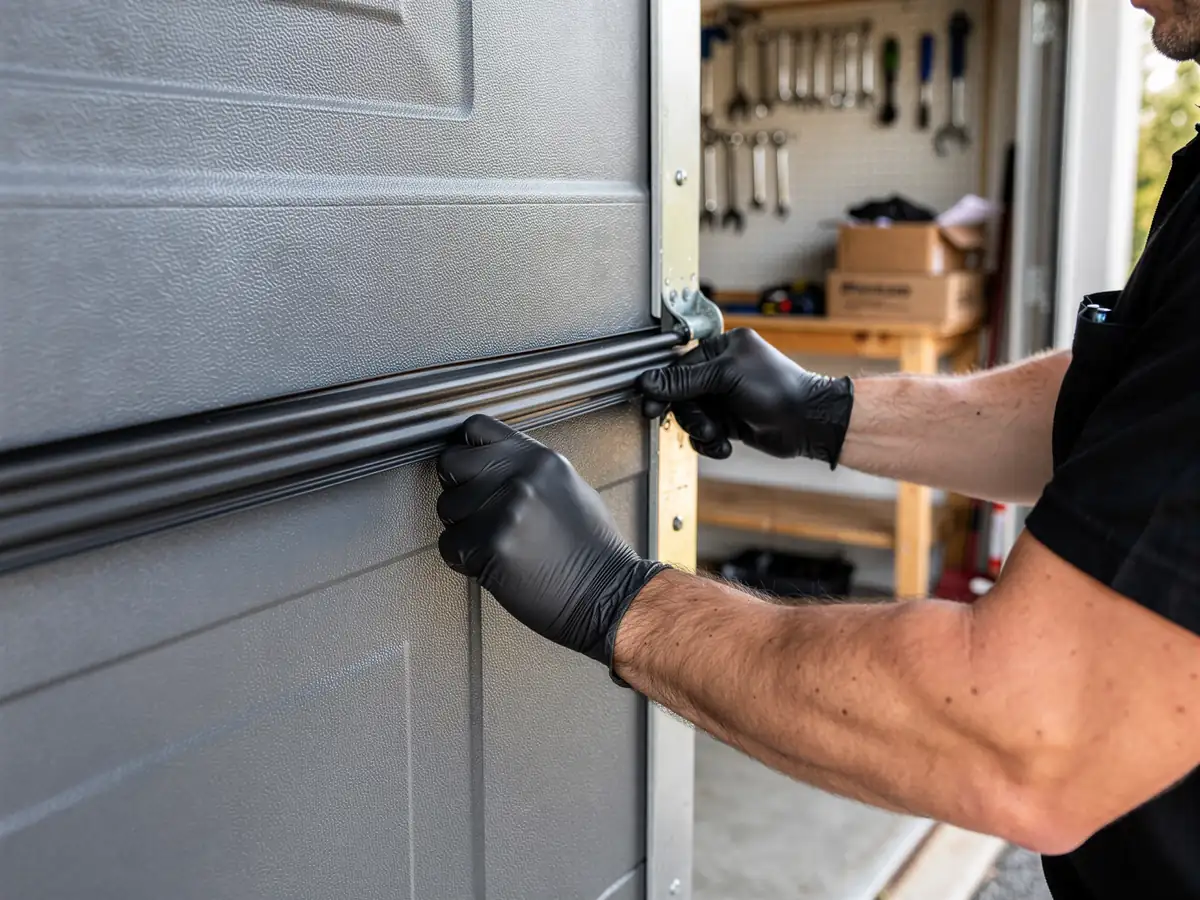
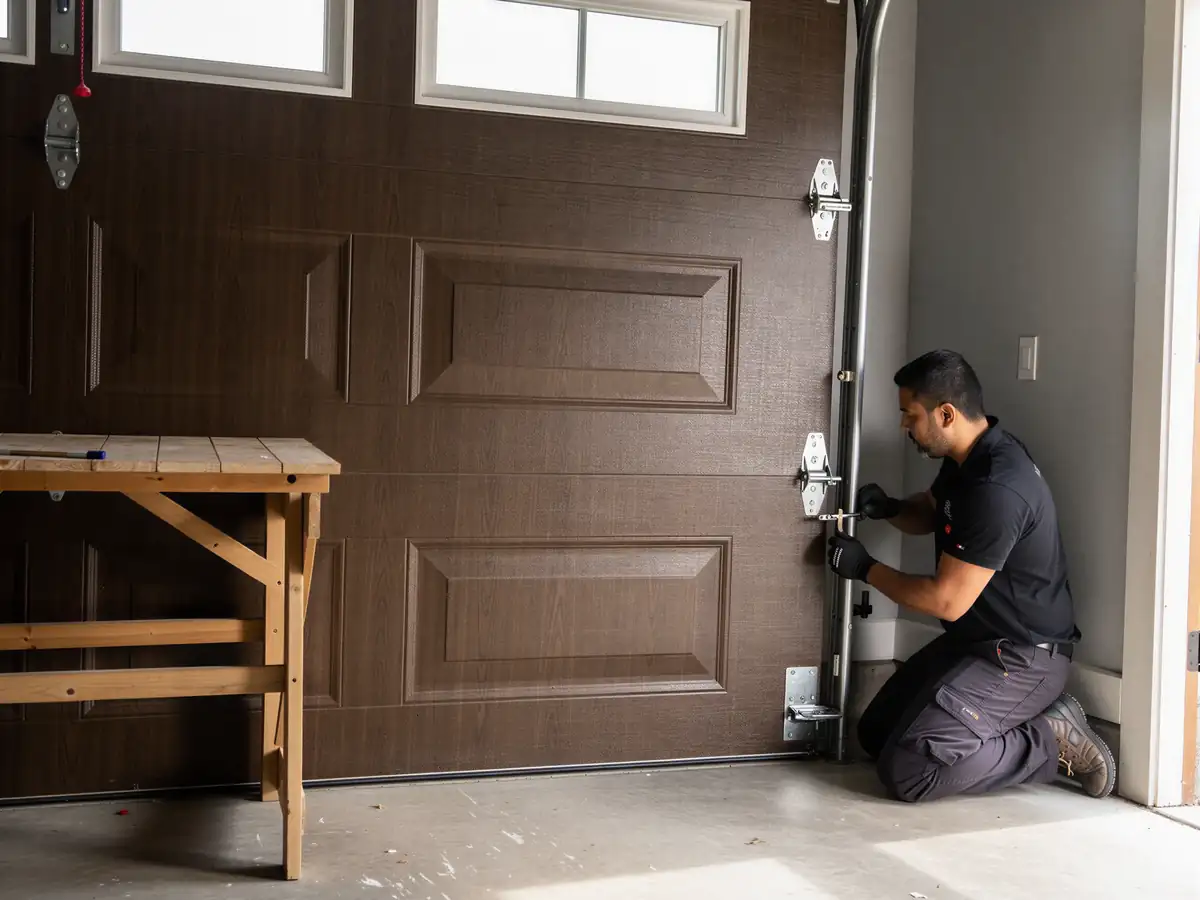
For a town this size, with roughly 107 households and a housing stock centered on 1978, the truck gets loaded differently than for a newer subdivision. We carry torsion springs across a range of older wind counts, standard and high-cycle cables, rollers in both nylon and steel, and drums sized for the lighter doors common on pre-1980 construction, alongside the current standard sizes for anything replaced more recently. Track sections and hinges come in both the older galvanized gauge and today's heavier stock. Given the cold-climate conditions out here, we also keep weatherstrip and bottom seals rated for sustained freezing temperatures, since the stuff sold for milder climates tends to crack and let the cold straight into the garage by the second winter.