Serving Columbia, MO & nearby
(573) 235-7236
Columbia, MO

Garage Door Repair for Ashland's Newer Homes

Most Ashland garage doors date after 2000, not the 1970s stock common across Columbia. We repair openers, springs, and tracks here, 10 miles from our shop.

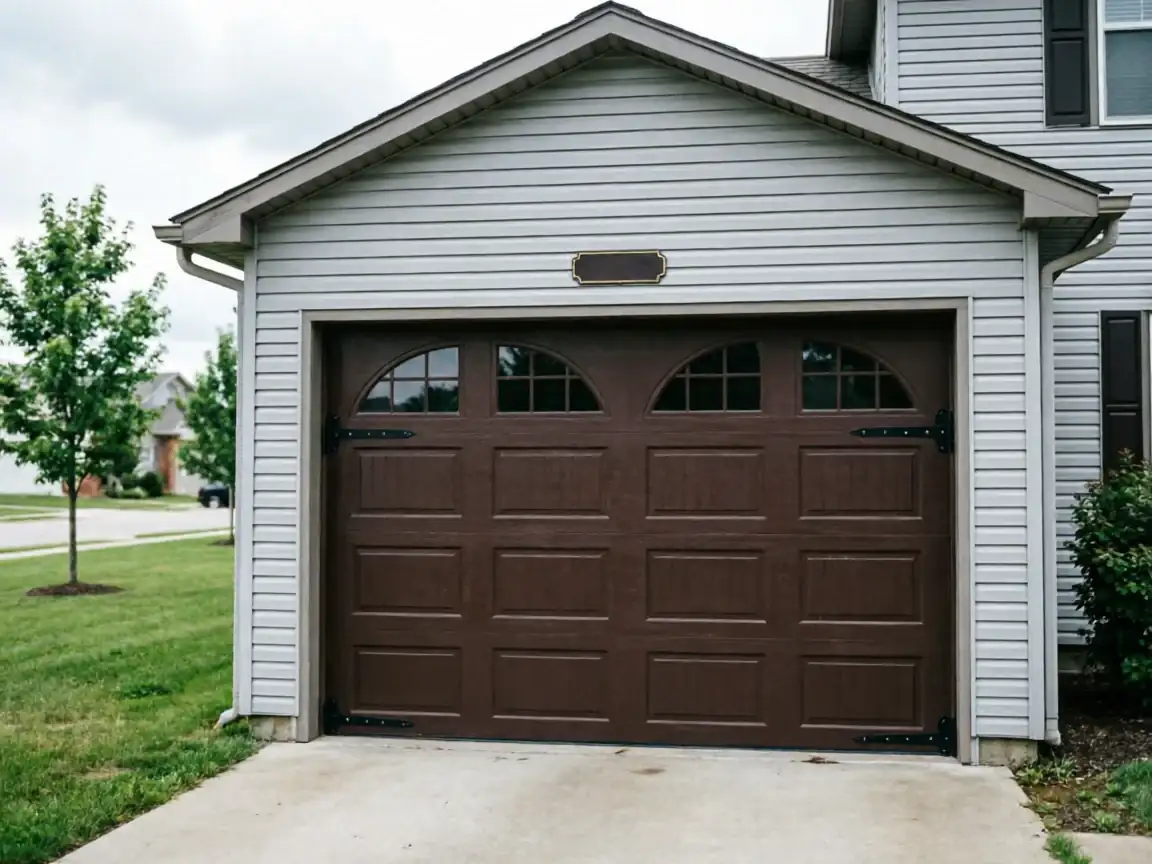
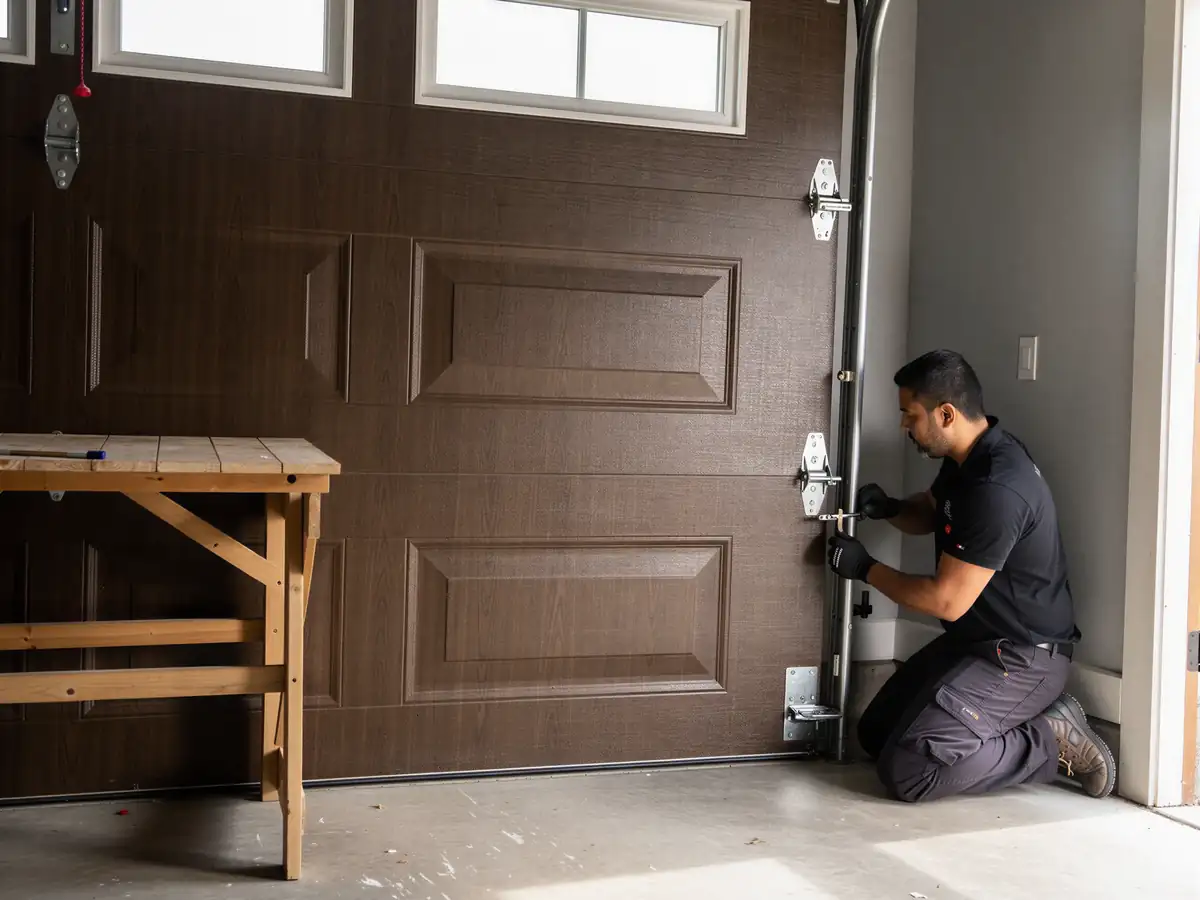
A technician kneels, adjusting the brown garage door's track and hinges.
Columbia, MO
8 services
7 service areas
Diagnosis first, then the fix

Booking a Visit

Ashland's median household income runs $90,628, well above the $58,889 median across the rest of our service area. At that income level, the repair-or-replace line sits in a different place than it does on an older house: a torsion spring swap or a new opener logic board extends a door that still has useful life, but a cosmetic panel dent or a door that's already shown multiple hardware failures is a different conversation when the house is newer and well-kept. We don't run a branch in Ashland. Every job here starts as a drive from our shop in Columbia, about 10 miles away, and we build the visit around your schedule rather than a fixed route through town. We don't promise the same turnaround for every job - if a part has to be special-ordered, we'll tell you that on the call instead of guessing a day. You can see what we cover for this stretch of the service area on our Ashland page, and the full repair rundown for the Columbia side of things lives on our main repair page.

What the Fix Involves

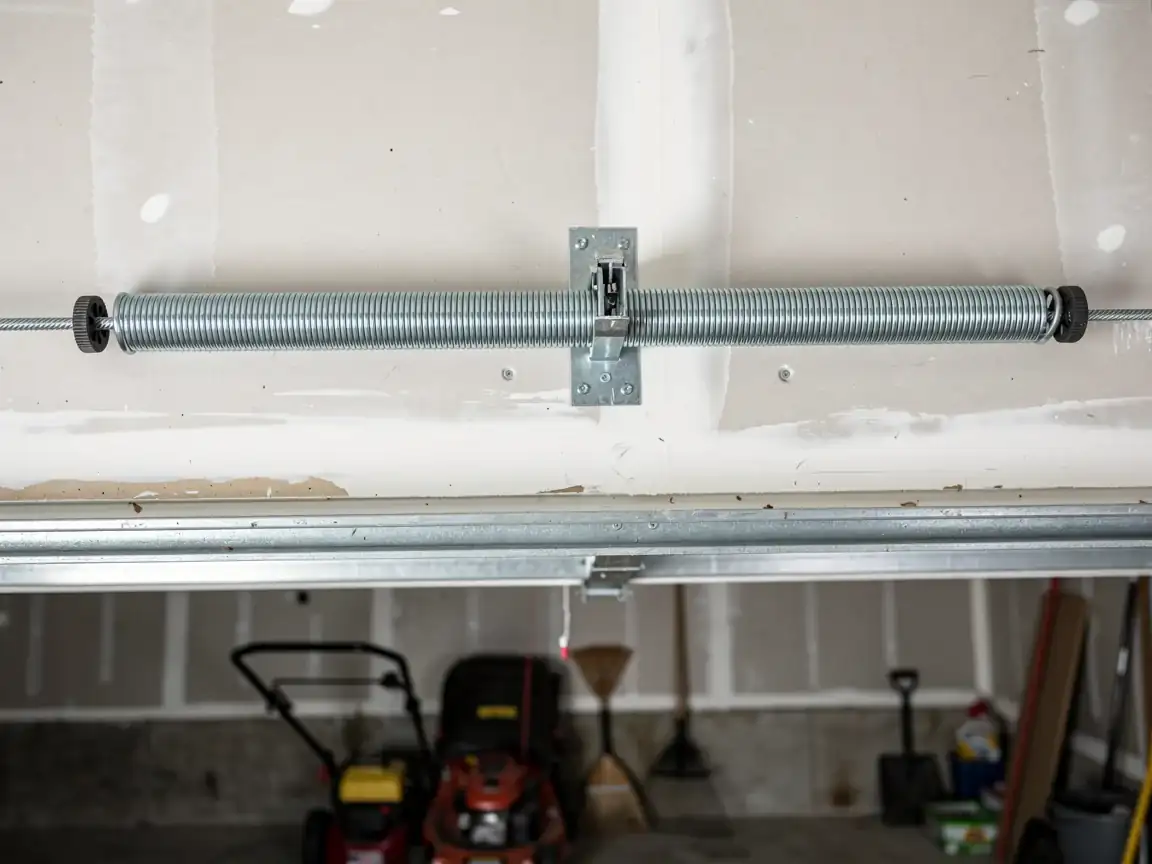
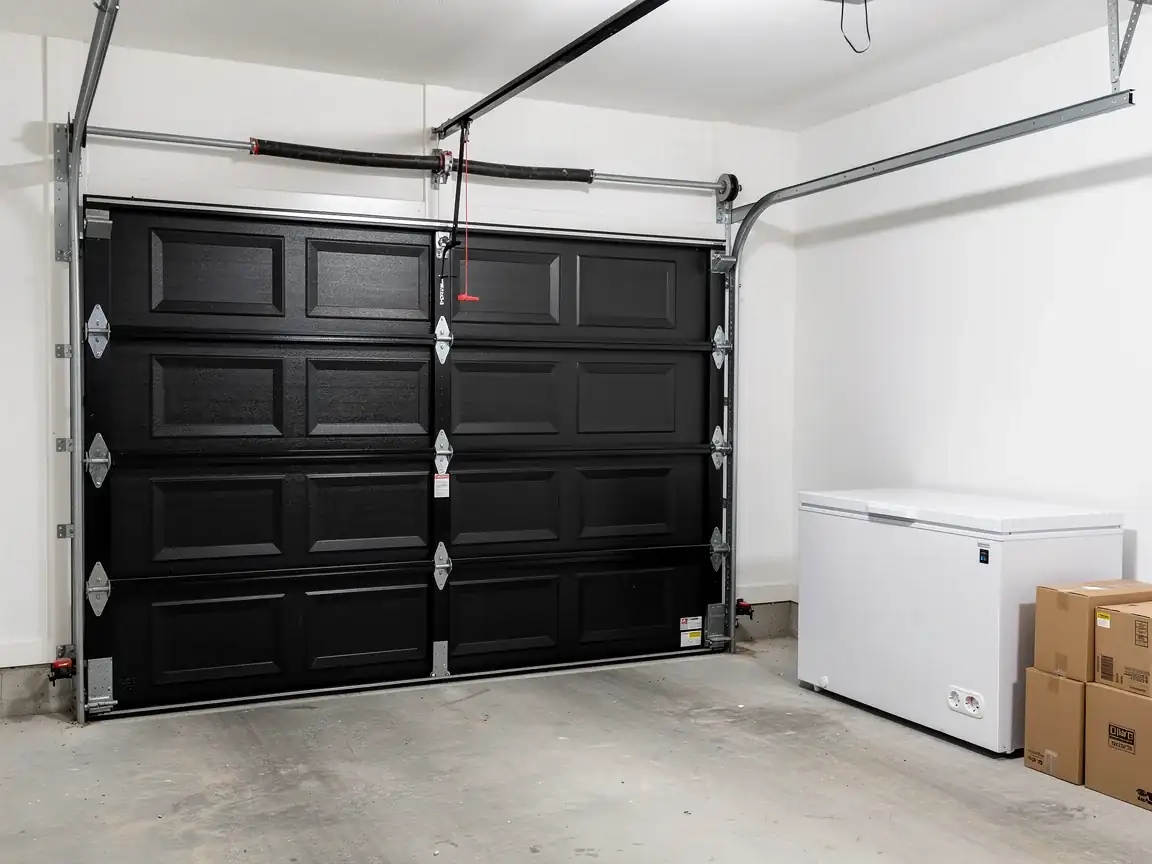
Because so much of Ashland went up after 2000, you're more likely to have a factory steel door on a lightweight torsion spring than the heavier doors common on houses built in the 1960s and 70s across the rest of the service area. That changes what the fix usually is. Instead of pulling a seized, decades-old torsion spring off rusted bearing plates, we're more often resetting an opener's travel limits, replacing a photo-eye sensor that's drifted out of alignment, or swapping a circuit board that's taken a power surge. Newer doors also mean newer openers - chain or belt drive units with logic boards instead of simple relay switches - and those boards are the part most likely to fail first on a house built in the last twenty years. Springs still break here, but on a door this age it's usually a cycle-count issue rather than age-related metal fatigue. We check the spring size and door weight against what's actually installed rather than assuming it matches an older house nearby, because builder-grade doors from this era vary by subdivision and by the contractor who put them up.

What You Are Seeing

On a newer door, the opener usually tells you something is wrong before the door itself does. A door that reverses halfway down, a remote that works from the driveway but not from inside the house, or an indicator light that blinks a set number of times before stopping are all opener-board symptoms, not a broken spring. If the door hesitates, humming without moving, a thermal sensor in the motor may be tripping - common on units pushed in quick succession during a busy week. Visible symptoms are less likely here than on older stock: you're less likely to see cracked panels or rust streaks on rollers than on houses built before 1980, since those doors haven't had thirty extra years of weather cycling. What you are more likely to see is a sensor pair that's slightly out of alignment after a bump from a bike or a lawn tool, which reads to the opener as an obstruction and refuses to close the door at all. A grinding or popping noise on a door this age usually means a roller or hinge has worked loose, not that the spring is about to go.

Why This Fails Locally

This area sits in a climate band rated cold and severe, and that matters more for newer builder-grade hardware than people expect. Lighter-gauge steel panels and composite insulation, common on doors built after 2000, contract and flex more in a hard freeze than the heavier steel used on older doors. Opener circuit boards are also more sensitive to cold than the mechanical relay switches they replaced - a board that's marginal will often fail on the first deep cold snap of the season, not gradually. Nylon rollers and plastic idler bearings, both common on doors from this era, stiffen in low temperatures and can bind just enough to trip the opener's force sensor, which reads as an obstruction and stops the door. None of this is unique to any one house in Ashland, but it shows up more often here than across the older 1960s-70s stock elsewhere in the service area, simply because there's more of this newer hardware installed. The fix is usually a part swap, not a full door replacement - but if the panel itself has warped from repeated freeze-thaw cycling, replacement is the honest answer.

Can You Do This Yourself

Some of this is fine to handle yourself. Clearing debris from the photo-eye sensors, tightening loose hinge bolts, and lubricating rollers and the track with the right garage-door lubricant are all reasonable weekend jobs and they fix a surprising number of the "door won't close" calls we get. What we don't recommend doing yourself is anything involving the torsion spring or the opener's internal wiring - a spring under tension can cause real injury, and an opener board wired wrong can damage the unit or the door itself. One honest limitation: if your house was built by a developer and the door was installed as part of the original construction, we won't have the installation spec on file, since we didn't put it in. That means a first visit sometimes includes extra time just identifying the spring size, drum size, and opener model before we can quote the actual repair. It's a small delay, but we'd rather tell you that upfront than guess at a part over the phone and show up with the wrong one.

Where This Job Goes Sideways

The failure mode we see most on newer houses is treating a symptom instead of the cause. Someone replaces a photo-eye sensor because the door won't close, and the door still won't close, because the real issue was a logic board sending the sensor a bad signal. Or a homeowner adjusts the opener's force settings to get a sticking door to close, which works for a few weeks until the stiff roller it was compensating for seizes completely. On a smaller, more uniform set of houses like Ashland's - a little over 2,100 households, almost all built within a couple of decades of each other - these problems also tend to show up around the same age across the whole area at once, since the hardware was installed in the same rough window. A door that's fine for a decade can start throwing opener faults within the same year or two as several of its neighbors, simply because the boards and sensors are reaching the same point in their service life together. That's worth knowing before you spend on a repair that treats one symptom and leaves the underlying part to fail again a few months later.
How it works

From “it’s stuck” to “it’s fixed”

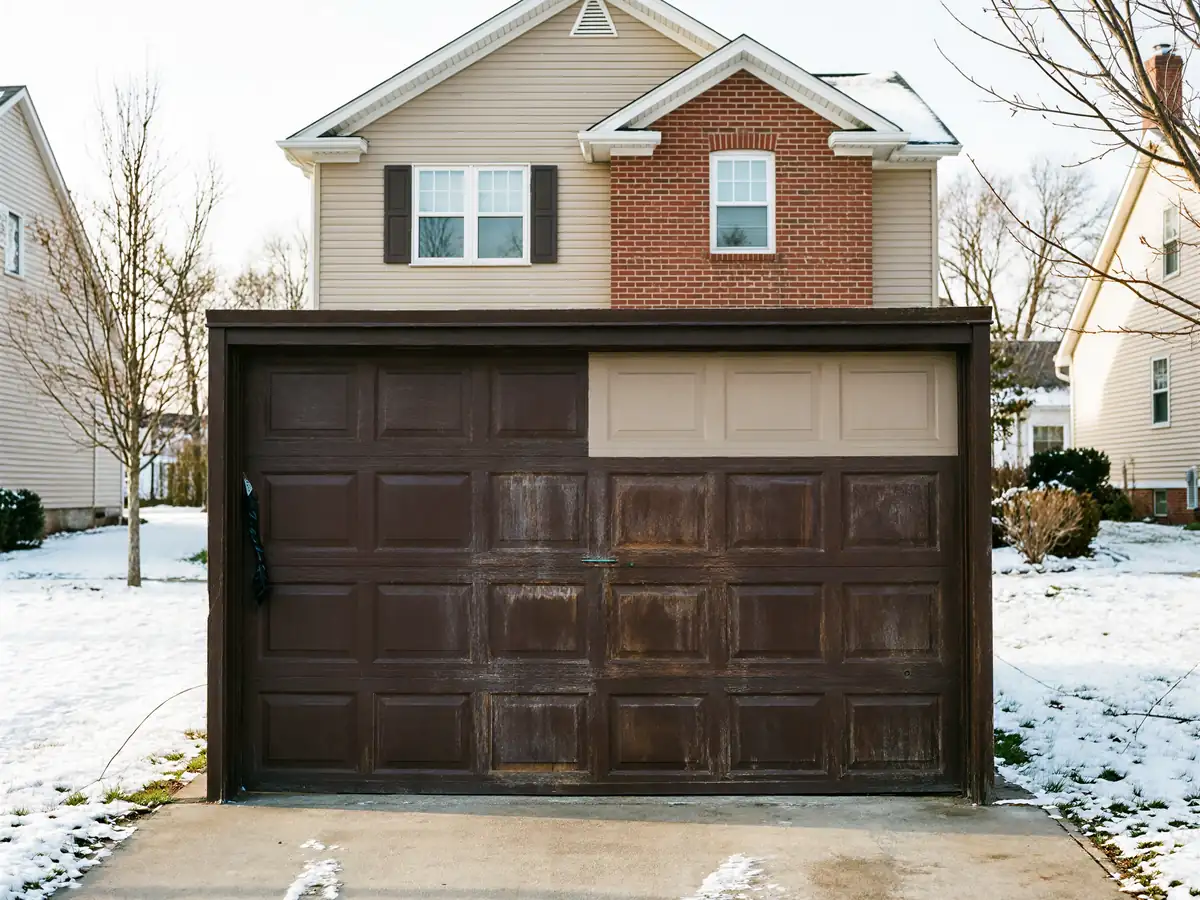
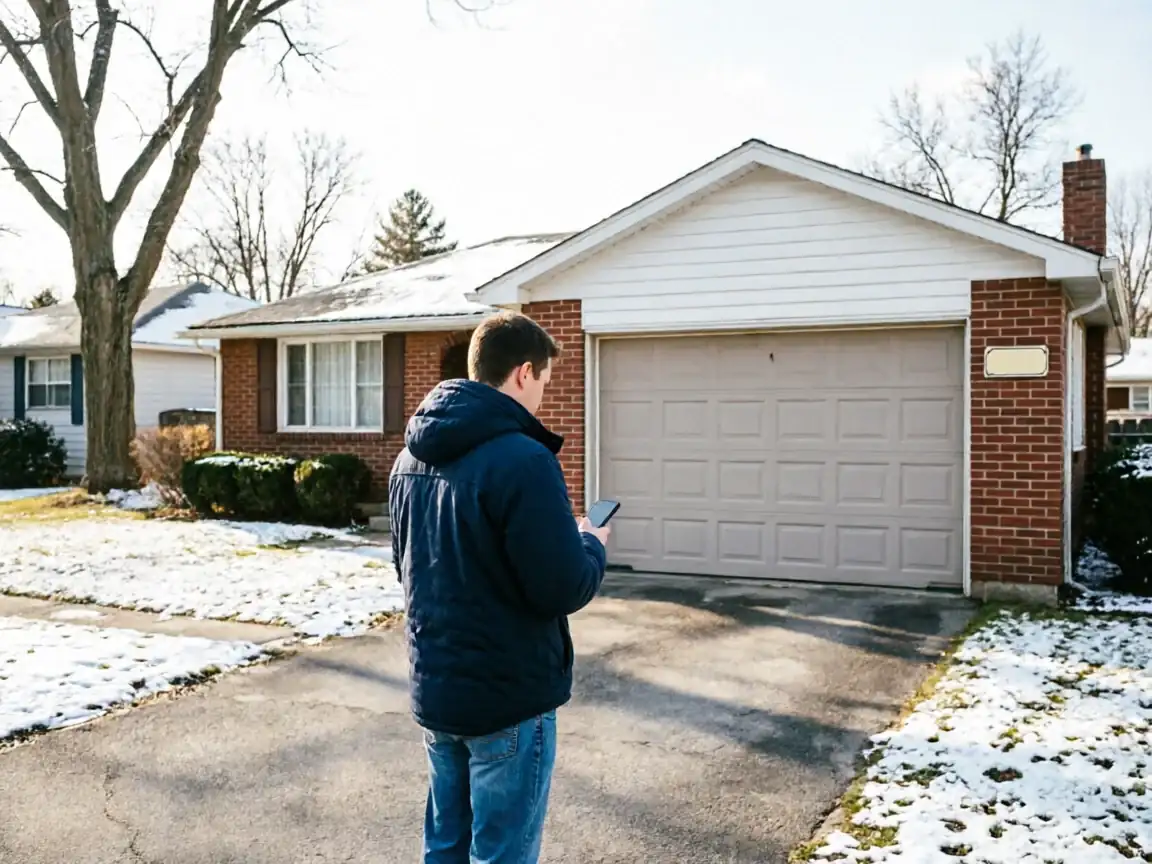
A man stands in a snowy driveway looking at his phone, facing a closed garage door.

Tell us what’s wrong

Describe the symptom - won’t open, loud bang, opener runs but the door won’t move.

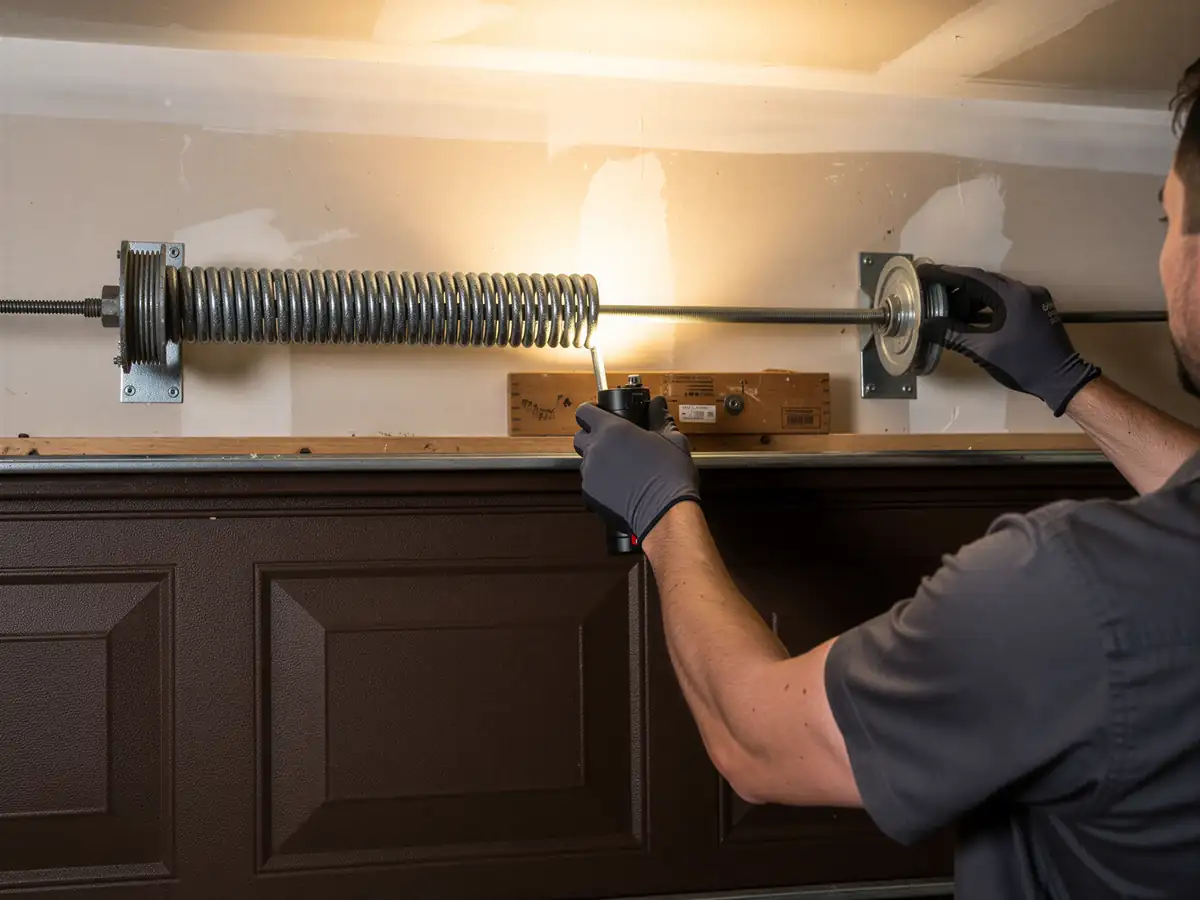
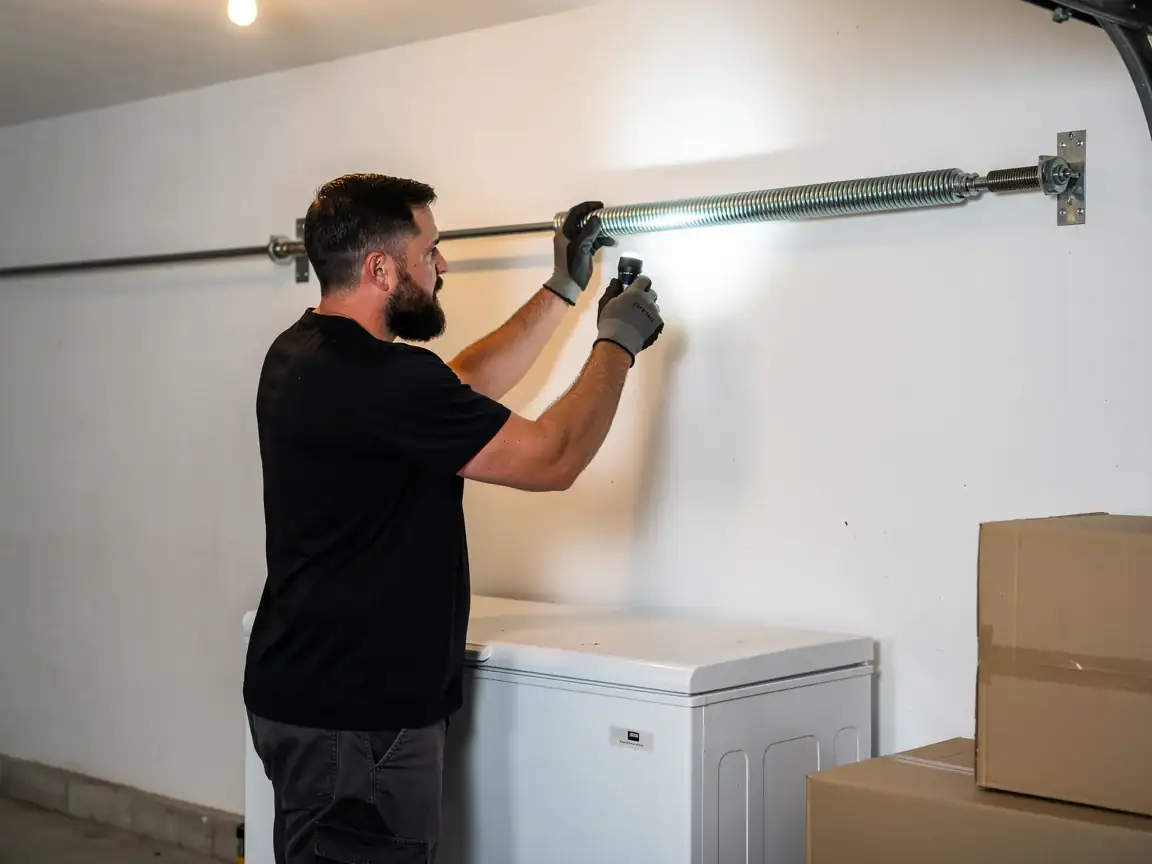
A technician inspects a garage door torsion spring with a flashlight.

On-site diagnosis

A technician tests the door under power and by hand and finds what actually failed.

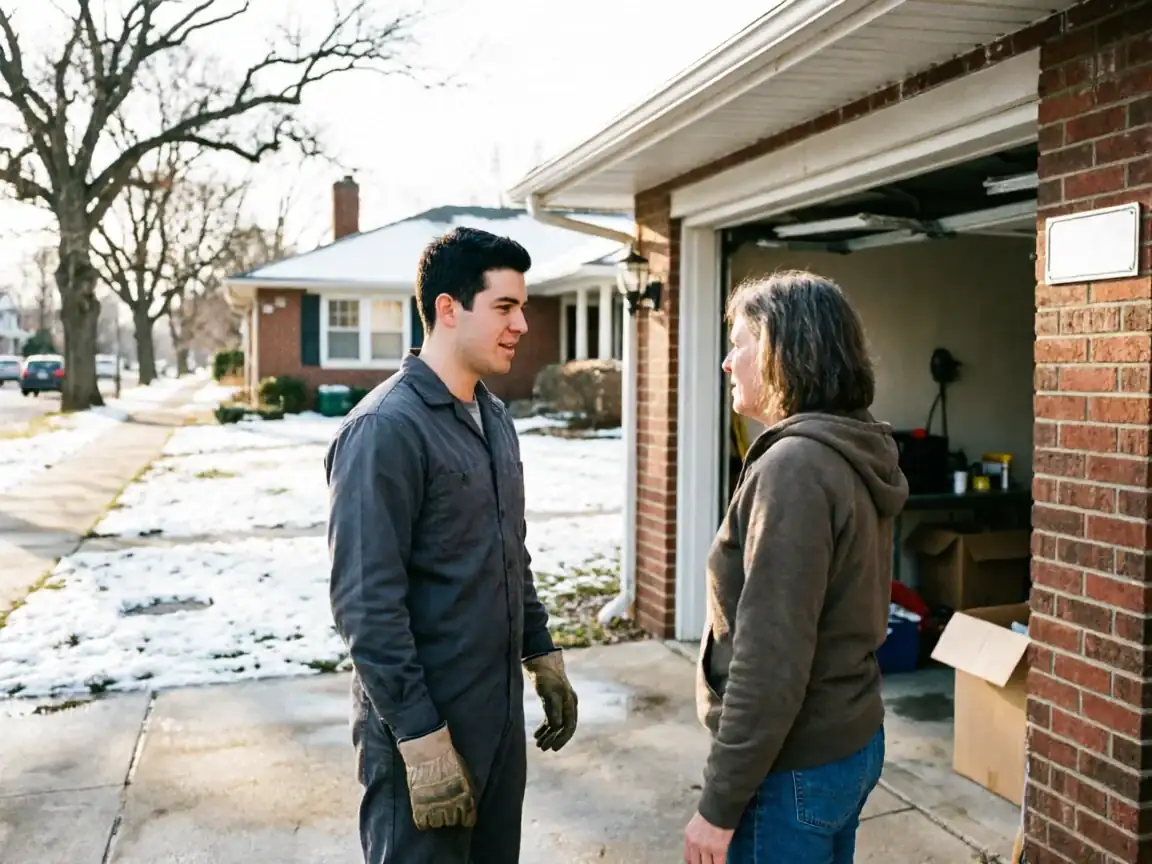
A technician in work clothes talks to a woman in front of a garage.

Clear, up-front plan

You get the fix that’s needed and what drives the cost - before any work starts.

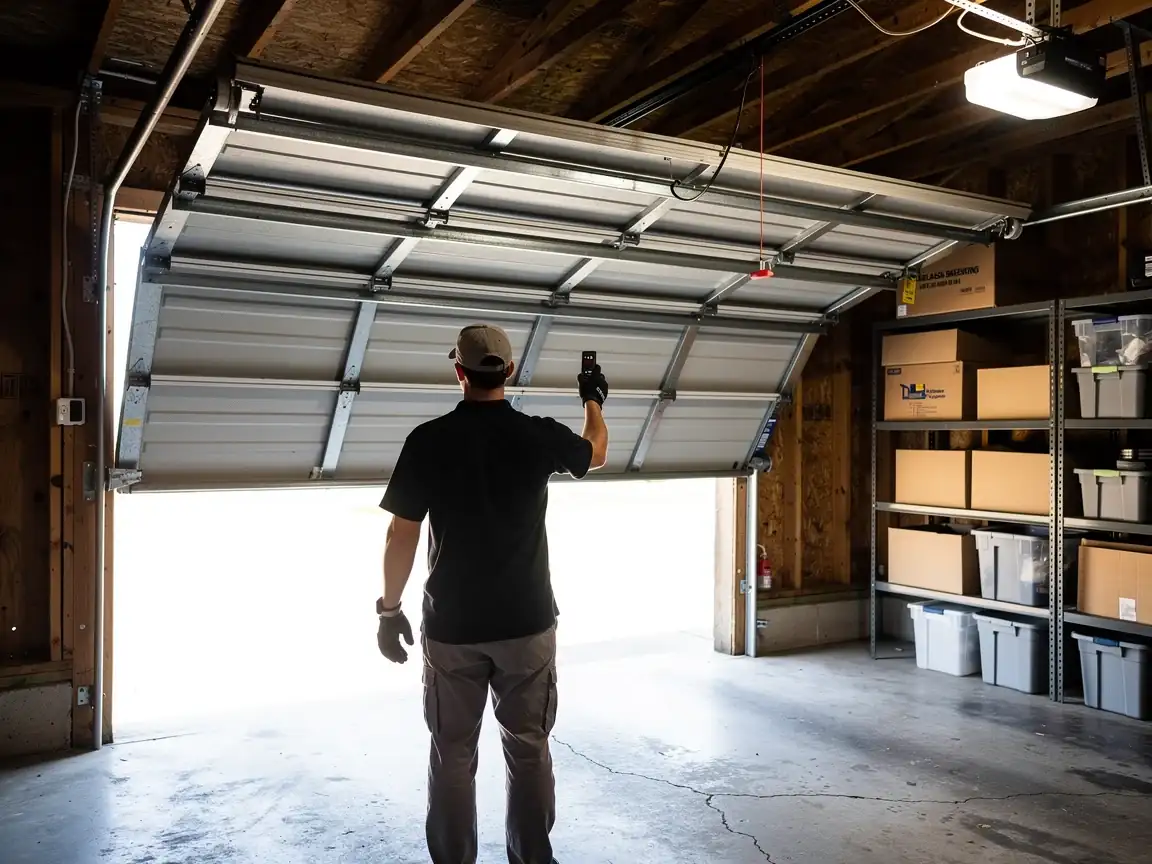
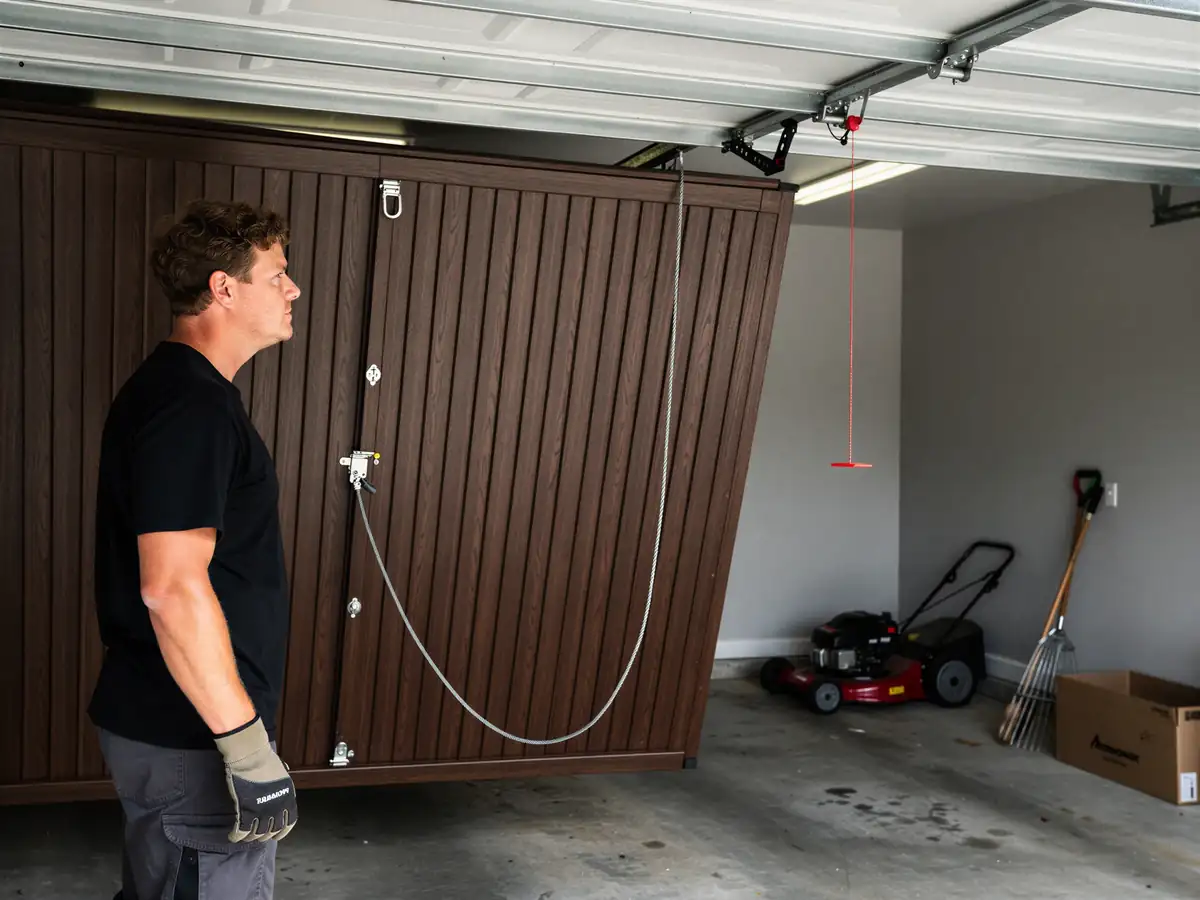
A technician operates a partially open garage door with a remote control.

Repaired & tested

The repair is done, the door is set true and tested, and the work area left clean.

Not sure which repair your door needs in Columbia, MO? Describe what it’s doing - every job starts with a diagnosis.

How we work

What to expect

Diagnosis firstEvery visit starts by finding what actually failed - not a pre-written parts list.
The right part for the doorSprings and openers matched to the door’s weight and age, so the fix holds up.
Straight answersWhen a repair makes more sense than a replacement - or the reverse - you hear it plainly.
Clean, careful workTension released safely, hardware set true, the door tested under power before we leave.
129,330Residents in Columbia
8Garage door services
7Neighborhoods & suburbs
MOServing Columbia, MO
Questions

Frequently asked

Straight answers about garage door repair in Columbia. Still unsure? Ask us directly.

Why are garage doors in Ashland different from older parts of Columbia?

Most houses here were built around 2003, more than two decades newer than the 1978 median across the rest of the service area. That means factory steel doors, lighter torsion springs, and opener logic boards instead of the heavier doors and simpler relay-switch openers common on older houses.

Do you have a location in Ashland?

No. We run every job out of our shop in Columbia, about 10 miles away, and build the visit around your schedule rather than a fixed route through town.

Is it worth repairing an opener instead of buying a new one?

Usually yes on a door this age. With a median household income of $90,628 here, most of these doors are well within their useful life, and a board or sensor swap is a smaller expense than full replacement on a door that's otherwise sound.

What if the builder installed my door, not you?

We won't have your installation spec on file, so the first visit sometimes takes extra time to identify spring size, drum size, and opener model before we can quote the repair. We'd rather confirm it in person than guess over the phone.

Ready to get your garage door sorted?

Tell us what it’s doing and where you are in Columbia - we’ll take it from there.

Request a QuoteCall