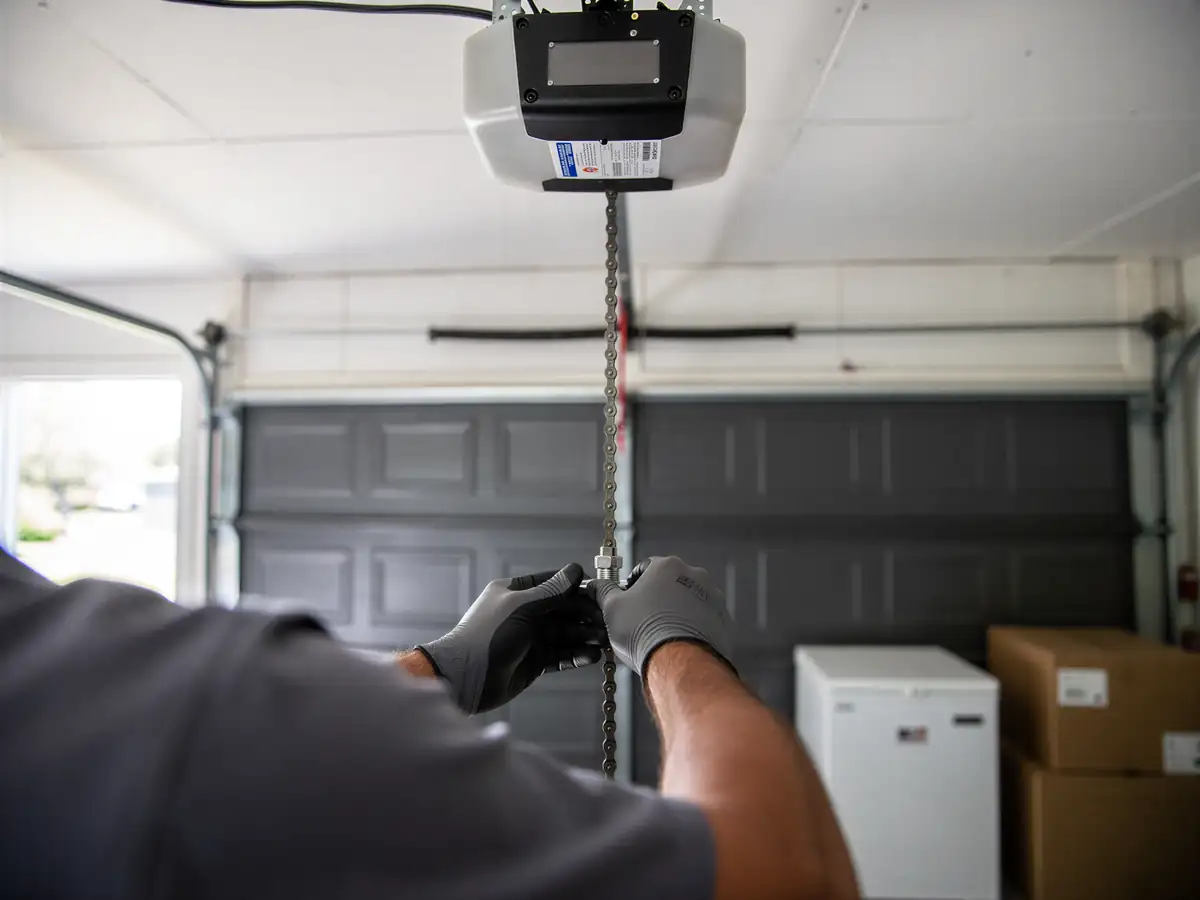
What the Fix Involves
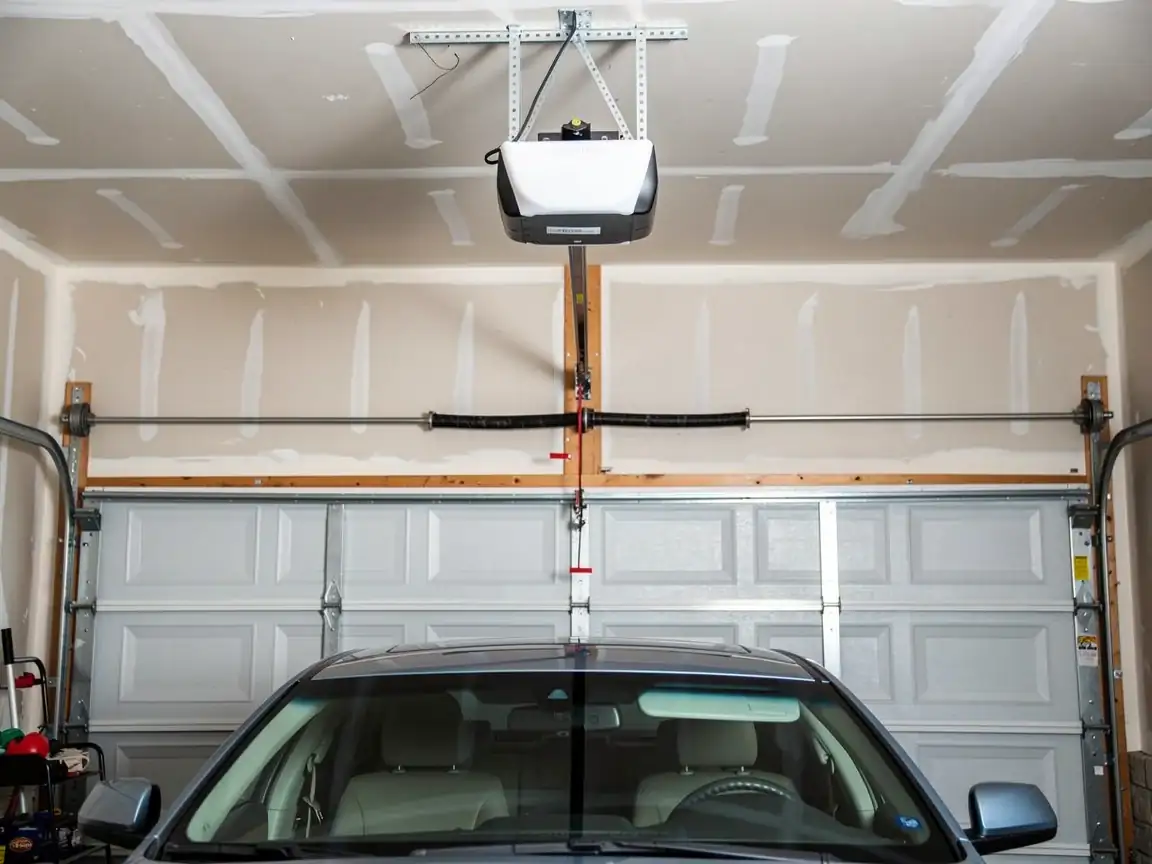
Opener repair starts with the safety sensors before anything else - misaligned or dirty photo-eyes are the single most common reason a door won't close even though the opener runs fine. After that we check the logic board for burnt relays, test the drive gear or belt for stripping, and pull the remote's learn codes if programming has dropped. On chain and belt-drive units we check tension and sprocket wear; on screw-drive units we're looking at the nut and the lubrication on the rod. If the board itself has failed, we replace it rather than patch it - a flaky board that resets itself intermittently will fail again within months, and that's a callback nobody wants, including us.
What You Are Seeing
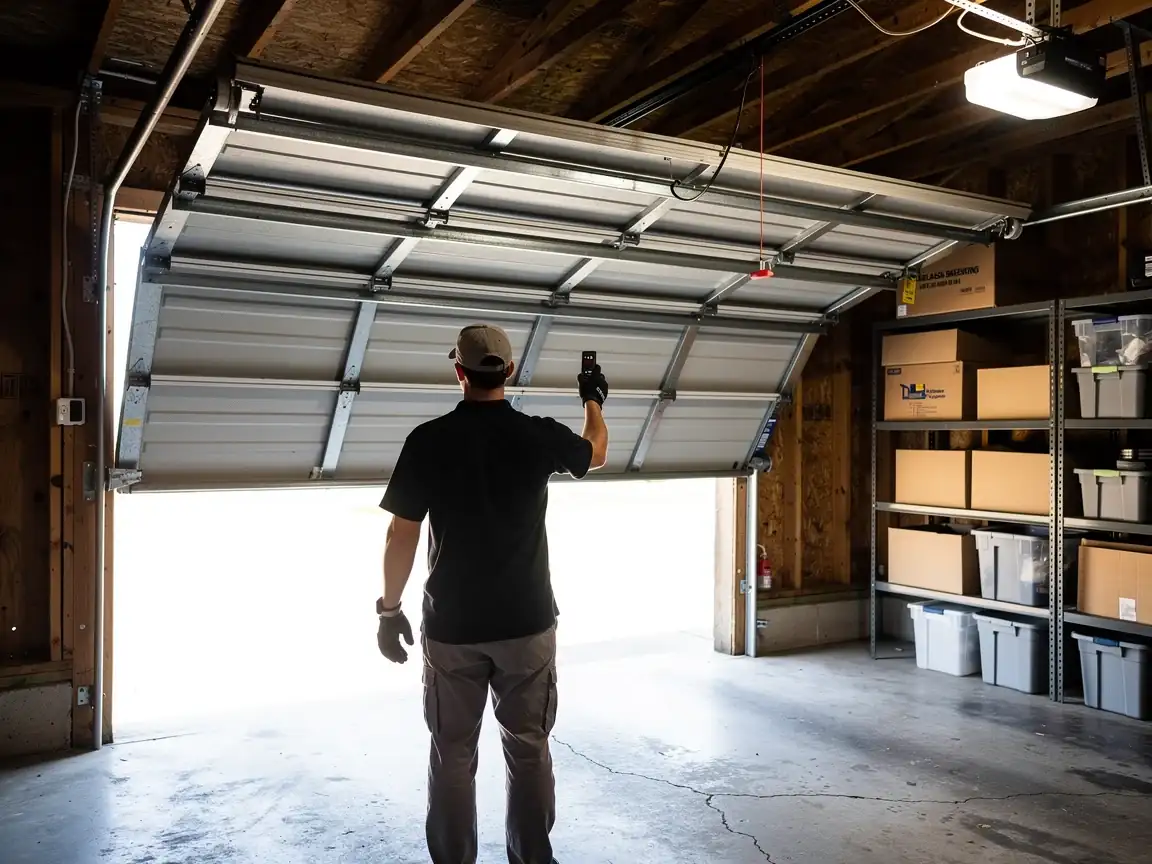
Most calls fall into a handful of patterns: the opener hums but the door doesn't move, which usually points to a stripped gear or a broken belt rather than the motor itself; the door reverses right before it closes, which is almost always the photo-eye sensors seeing something - or seeing nothing because one's knocked out of alignment; or the remote works intermittently while the wall button works fine, which points to a dying receiver board rather than the remote battery. Less common but not rare: the opener runs on a delay, lagging a second or two after you press the button, which is often early sign of a capacitor or board failure rather than anything mechanical. None of these are rare for any opener regardless of age, but which one you're likely to see does track with how old the unit is.
Can You Do This Yourself
Cleaning photo-eye lenses with a soft cloth and checking that both sensors line up and light up solid (not blinking) is worth trying before you call anyone - it fixes a real share of "door won't close" complaints and costs nothing. Reprogramming a remote is usually a button-press sequence printed right on the opener housing, worth five minutes of your time. Where we'd stop you: swapping a logic board yourself. The boards aren't universal across brands or even across model years from the same brand, and a wrong part number means a return shipping delay on top of the repair you already needed. If the opener is original to a newer build and still under manufacturer warranty, check that before paying for a board out of pocket.
Where This Job Goes Sideways
The most expensive mistake we see is someone replacing a whole opener when the real problem was a $40 sensor or a worn drive belt - a newer unit with a good motor doesn't need to go in the trash because one part failed. The second is buying a replacement opener online rated for the wrong door weight; insulated steel doors common in newer construction are heavier than the hollow doors they're sometimes swapped in to replace, and an underpowered opener will burn out the gear within a year. Third, and this one's avoidable: ignoring a reversing door because "it eventually closes on the second try." That's a sensor or spring tension problem getting worse, and it tends to fail completely at the least convenient moment, usually when you're already late.