Booking a Visit
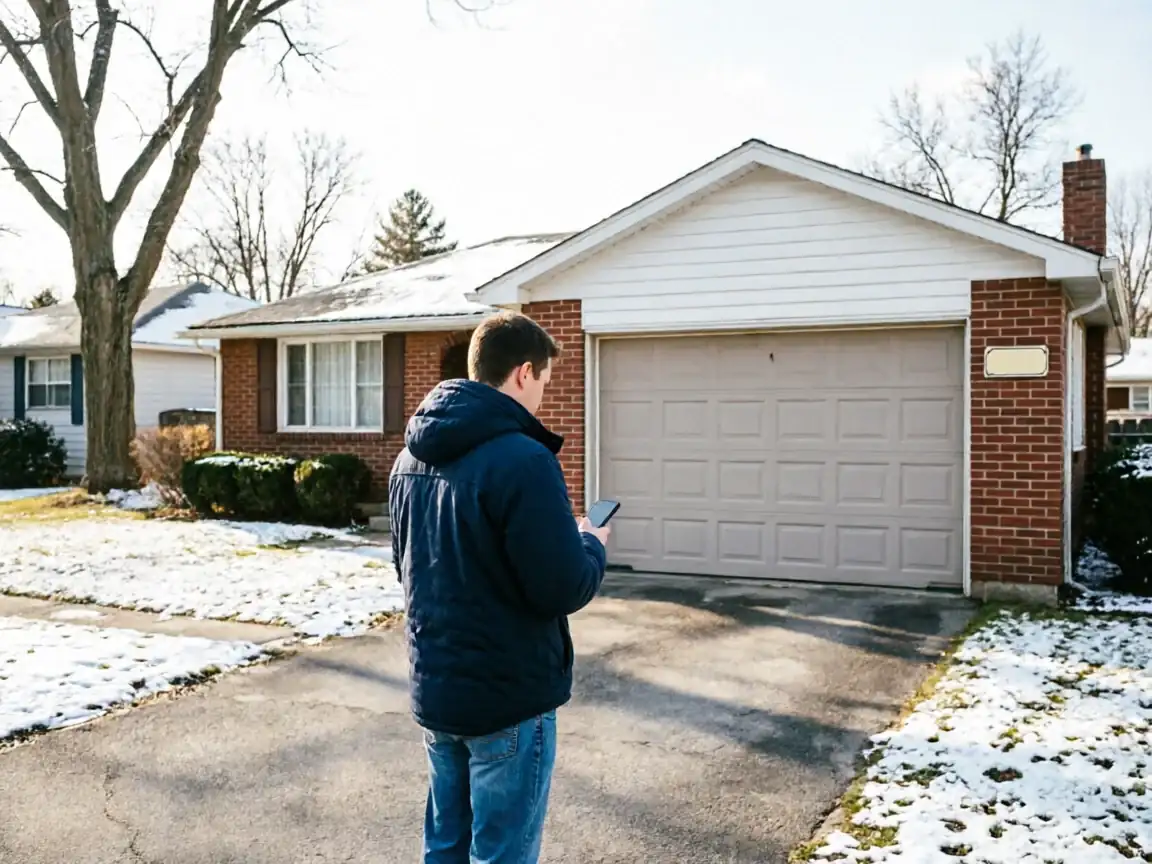
Ashland is a smaller town
Just over 2,100 households - which means we're not driving out here every day the way we might inside Columbia. When we do get a call, it's almost always a torsion spring that's snapped clean, usually with that loud bang homeowners describe as sounding like a gunshot in the garage. We come from Columbia, about 10 miles up the road, so we're not posted up locally with a depot or a drop-in counter here. You call, we figure out what you've got over the phone - spring size, door weight, whether it's a single or double - and we load the truck with parts that match before we head out. That's different from a shop that stocks one spring size for a neighborhood built in one decade, because Ashland's housing doesn't skew that old.
- 2,100 households
- 10 miles
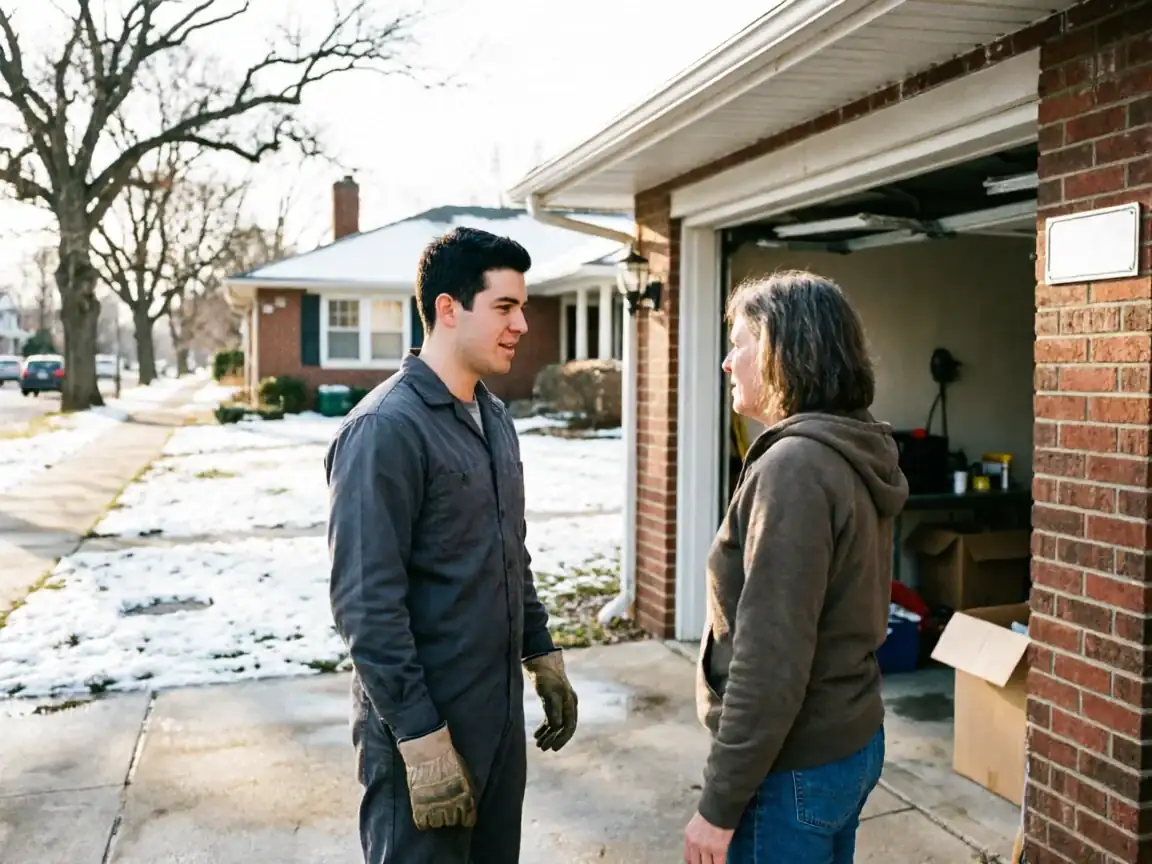
We'd rather spend five extra minutes on the phone getting your spring wind and door width right than show up with the wrong part and have you wait on a second trip
That's the honest tradeoff of working a town this size from a home base ten miles out: fewer trucks on the road here, but we show up prepared instead of guessing.
What the Fix Involves
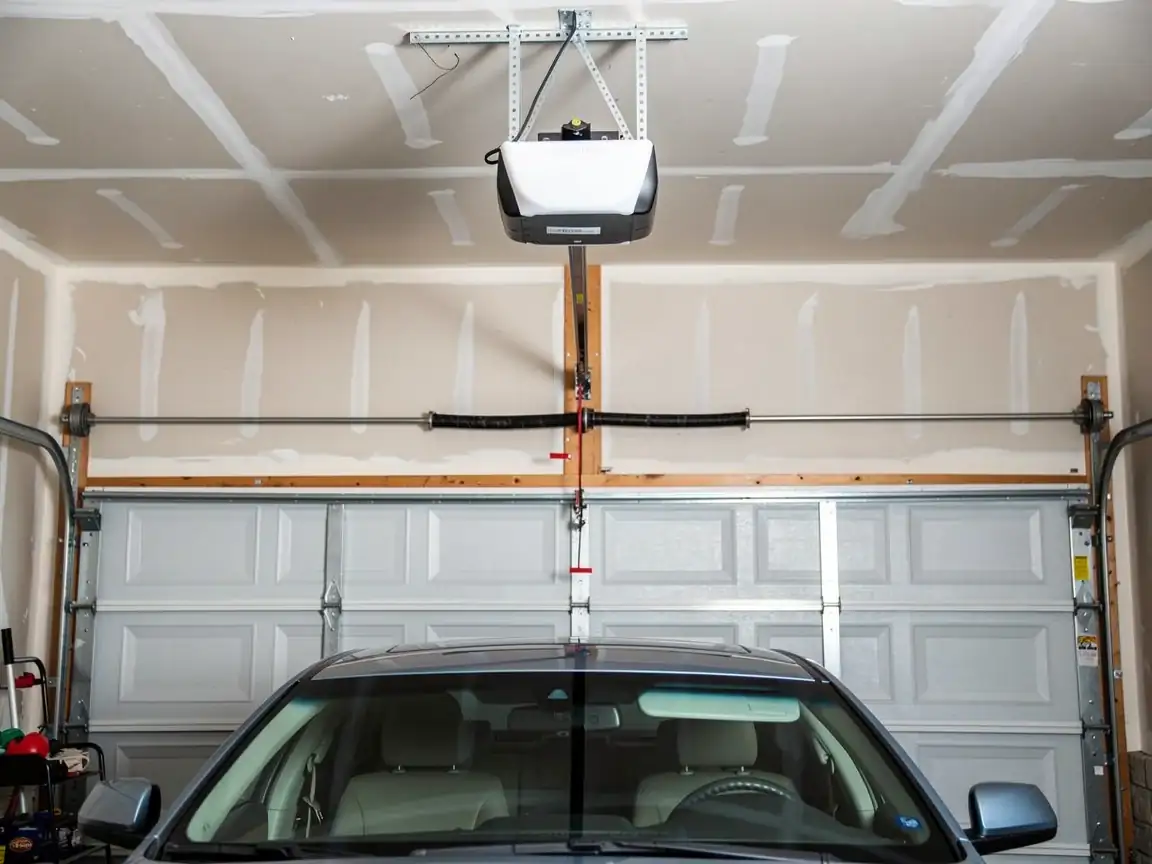
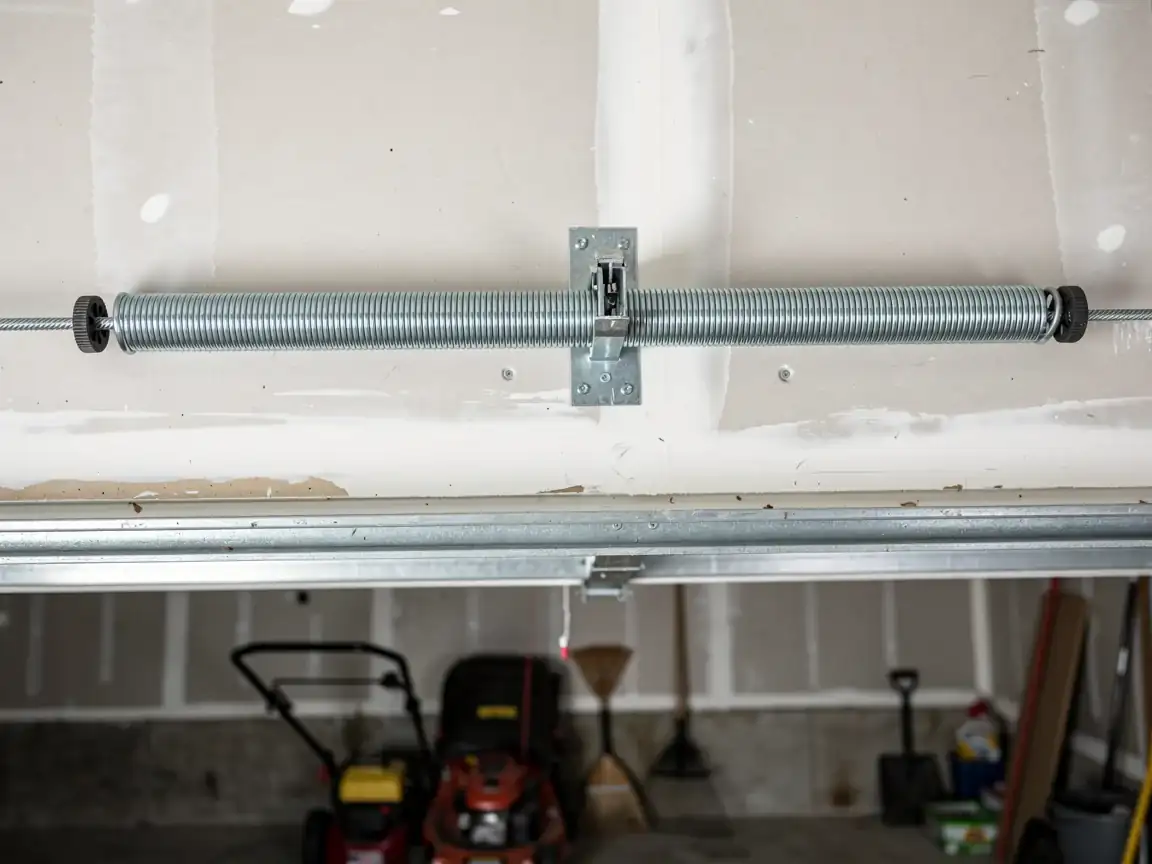
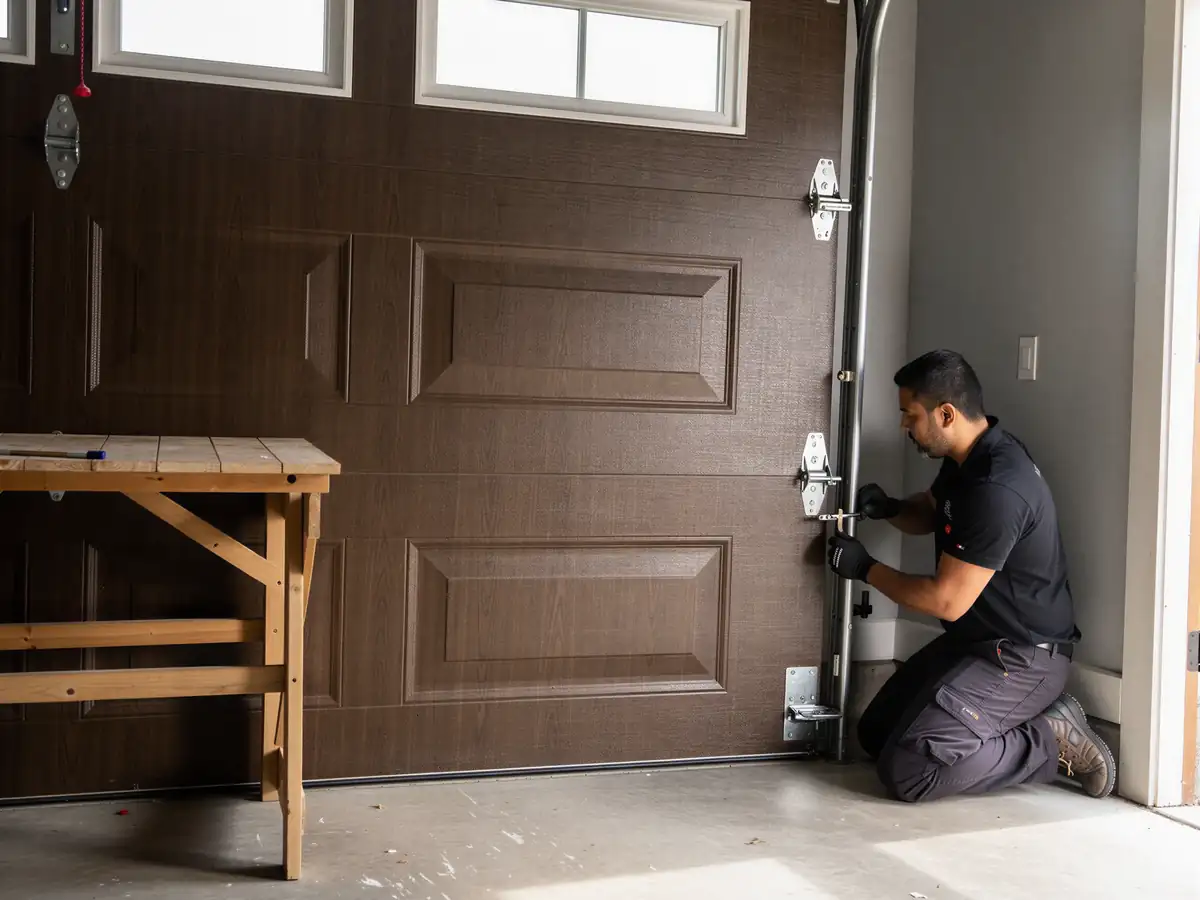
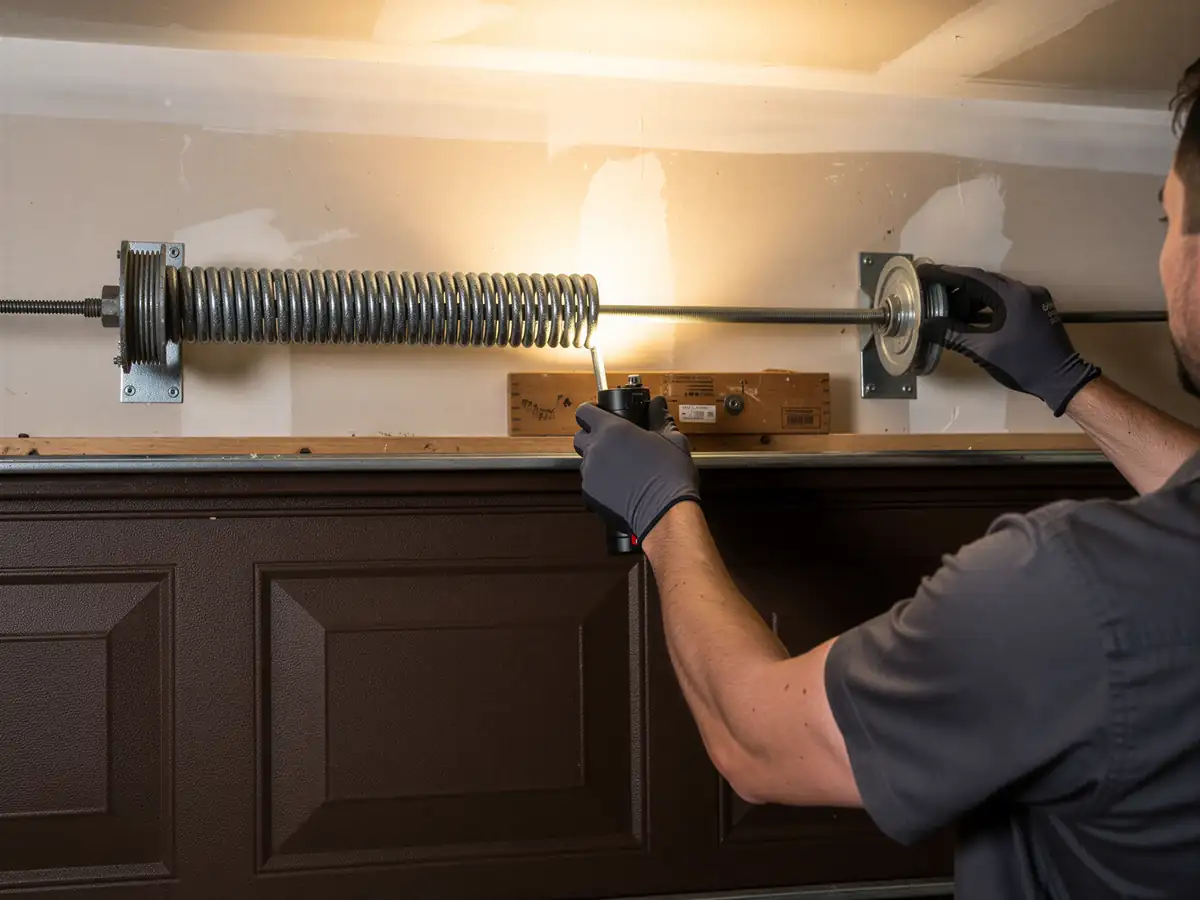
A torsion spring repair means taking tension off the old spring with winding bars, pulling the broken halves off the shaft, and setting a matched replacement sized to your door's weight and height. On a lot of Ashland doors - built when the area's median year of construction sits around 2003 - you're looking at standard double-car torsion springs on a 7-foot door, not the odd one-off hardware you find on a house from the 1940s or 50s. That's a real advantage: parts fit without modification more often than not.
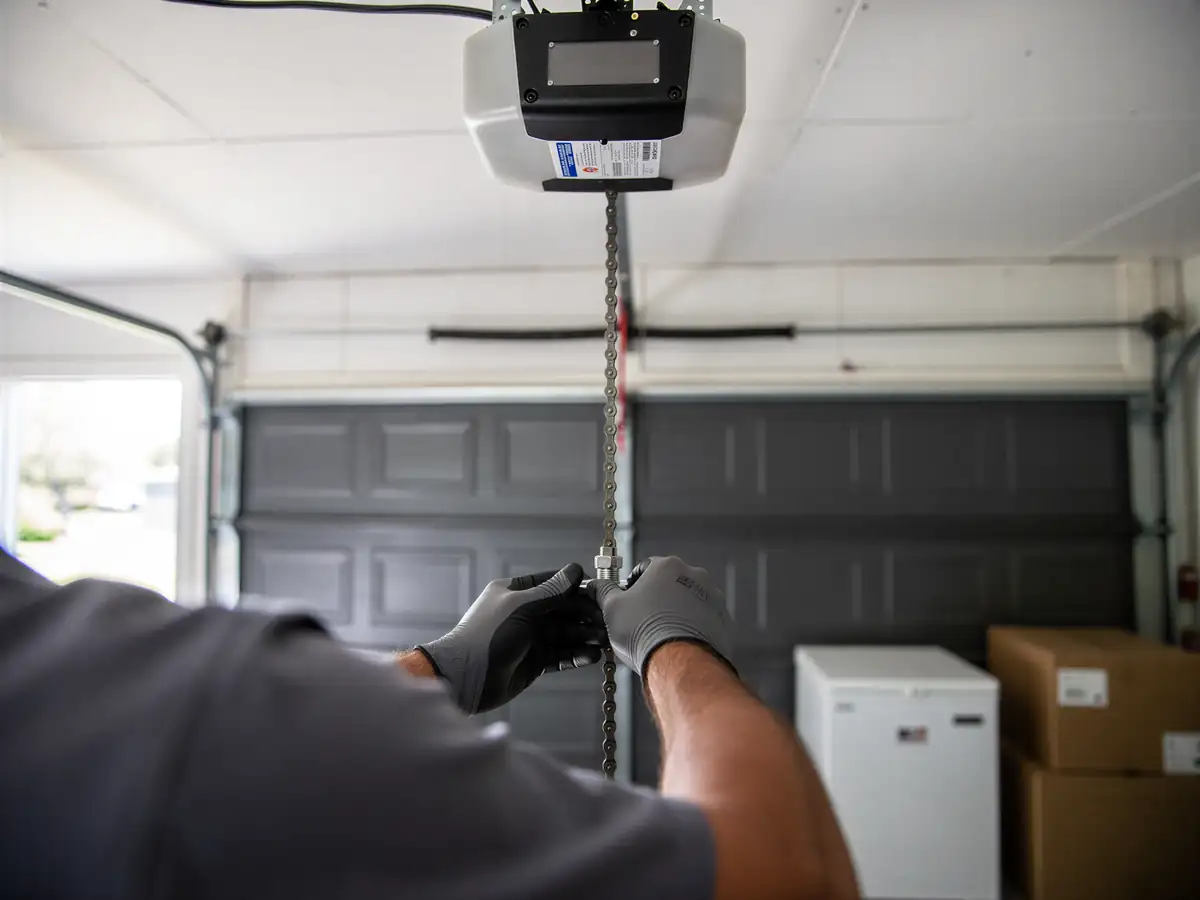
We check the drums, the cable condition, and the bearing plates while we're in there, because a spring snap under tension can nick a cable or warp a bracket on its way out. If the opener's been straining against a dead spring for a few days before the call comes in, we look at the drive gear too - that's a common secondary failure that shows up on newer belt-drive openers more than old chain units.
What You Are Seeing
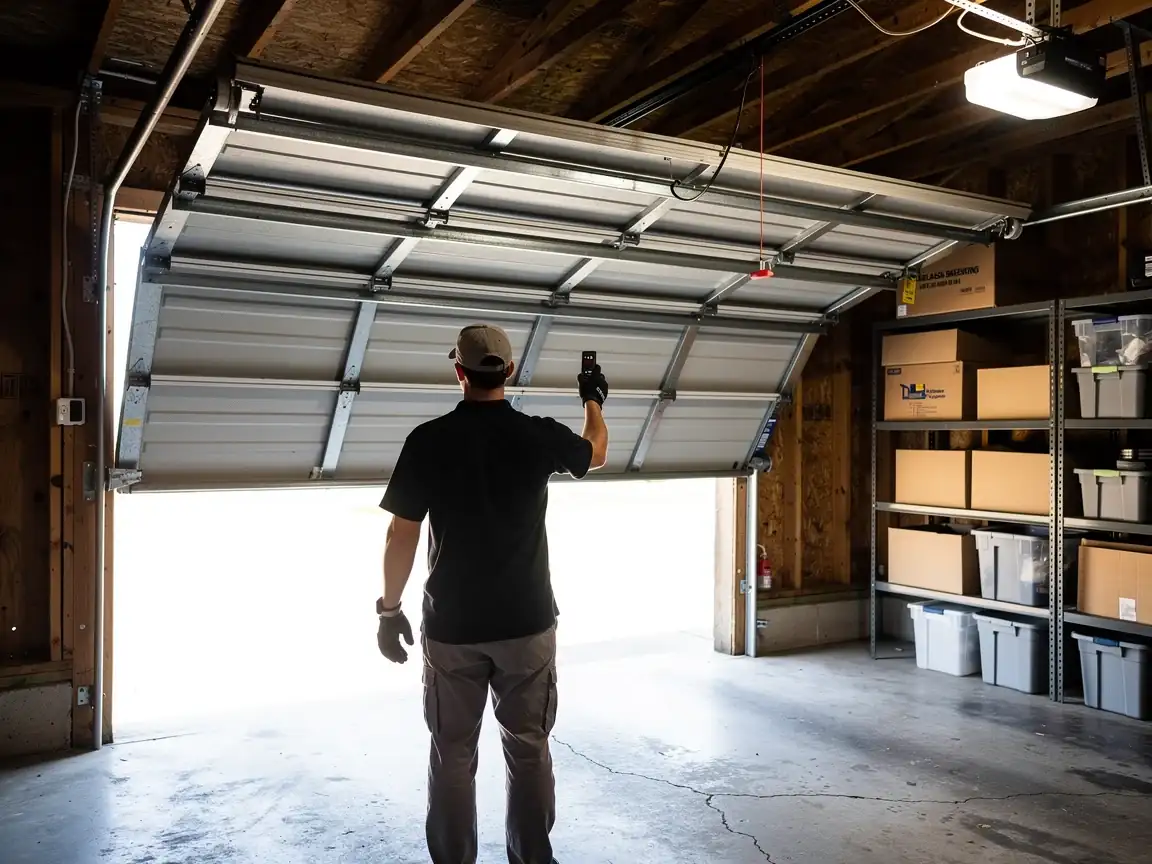
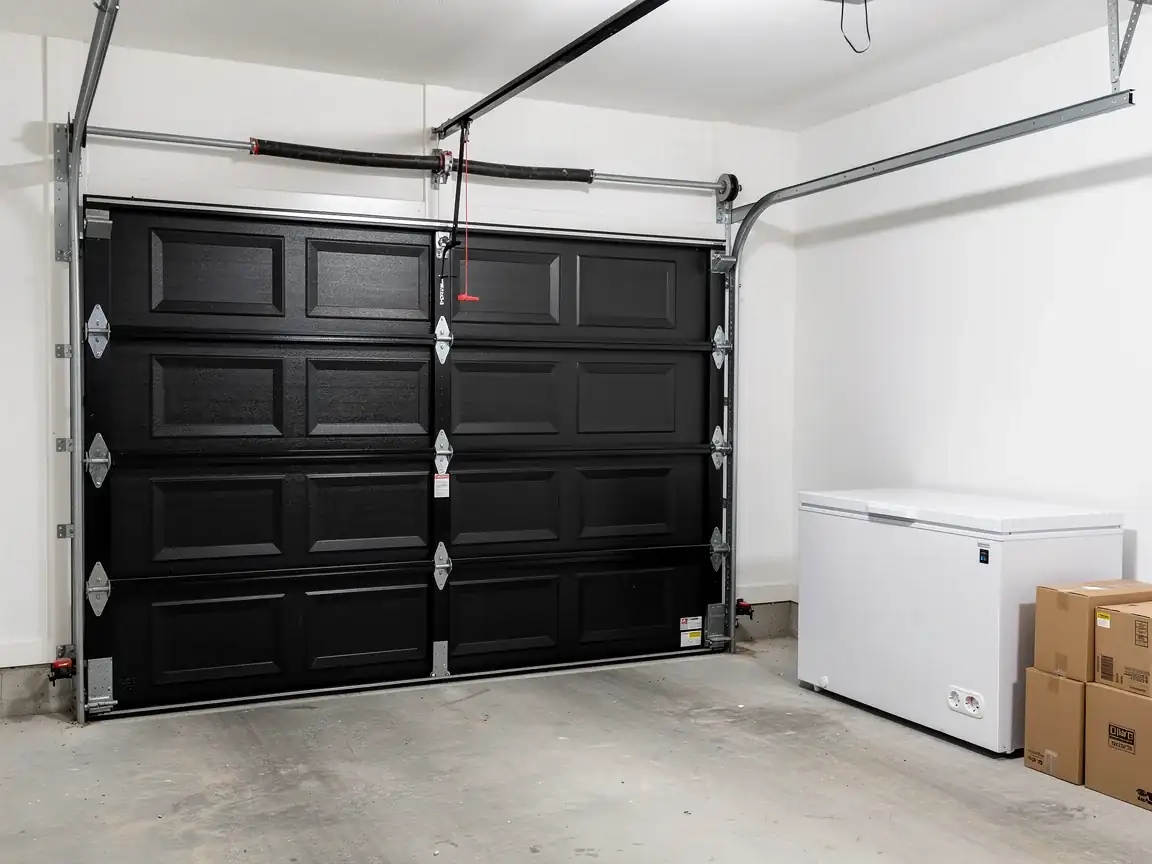
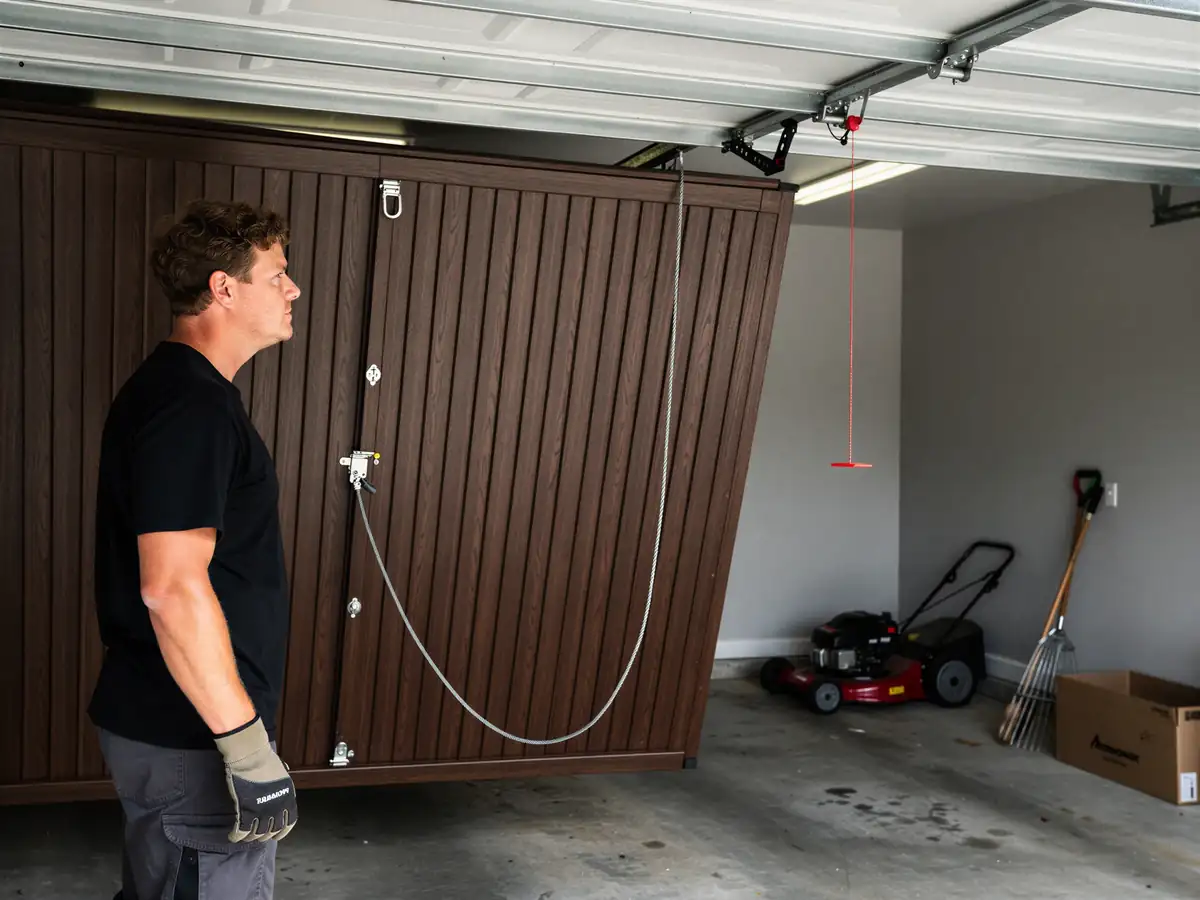
The door won't budge, or it only lifts a few inches before stalling and the opener motor groans and reverses. Sometimes it's one side visibly lower than the other - that's a broken spring on a double-spring setup, where one side is still holding and the other has let go. You might also notice the door feels twice as heavy as usual when you try to lift it by hand, which is exactly what you'd expect with zero spring tension doing the work.
On houses built in the last 20 years, this almost always comes down to standard torsion spring wear rather than warped tracks or rotted jambs - the kind of secondary damage you see more on older framing. The spring itself is rated for a cycle count, and once it's done, it's done. There's no fixing a broken spring coil; it gets replaced, not patched.
Why This Fails Locally
A spring rated for 10,000 cycles in a mild climate doesn't always get there here
Ashland's housing stock, with a median build year around 2003, means most doors are still on their original or first-replacement spring set, so a lot of this area is sitting right in the window where failure starts showing up.
The other factor is simple mechanics
A spring under daily tension in cold weather is working harder every open-close cycle than the same spring would in a mild climate. Combine newer, heavier insulated doors (common in homes this era) with that cold-weather spring load, and you get failures that cluster - not randomly, but tied to the age of the housing and the winters it's been through.
Can You Do This Yourself
We'll say this plainly: don't. A torsion spring is wound under enough tension to break bones or worse if the winding bars slip, and the tools to do it safely - proper bars, a vise grip setup, correct spring wind measurement - aren't things most homeowners have sitting in the garage. This is one job where the YouTube video and the real thing part ways fast.
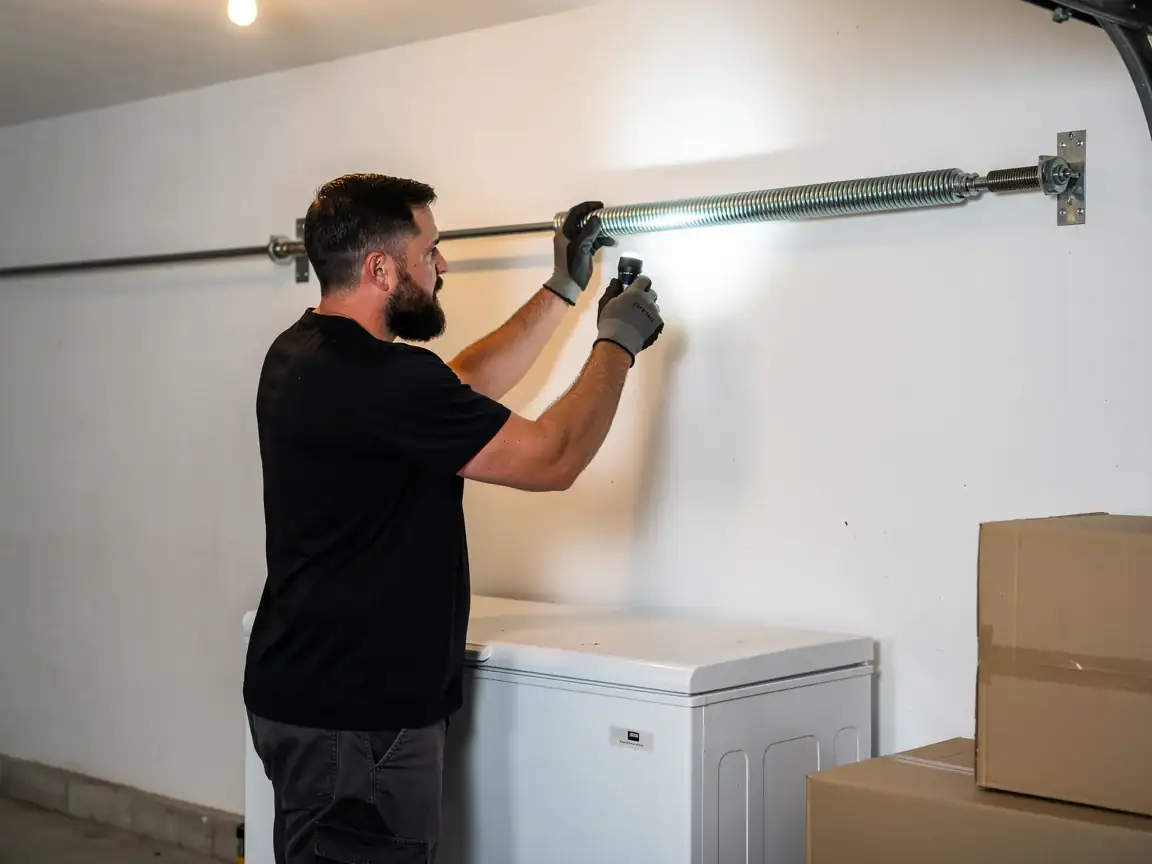
What you can safely do yourself: visually check if it's one spring or two, note whether the door is a single or double, and check the spring diameter and length if you can see it clearly without touching it. That information speeds up the phone call and helps us bring the right part on the first trip out from Columbia, which matters more here since we're not already around the corner.
Where This Job Goes Sideways
The spring breaks, but the cable's also frayed from running over a damaged drum for weeks - now it's not a 20-minute swap, it's a cable and drum job too. Or the door's been limping along on a half-dead spring long enough that the opener's drive gear stripped trying to compensate, which is a separate repair on top of the spring. We see this more when a homeowner notices the door's gotten heavy but keeps using the opener anyway instead of calling.
The other way it goes sideways: someone orders a generic spring online that's close but not matched to the door weight, and it either doesn't hold tension right or wears out again within a year. Matching the spring to the actual door - height, weight, insulation - isn't guesswork, and getting it wrong just means doing the job twice.